Standard "how to watch" guides treat a primetime NFL broadcast like a cable channel checklist. Kickoff time. Streaming app. Referee crew. Done.
That laziness misses the real story. If you liked this piece, you might want to read: this related article.
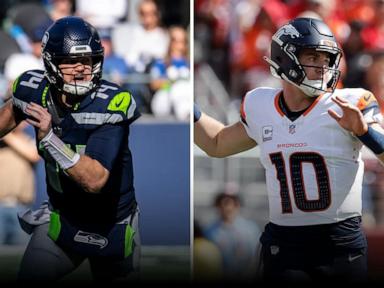
When the Seattle Seahawks and Denver Broncos met on Thursday Night Football in Week 6 on October 15, 2026 at Empower Field at Mile High, fans looking for a service-journalism preview got a sterile rundown of broadcast logistics—Prime Video, Al Michaels and Kirk Herbstreit on the call, Seahawks favored by 2.5 points, over/under sitting at 40.5. What they actually got was a brutal clash of short-week attrition, Mile High air, defensive front dominance, and red-zone friction that ended with Denver winning 17-14 in overtime.
Watching a Thursday night game without understanding why the product looks sloppy, physical, and volatile is like watching a stock ticker without checking liquidity. You see the score move, yet you miss the mechanics driving every swing. For another perspective on this development, check out the latest coverage from NBC Sports.
What Standard "How to Watch" Guides Get Wrong
Conventional game-day viewing articles operate on a simple premise: give the reader the coordinates so they can find the stream on time. There is nothing wrong with listing kickoff times, radio affiliates, or broadcast platforms. The problem is what gets treated as secondary or ignored altogether.
First, standard guides treat Thursday Night Football as if it plays by the same physiological and tactical rules as a Sunday afternoon game. It does not. Teams playing on four days of rest have less time to install game plans, less time to recover soft tissue, and less margin for error in blitz pickup and special teams execution. When you add altitude in Denver, fatigue compounds faster in the second half and overtime.
Second, surface-level previews lean heavily on pregame narratives rather than structural matchups. Entering that Week 6 clash, both teams sat at 3-2, Seattle brought star receiver Jaxon Smith-Njigba into the spotlight alongside quarterback Sam Darnold, and oddsmakers installed Seattle as a slight road favorite. That framing makes the game sound like a straightforward test of passing volume versus a sharp defense.
The box score told a much messier, far more revealing truth. Seattle outgained Denver 353 total yards to 168 and ran 82 plays to Denver's 57. Yet Denver walked off with a 17-14 overtime victory. A viewing guide that only tells you which app to open never prepares you for why a team with half the yardage can still win on a short week.
| Metric | Seattle Seahawks | Denver Broncos |
|---|---|---|
| Final Score | 14 | 17 (OT) |
| Total Yards | 353 | 168 |
| Total Passing Yards | 240 | 94 |
| Total Rushing Yards | 113 | 74 |
| Yards Per Play | 4.3 | 2.9 |
| Total Plays | 82 | 57 |
| Turnovers Lost | 3 | 0 |
| Sacks Recorded | 5 | 2 |
Redefining What You Should Actually Watch When Seahawks and Broncos Collide
If you are tuning in to a Seahawks-Broncos primetime matchup, stop asking "what channel is it on?" as your main question and start asking a sharper one: which bottleneck breaks first under compressed preparation?
Football analysts and coaches—from Bill Belichick's long-standing emphasis on situational football and turnover margin to modern analytics researchers tracking drive efficiency—have spent years proving that raw yardage is a noisy proxy for winning. Volume looks impressive on a scrolling ticker. Situational control decides the scoreboard.
In the October 15 meeting, Seattle moved the ball between the 20s with regularity. Sam Darnold finished with 278 passing yards on 51 attempts, and Jaxon Smith-Njigba hauled in 12 catches for 134 yards while Cooper Kupp added 5 catches for 50 yards. On paper, that looks like an offense humming.
Look closer at the bottlenecks. Seattle went just 1-for-2 in the red zone, threw 2 interceptions, and lost a fumble—three giveaways to Denver's zero. Meanwhile, Bo Nix and Denver's offense averaged just 2.9 yards per play and generated only 94 net passing yards, yet Denver scored touchdowns on rushing plays by J.K. Dobbins and RJ Harvey in the second quarter before Wil Lutz drilled a 53-yard field goal in overtime.
Imagine a scenario where you watch that broadcast solely to see big chunk plays from wide receivers. Every time Smith-Njigba breaks open across the middle, you expect points. Instead, stalled drives, sacks, and turnover points flip the leverage instantly. The real drama of that game lived in third-down conversions, red-zone execution, and hidden yardage—not highlight reels.
The Short-Week Tax on Offense
Short-week games punish timing and protection schemes first. Receivers and quarterbacks need crisp timing on option routes and sight adjustments against shifting coverage. When practice time shrinks to walkthroughs and recovery sessions, timing degrades.
Quarterbacks take longer to process disguised coverages, offensive linemen lose half a step in pass sets, and ball security suffers. Five sacks taken and three turnovers lost on the road in prime time is rarely a fluke; it is what happens when an offense tries to play high-volume football without clean rhythm.
Why Low-Yardage Wins Happen in Denver
Empower Field at Mile High changes how late-game fatigue shows up. Defenses that stay on the field for 82 plays while their own offense manages 57 plays face a clear structural test. Even when Denver's attack sputtered for long stretches—posting just 168 total yards—keeping turnovers at zero prevented Seattle from getting short fields and easy momentum.
When a game stays within a single score into the fourth quarter and overtime, kicking and field position carry disproportionate weight. Jason Myers hit from 55 and 34 yards for Seattle, yet Denver's defense held firm long enough for Wil Lutz to settle matters from 53 yards out in the extra period.
Battle Scars From Covering Prime-Time Matchups and Where This Approach Cuts Both Ways
I have seen media teams and content operations pour hours into pregame "how to watch" roundups that get indexed for five minutes before kickoff and forgotten by halftime. They chase search volume with thin checklists while readers who actually care about the sport get zero tactical insight.
At the same time, going heavy on tactical bottlenecks and turnover mechanics has its own blind spots. Not every viewer wants a film-room breakdown before pouring a drink on a Thursday night. Sometimes a fan genuinely just needs to know whether a game is on a streaming platform, cable channel, or local broadcast in their region—especially when rights splits and regional blackouts confuse casual viewers. Over-indexing on analytical depth can feel dense if you strip away practical viewing basics entirely.
The trick is pairing exact viewing facts with a lens that respects the viewer's intelligence. Know where the feed is, know when kickoff hits, and then watch the hidden levers—turnovers, red-zone trips, third-down efficiency, and late-game stamina—that actually decide who walks away with the win.
Actionable Ways to Watch Smarter Next Time
- Check the turnover and red-zone ledger before praising yardage. If a team leads in total yards by 150-plus yards yet loses the turnover battle by two or three, expect tension and late-game volatility rather than a blowout.
- Watch defensive rotation in the second half on short rest. Track how often front-seven defenders rotate on Thursday nights, especially in high-altitude venues where leg drive fades late.
- Treat field-goal range as prime real estate in low-scoring games. When offenses stall inside opponent territory, a reliable kicker from 50-plus yards changes the entire fourth-quarter and overtime math.
Stop treating Thursday Night Football like a passive background screen; watch the bottlenecks, and you will see the game before the scoreboard catches up.