The coffee in the Jakarta hotel lobby was thick, dark, and sweet enough to coat the back of the throat. Outside, the tropical downpour hit the asphalt with the sound of thousands of tiny drums beating a relentless, heavy rhythm. Inside, diplomats in expensive charcoal suits checked their watches.
They were waiting for a decision that looked small on a briefing sheet, yet carried the weight of millions of people who had never set foot in a conference hall.
This is the story of a tightrope. Not the circus kind made of twisted hemp and anchored with iron stakes, but a diplomatic one woven from history, geography, and the delicate art of saying yes to everyone without actually promising a thing.
The Room Where the Map is Redrawn
Consider a hypothetical diplomat named Maya. She has spent twenty-five years navigating the labyrinth of international relations, trading her youth for frequent flyer miles and cold conference room air. She sits at a polished mahogany table, her fingers tracing the edge of a porcelain teacup.
To her left sits a representative from Washington, eyes sharp, measuring loyalty in votes and shared communiqués. To her right sits a representative from Beijing, quiet, patient, measuring friendship in steel, concrete, and deep-water ports.
Maya represents Indonesia. And right now, her country is eyeing a seat on the United Nations Security Council, testing a philosophy born more than half a century ago in the sweltering heat of Bandung.
Non-alignment.
It sounds noble. In practice, it feels like walking across Niagara Falls during a gale-force wind, carrying a tray of lit candles.
To understand why this matters, you have to step away from the polished tables and look at the streets of Jakarta, Surabaya, or Medan. You have to smell the clove smoke of a neighborhood kretek stall, hear the roar of ten thousand commuter motorbikes weaving through chaotic traffic at dusk, and feel the humidity that clings to skin like a wet blanket.
People there are not thinking about the United Nations Security Council while they fry tempeh or haggle over the price of mangos. They are thinking about school fees, fuel prices, and whether the coming monsoon will flood their front yard.
Yet, every decision made in New York ripples down to those very streets.
The Ghosts of Bandung
History has a long memory, especially in the Global South. In 1955, leaders from twenty-nine newly independent Asian and African nations gathered in Bandung, Indonesia. They were bruised by colonialism, exhausted by being treated as pawns in a giant ideological chess match between Washington and Moscow, and desperate to carve out their own destiny.
They declared independence from blocs. They chose a third path.
Fast forward decades later, and the chessboard looks entirely different. The Cold War is a chapter in a textbook, replaced by a tangled web of global supply chains, rare earth minerals, digital surveillance, and escalating tech wars.
Yet, the core dilemma remains identical.
When a rising superpower demands alignment—asking you to choose whose semiconductor chips you buy, whose submarine cables you plug into your seabed, whose economic orbit you permanently enter—saying "we are friends to all" sounds charmingly naive to hard-nosed realists.
It sounds like trying to straddle two speedboats moving in opposite directions.
Yet, Indonesia keeps trying. Because it has to.
The Mechanics of Balancing
Let us look at the numbers, stripped of political spin. Indonesia is the world's fourth most populous nation, an archipelago of over seventeen thousand islands flung across the equator like a necklace of emeralds. It possesses the globe's largest reserves of nickel, a metal essential for the electric vehicle batteries powering the green transition.
It sits astride vital maritime chokepoints like the Malacca Strait, through which a staggering share of global commerce flows every single day.
If Indonesia leans too far west, it risks choking off economic lifelines and angering a massive neighbor across the South China Sea. If it leans too far east, it risks losing the technological partnerships, security assurances, and financial frameworks tied to Western institutions.
So, what does non-aligned diplomacy look like in the twenty-first century?
It looks like playing host to major global summits while quietly refusing to sign defense pacts that lock out competitors. It looks like buying patrol boats from one nation while purchasing fighter jets from another. It looks like a diplomatic dance where every step forward is calculated to avoid stepping on anyone's toes.
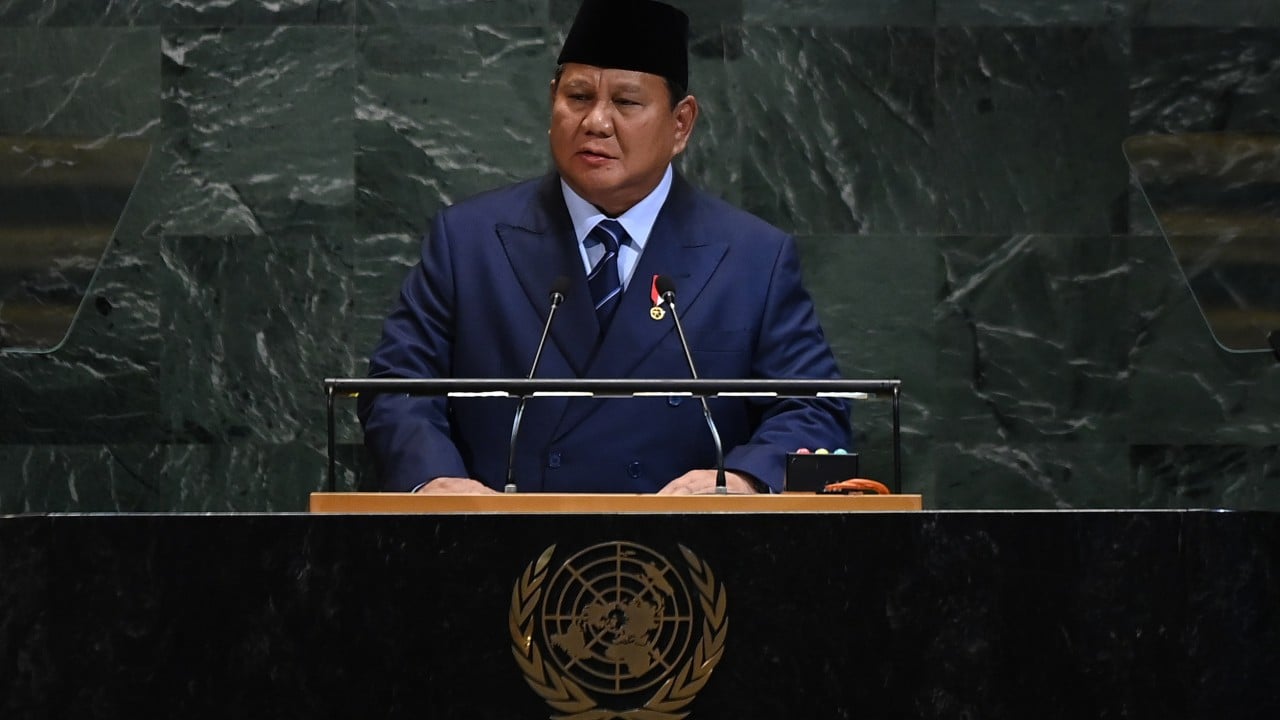
When Indonesia bids for a seat on the UN Security Council, it is not merely seeking a fancy title or a plush chair in Manhattan. It is running for the role of mediator-in-chief. It is raising its hand to say: Let us be the room where adversaries can still talk when all other doors are slammed shut.
The Human Cost of Neutrality
Back in the lobby, the rain slows to a heavy mist. Maya closes her leather binder. The meeting is adjourned. No dramatic declarations have been made. No sweeping treaties signed.
To an outside observer, nothing happened.
But that is the illusion
The Tightrope Walker in Jakarta
news
The coffee in the Jakarta hotel lobby was thick, dark, and sweet enough to coat the back of the throat. Outside, the tropical rain battered the asphalt, turning the chaotic evening traffic into a blurry river of red and white taillights. Inside, far away from the blare of horns, a veteran diplomat adjusted his glasses and stared at a blank notepad.
For decades, Indonesia has walked a very specific, lonely tightrope.
Imagine standing on a narrow wire stretched between two towering skyscrapers. On one side stands Washington, waving the banners of security partnerships, maritime trade routes, and democratic alliances. On the other side stands Beijing, offering towering cranes, deep-water ports, and mountains of capital that transform skylines overnight. Look down, and you see the turbulent waters of the South China Sea, where cargo ships carry the economic lifeblood of an entire hemisphere. Look up, and you see the United Nations Security Council—a permanent cage of global heavyweights where vetoes crush ambition and quiet compromises shape the destiny of nations.
Indonesia wants a seat inside that cage. Again.
To understand why this matters, you have to look past the dry press releases issued from the ministry buildings in Central Jakarta. You have to look at the philosophy of Bebas Aktif—free and active. It is a doctrine born in the fires of the mid-20th century, crafted by leaders who had just thrown off the heavy chains of Dutch colonial rule and refused to become pawns in the global chess match between the United States and the Soviet Union.
"We are not for sale," a retired Indonesian ambassador told me years ago, swirling the dregs of his tea. "We do not rent our sovereignty. But we will trade with anyone who treats us as an equal."
That philosophy is currently being tested in real-time.
When a country campaigns for a non-permanent seat on the UN Security Council, it is not merely asking for a fancy mahogany desk in New York City. It is stepping onto the world’s most exposed stage. Every vote cast on a resolution concerning Ukraine, Gaza, or maritime security is weighed on invisible scales by superpowers keeping score. Say yes to one side, and you risk alienating an indispensable economic partner. Say no, or abstain, and you are accused of moral cowardice.
The diplomatic corps in Jakarta knows this better than anyone. They operate under a relentless psychological pressure. They are the architects of a middle-power strategy that relies entirely on credibility. If Indonesia leans too far west, its crucial trade relationships in Asia fray. If it leans too far east, its democratic identity and regional neighbors grow nervous.
Consider what happens on the ground in the provinces. Far from the diplomatic salons of Manhattan, fishermen in the Natuna Islands cast their nets into waters where foreign coast guard vessels routinely push the boundaries of international law. For those fishermen, non-aligned diplomacy is not an abstract theory found in political science textbooks. It is the gray ship on the horizon. It is the fuel cost of avoiding disputed zones. It is the fragile peace that allows their children to go to school instead of learning the language of occupation.
This is why the current diplomatic push for international influence carries such heavy emotional and political stakes.
Jakarta has long positioned itself as the natural leader of ASEAN, the Association of Southeast Asian Nations. Yet leadership in a region as culturally, economically, and politically diverse as Southeast Asia requires a delicate alchemy. You cannot bully your neighbors; you must persuade them. You cannot lecture superpowers; you must negotiate with them.
When Indonesia sits at the UN table, it carries the quiet hopes of the Global South—countries that are tired of watching their futures decided in closed-door meetings in Western capitals or Eastern boardrooms. They want a voice that speaks of climate justice, equitable economic development, and multilateral cooperation that actually delivers results rather than empty resolutions.
Yet the road to New York is paved with contradictions.
Domestically, Indonesia faces massive developmental pressures. Millions of young citizens enter the workforce every year, hungry for high-tech jobs, green energy transitions, and urban infrastructure. Balancing these immense domestic needs with the expensive theater of global diplomacy requires a masterclass in prioritization. Why spend political capital on distant resolutions when flooding threatens coastal neighborhoods in Semarang and Jakarta is sinking a few centimeters every single year?
Because isolation is a luxury no regional power can afford.
If Indonesia retreats inward, others will fill the vacuum. The architecture of global governance is shifting, and the rules written fifty years ago are fraying at the edges. A non-aligned nation must constantly reinvent its relevance. It cannot simply repeat the slogans of the past. It has to prove that middle powers can offer pragmatic solutions to polarization.
The rain outside the Jakarta hotel eventually slowed to a steady, quiet mist. The diplomat closed his notepad, the ink dry on a page filled with strategic calculations, historical references, and quiet warnings.
The tightrope remains suspended in the air. The winds from both East and West continue to howl, threatening to knock the walker off balance. But down below, millions of people go about their lives, trusting that the person up on the wire has steady hands, sharp eyes, and the courage not to look down.


