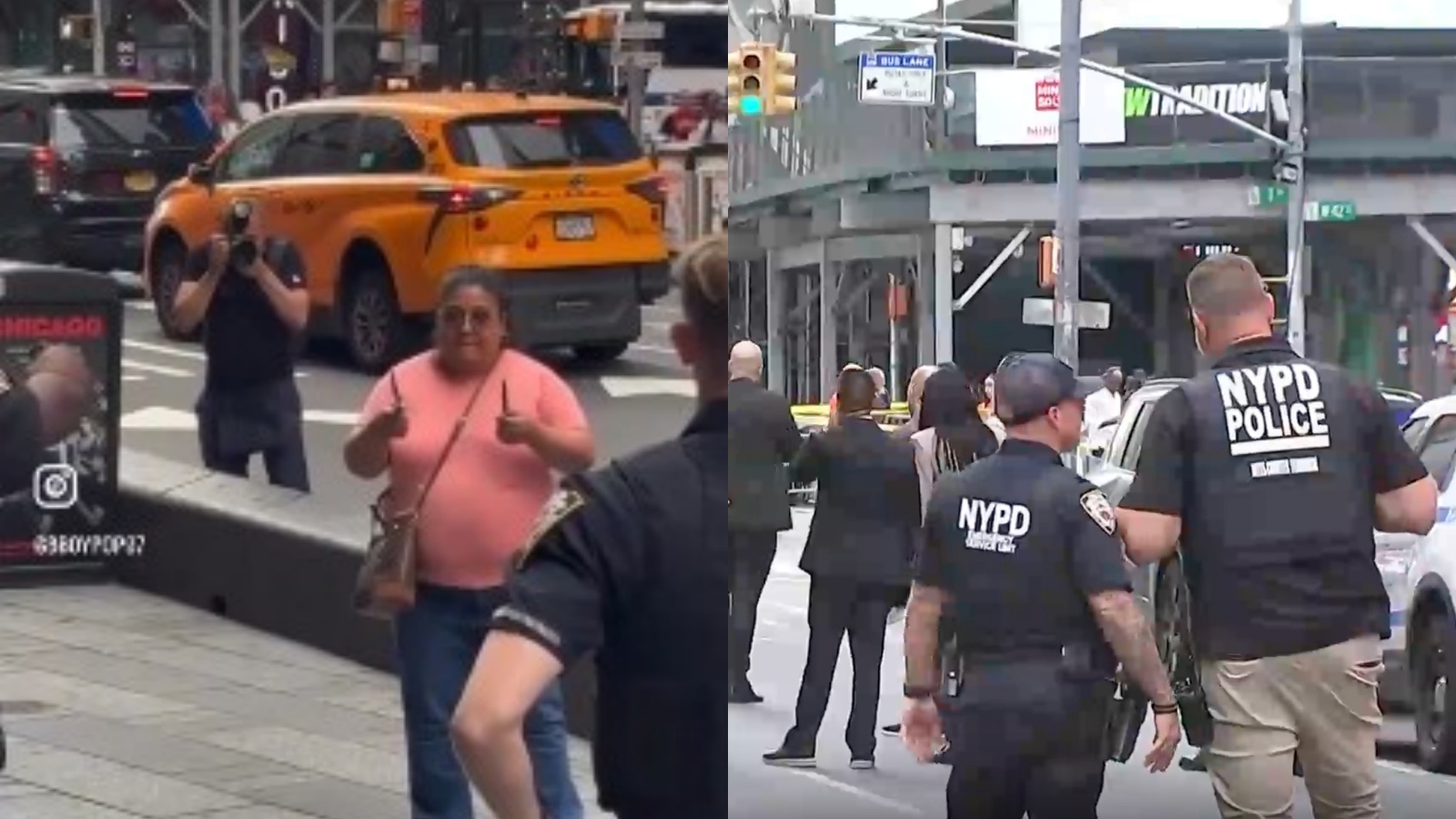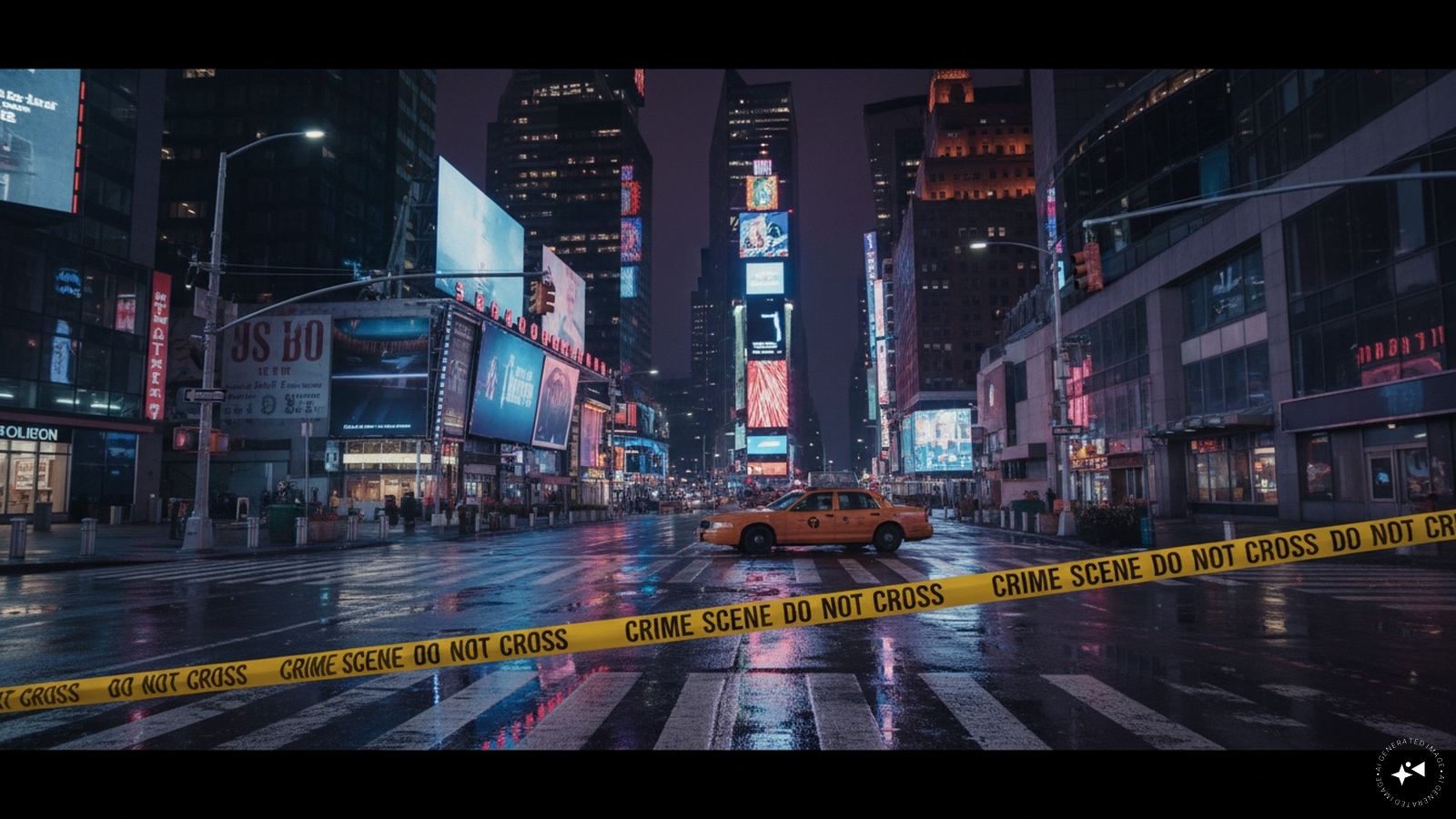
Another violent flash, another body on the asphalt, another chorus of politicians wringing their hands about mental health funding while standing behind microphones in front of millions of tourists. The standard script writes itself within minutes of the police tape going up. Pundits scream about the breakdown of urban order, advocates demand more social workers, and police brass point to response times. Everyone misses the target completely because the entire debate relies on a comforting lie.
We pretend random violence in high-density transit hubs is an unpredictable meteorological event. It is not. It is the predictable outcome of a system built entirely around deterrence optics rather than logistical containment. Building on this idea, you can find more in: Catastrophic Hydraulic Failure In The Himalayas The Structural Mechanics Of The Nepal China Border Floods.
The Fallacy of High-Visibility Security
Walk through Times Square on any given evening and you will see blue uniforms every twenty feet. Tourists snap pictures next to mounted officers. Private security guards stand outside flagship retail stores holding clipboards. The city floods the zone with badges because visible presence plays well on the local evening news. Observers at USA Today have shared their thoughts on this trend.
It does nothing to stop a knife attack.
Deterrence relies on rational actors calculating risk versus reward. A person suffering an acute psychotic break or operating under a severe chemical compulsion does not process the presence of an officer three hundred feet away as a variable in their decision matrix. They process noise, light, and motion. When the pressure cooker pops, badges are just wallpaper.
Security theater serves a single purpose: lowering the anxiety of municipal officials long enough to get through an election cycle. It treats the symptom by throwing warm bodies at a plaza while ignoring the architectural and crowd-flow realities that make these spaces death traps.
The Logistics of Chaos
Dense urban spaces require rigorous spatial management. When you pack four hundred thousand people daily into a pedestrianized bottleneck, personal space evaporates. Friction spikes. For a fragile mind on the edge of decompensation, that sensory overload acts as a literal accelerator.
Yet city planners treat public squares like open-air plazas in a European village, ignoring the unique psychological load of American urban density. We remove barriers, crowd the sidewalks with Elmo impersonators and ticket hawkers, and then act shocked when someone snaps under the weight of the stimuli.
The standard media narrative focuses on the weapon and the perpetrator's background. Did they have a prior arrest record? Did social services drop the ball? Did the housing authority miss an intake? These are downstream questions. They assume that if we just patch the paperwork holes in the social safety net, every erratic individual will calmly check into a wellness center.
That is fantasy. Some percentage of the population cannot or will not engage with voluntary social services, and leaving them to drift through the most crowded intersections on earth until they commit a felony is a choice. We call it compassion. It is actually profound negligence disguised as civil liberties purism.
The Cost of Misplaced Empathy
True systemic reform requires abandoning the luxury of pretending we can hug our way out of violent public psychoses. When an individual poses an imminent, observable danger to themselves or others in a public thoroughfare, the priority must shift instantly from civil autonomy to absolute containment.
We have built a legal and cultural framework that prioritizes the abstract right of a severely ill person to sleep on a subway platform or pace a tourist hub over the concrete right of commuters and families to walk home without dodging a blade. That balance is completely inverted.
Civil rights groups howl about criminalizing poverty whenever anyone suggests involuntary commitment for individuals exhibiting violent, unstable behavior in transit zones. They frame the argument around freedom. Freedom to do what? Freedom to terrorize a crosswalk? Freedom to force fifty strangers to dodge a knife-wielding assailant while a dozen tourists stream the chaos on TikTok?
The bleeding-heart refusal to enforce strict behavioral thresholds in high-density zones has created a two-tier system of safety. The wealthy retreat to private developments, gated office towers, and Uber rides that drop them at secure valets. The working class and the tourists absorb the cost of public space degradation on foot.
What Real Intervention Looks Like
If we actually wanted to fix urban violence instead of just arguing about it after the body count accumulates, we would overhaul our approach entirely.
- Targeted Architectural Bottlenecks: Break up massive, disorienting open plazas with physical dividers and directional crowd-flow channels that reduce sensory overload and prevent sudden surges.
- Aggressive Interdiction Protocols: Empower intervention teams to remove visibly unstable individuals from high-density transit zones before a violent escalation occurs, shifting the standard from "wait until they swing" to "prevent the crisis in the footprint."
- Mandatory Stabilization Facilities: Construct secure, long-term stabilization facilities that do not rely on voluntary check-ins. If you cannot function safely in public, your right to occupy public space is suspended until you can.
Until city leadership stops treating public safety as a PR exercise and starts treating it as an engineering and containment problem, the body bags will keep piling up under the neon lights.
The next time an incident shuts down Broadway, spare yourself the think pieces about the soul of the city. Look at the crowd. Look at the architecture. Look at the politicians stepping up to the microphone to promise that lessons have been learned.
Nothing has been learned. Nothing will change until we stop apologizing for keeping the streets safe.