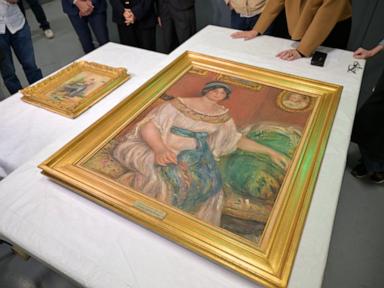
The recovery of high-value stolen art historically relied on human informants, physical surveillance, and ransom negotiations. When investigators successfully located stolen Renoir paintings and executed arrests in connection with their theft, the operation underscored a fundamental shift in criminal investigations. Law enforcement no longer depends solely on traditional tip lines. Instead, asset recovery now operates as a high-precision convergence of biological trace forensics and digital vehicle telemetry.
To understand how modern multi-jurisdictional recovery operations succeed, one must deconstruct the mechanics of art theft logistics. High-end art theft is rarely a crime of spontaneous opportunity; it is a supply chain problem. The perpetrators must solve three distinct operational friction points: physical acquisition, secure transit, and liquid inventory conversion. By injecting biological and digital tracking mechanisms into this chain, investigators exploit vulnerabilities that criminals inherently introduce during transit and handling.
The Forensic Footprint of Biological Trace Evidence
The application of forensic science to art recovery begins with the degradation of the crime scene. Unlike open-air homicides or dynamic burglaries, art thefts often leave behind minimal trace evidence due to the calculated movements of professional thieves. However, physical contact with delicate canvases, frames, or immediate storage containers leaves microscopic biological signatures.
DNA collection in art theft recovery is governed by transfer mechanics. Primary transfer occurs when a perpetrator directly handles an unsealed canvas or porous backing material. Secondary and tertiary transfers occur when handlers utilize gloves, tools, or transport packing. Forensic analysts isolate touch DNA—epithelial cells left behind by friction against surfaces—and amplify the samples using standard short tandem repeat profiling.
The structural utility of DNA in art recovery is twofold. First, it bypasses the anonymity of the illicit market. While an anonymous buyer or corrupt middleman can trade a painting without a paper trail, biological material deposited during the initial heist or subsequent transfers ties a specific physical body to the object. Second, biological databases allow authorities to link disparate jurisdictional crimes. If a suspect leaves DNA at an art storage cache, that profile can be cross-referenced against national and international offender indices, converting an isolated local property crime into a coordinated enterprise investigation.
The limitation of biological evidence lies in the temporal window of collection. Organic material degrades rapidly when exposed to fluctuating humidity, temperature extremes, and ultraviolet light—environmental factors frequently present in poorly managed clandestine storage sites. Therefore, biological evidence serves primarily as a retrospective anchor for prosecution rather than a real-time tracking vector.
The Digital Telemetry Vector
While biological forensics establishes identity and presence after the fact, digital tracking provides the operational intelligence required for interdiction. Modern vehicle-tracking architecture transforms passive transit into an active telemetry stream.
Criminal syndicates moving stolen cultural property rely on commercial or personal transport networks. In the contemporary logistics environment, vehicles are inherently instrumented data nodes. Every modern automobile contains multiple electronic control units, telematics modules, and connected infotainment systems that constantly broadcast location data, ignition cycles, and cellular handshakes. Furthermore, the proliferation of aftermarket GPS beacons, dashcams, and fleet management software creates secondary telemetry layers.
When investigators identify a vehicle of interest linked to a suspected fence or courier, they exploit this digital footprint through two primary methodologies. The first is historical geofencing analysis, where law enforcement subpoenas cellular tower dumps and automated license plate reader networks to reconstruct the exact spatial-temporal timeline of the vehicle between the theft site and the recovery location. The second is active telemetry interception, wherein court-authorized tracking devices or live cellular data feeds allow tactical units to monitor the transit of the asset in real time.
The strategic advantage of vehicle tracking is its scale. Art objects are spatially bound; they must be physically moved from point of theft to point of concealment, and eventually to point of sale. By focusing surveillance resources on the vehicle vector rather than hunting for the artwork directly, investigators leverage the kinetic movement of the suspects to betray the hiding place of the contraband.
The Intersecting Failure Points of Criminal Supply Chains
The simultaneous application of DNA profiling and vehicle telemetry exploits the core paradox of illicit asset trafficking: the trade-off between preservation and movement.
To monetize a stolen Renoir, the thieves must break concealment. A painting locked in a dark, climate-controlled vault is safe from law enforcement seizure, but it yields zero economic return. Conversely, moving the asset to show a prospective buyer, transferring it to a secondary stash house, or loading it into a vehicle introduces catastrophic risk surfaces.
[Theft Execution] --> [Transit & Concealment] --> [Monetization Attempt]
       |                         |                           |
       v                         v                           v
[Touch DNA Deposited]     [Vehicle Telemetry Logged]  [Surveillance Exposure]
When law enforcement integrates these two modalities, they close the feedback loop of the investigation. Touch DNA secures the indictment and validates the physical chain of custody once the asset is seized. Vehicle telemetry pinpoints the spatial coordinates of the asset while it is in motion, neutralizing the anonymity advantage long enjoyed by organized art theft rings.
The recovery operation ceases to be a search for a hidden needle in a global haystack. It becomes a controlled interception of a known vector, driven by the digital footprint of the vehicle and corroborated by the biological signature of the perpetrator.
Strategic Forecast for Asset Recovery Operations
As criminal networks adapt to pervasive digital surveillance by employing signal jammers, burner communications, and encrypted logistics channels, the reliance on multidisciplinary forensic integration will intensify. Future interdictions will depend heavily on automated anomaly detection within commercial transport corridors and rapid-deployment biological screening kits capable of processing touch DNA at the point of seizure. The convergence of physical trace science and digital telemetry sets a new baseline for high-value asset protection, ensuring that the friction of movement remains the ultimate undoing of illicit trafficking networks.