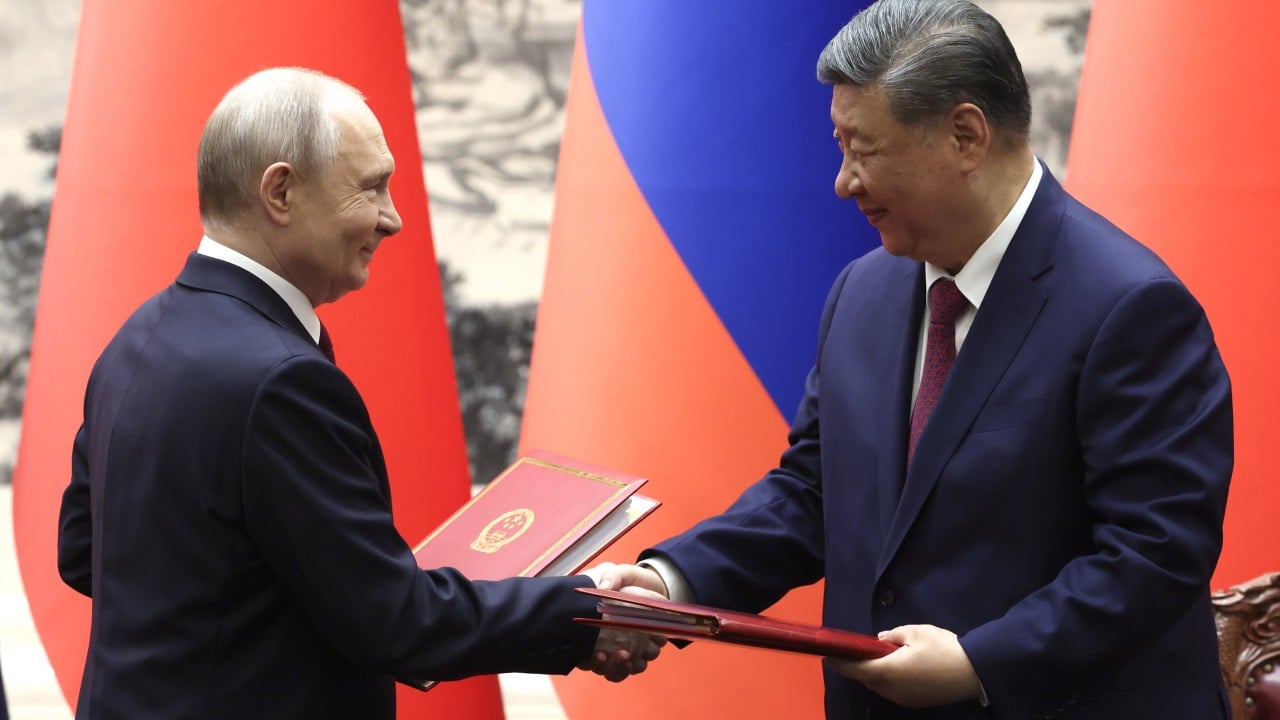
Beijing and Moscow have quietly re-engineered their relationship from a marriage of convenience into a highly functional, asymmetric partnership designed to systematically dismantle Western geopolitical dominance. While Western analysts frequently dismiss their alignment as a superficial alliance plagued by historical mistrust, the reality on the ground tells a much more dangerous story. China provides the economic lifelines and dual-use technologies that keep the Russian war machine running. In return, Russia offers discounted energy, advanced military technology, and a willing proxy to distract and divide American strategic focus. This is not a formal treaty, but a cold, calculated division of labor.
The Illusion of Equality
The partnership is fundamentally unequal. Moscow likes to project an image of two superpowers standing shoulder to shoulder against Washington, but the economic data reveals a starkly different dynamic. Russia has effectively become a junior partner, increasingly dependent on Chinese markets and financial systems to survive Western sanctions.
This asymmetry suits Beijing perfectly. By keeping Russia economically dependent but militarily viable, China secures its northern border and guarantees a steady supply of cheap natural resources. Russian oil and gas, blocked from European markets, now flow heavily to Chinese industries at steep discounts. This resource transfer mitigates China’s own energy vulnerabilities in the event of a future conflict in the Indo-Pacific.
Yet, Beijing carefully manages the optics. Chinese leadership routinely treats Russian officials with immense public deference. They understand that preserving Moscow's pride is a small price to pay for a massive, nuclear-armed buffer state that absorbs the brunt of Western diplomatic and military focus.
The Stealth Flow of Dual Use Technology
Western sanctions were intended to cripple Russia’s high-tech manufacturing and defense sectors. They failed to account for the porosity of the Chinese supply chain. While Beijing officially denies sending lethal weaponry to Russia, it has flooded the Russian market with components that serve a vital dual purpose.
- Semiconductors and Microchips: Mass shipments of commercial-grade chips routinely find their way into Russian military hardware, replacing restricted Western components.
- Machine Tools: CNC machine tools from Chinese manufacturers have filled the void left by European suppliers, allowing Russian munitions factories to maintain high production rates.
- Satellite Imagery and Drone Components: Commercial drones and optical equipment stream across the border, providing immediate tactical utility on the battlefield.
This arrangement gives Beijing plausible deniability. When confronted by Western diplomats, China maintains that it is merely engaging in normal, non-lethal commercial trade. For Russia, these imports are the difference between strategic collapse and a sustained war of attrition.
Financial Insulation and Sanctions Bypassing
The weaponization of the US dollar through the SWIFT banking system was supposed to isolate the Russian economy. Instead, it accelerated the creation of an alternative financial infrastructure.
The Chinese yuan has largely replaced the US dollar and the euro in Russian foreign trade. Russian banks now rely heavily on China’s Cross-Border Interbank Payment System (CIPS) to process international transactions. This financial integration remains incomplete, and major Chinese state banks occasionally pause transactions out of fear of secondary US sanctions. However, smaller, regional Chinese banks—those with no exposure to the US financial system—continue to facilitate the capital flows that keep bilateral trade humming.
This financial workaround is crude, inefficient, and expensive for Moscow. It forces Russia to accumulate vast reserves of yuan that can only be spent on Chinese goods, further locking the country into Beijing's economic orbit. Despite these drawbacks, the system functions well enough to prevent the economic collapse the West anticipated.
The Nuclear and Military Technology Transfer
For decades, Russia guarded its most advanced military secrets from China, fearing intellectual property theft and a long-term strategic threat on its border. That caution has evaporated under the pressure of the war in Ukraine.
Desperate to maintain China's economic backing, Moscow has started sharing sensitive military technologies that were previously off-limits. This includes cooperation on early-warning missile detection systems, submarine quietness technologies, and advanced naval propulsion.
+----------------------------+------------------------------------------+
| What Russia Gives          | What China Provides                      |
+----------------------------+------------------------------------------+
| Discounted Crude Oil & Gas | Industrial Machine Tools                 |
| Submarine Quietness Tech   | Microelectronics & Semiconductors        |
| Diplomatic Cover at UN     | Global Financial Clearing (Yuan/CIPS)   |
| Strategic Distraction      | Commercial Drone Fleet Components        |
+----------------------------+------------------------------------------+
This exchange directly accelerates China’s own military modernization. The People’s Liberation Army Navy benefits enormously from Russian undersea warfare expertise, narrowing the technological gap with the United States Navy in the Western Pacific far faster than Washington anticipated.
The Global South Charm Offensive
The most overlooked aspect of this alignment is its diplomatic resonance outside the West. Together, Beijing and Moscow offer a powerful, alternative narrative to developing nations across Africa, Latin America, and the Middle East.
Their pitch is simple. They offer infrastructure investment, security assistance, and trade partnerships without the lecturing on human rights, governance, or democratic reforms that typically accompanies Western aid. To many authoritarian regimes and developing democracies alike, this transactional approach is highly appealing.
The expansion of groups like BRICS and the Shanghai Cooperation Organisation (SCO) provides tangible evidence of this strategy's success. These forums are explicitly designed to build a multipolar world order where Western norms no longer dictate global commerce or international law. By positioning themselves as the champions of the Global South, China and Russia are successfully diluting Western diplomatic leverage on the world stage.
Fragility Behind the Facade
This axis is formidable, but it contains structural fault lines that Western policymakers frequently mismanage. The partnership is driven entirely by shared opposition to the West, rather than a shared vision for the future.
Central Asia remains a quiet flashpoint. Russia traditionally viewed the former Soviet republics in the region as its exclusive sphere of influence. China’s Belt and Road Initiative has systematically eroded that influence, replacing Russian security patronage with Chinese economic dominance. For now, Moscow swallows this bitter pill because it has no alternative, but the underlying resentment remains a permanent fixture of the relationship.
Furthermore, China’s primary strategic objective is to surpass the United States economically and technologically without triggering a catastrophic global war that destroys its export-driven economy. Russia, conversely, has transformed into a revisionist power that benefits from chaos and instability. If Moscow's actions threaten to trigger secondary sanctions that genuinely jeopardize China's access to Western consumer markets, Beijing's willingness to shield Russia will face a brutal reality check.
The Strategic Calculus for Western Power
The West can no longer treat China and Russia as separate geopolitical challenges. Attempting to drive a wedge between them using traditional diplomatic overtures is a dead end; the current leadership in both capitals is far too invested in their shared anti-Western project.
Instead, the response must target the mechanics of their cooperation. This means shifting focus from broad, sweeping sanctions to hyper-targeted enforcement against the specific Chinese logistics firms, regional banks, and trading companies facilitating the dual-use supply chain. It requires accepting that the era of uncontested Western dominance has ended, replaced by a prolonged, systemic competition where economic resilience and industrial capacity matter just as much as military deterrence.