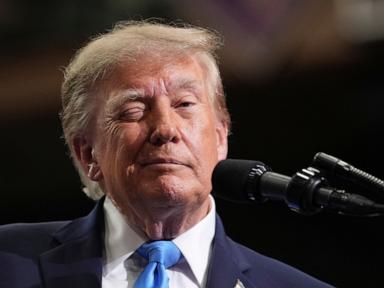
President Donald Trump has turned the federal treasury into an explicit campaign leverage tool during the 2026 midterm cycle, publicly signaling to voters in battleground states that disaster recovery funds, veterans' health settlements, and agricultural waivers depend on electing Republicans. According to reporting by The Associated Press, this strategy abandons the long-standing executive norm that federal assistance is distributed based on statutory formula and public need rather than partisan alignment. While the White House frames this posture as standard political responsiveness, the rhetoric exposes a deeper structural shift in how executive discretion is wielded over congressional appropriations and agency rulemaking.
The Mechanics of Conditional Governance
The strategy is not an abstract threat. It relies on specific administrative bottlenecks where the White House holds unilateral or discretionary authority to accelerate, delay, or halt federal action.
In North Carolina, the administration tied two distinct streams of federal money directly to the outcome of the U.S. Senate race between Republican Michael Whatley and Democrat Roy Cooper. During an October 2026 rally in Greenville, Trump addressed compensation claims under the 2022 law signed by former President Joe Biden for Marines and families poisoned by contaminated water at Camp Lejeune. After noting that $1 billion in settlements had been distributed, Trump stated he would direct the Department of Justice to settle remaining legitimate claims quickly—adding, "So, if we don't win, there's no money. If we do win, you're getting it".
A month earlier, at a September rally in Gastonia, Trump applied the same logic to Hurricane Helene recovery funding. Telling the crowd that North Carolina was still waiting on federal disaster money, he remarked, "Now, if Michael loses, I'm not sending it," before immediately claiming he was joking.
In Kansas, the leverage shifted from direct payouts to regulatory waivers. Speaking in Park City on behalf of Republican Senator Roger Marshall against Democratic challenger Adam Hamilton, Trump pledged to make year-round sales of E15 ethanol-blended fuel permanent. He drew a hard partisan line: "But if Adam Hamilton is in, I'm not doing it. That's it. I'm only doing it for him". While permanent E15 authorization requires congressional legislation, the Environmental Protection Agency possesses the executive discretion to issue temporary emergency waivers that keep the fuel on the market—giving the White House an immediate regulatory switch to flip.
In Ohio and Georgia, the message broadened into a general doctrine of personal access. Trump told voters that Georgia GOP Senate candidate Mike Collins could call him anytime for state assistance, whereas reelecting Democratic Senator Jon Ossoff would yield a different outcome. Similarly, discussing Ohio Democratic gubernatorial candidate Amy Acton, Trump admitted, "She's never gonna call me. I'm never probably gonna work the same way. You just can't. It's just human nature. But I'm not gonna help her probably". He acknowledged the break with protocol openly, noting that people might call it inappropriate, before defending the instinct to favor "people that you like" over "people that you can't stand".
Why This Works and Where the Law Bends
To understand how a president can credibly threaten to withhold money Congress already authorized, you have to look at the plumbing of the modern administrative state. Congress appropriates funds, but the executive branch controls the velocity of the pipeline.
The Impoundment and Rulemaking Gray Zone
Under the Impoundment Control Act of 1974, a president cannot unilaterally refuse to spend money appropriated by Congress without formal legislative approval. However, the law leaves wide operational latitude in how fast agencies process claims, review environmental impact statements, or finalize grant agreements.
- Department of Justice Litigation: In mass-tort frameworks like the Camp Lejeune Justice Act, the statute creates a legal right to sue, but the Justice Department controls settlement offers, evidentiary thresholds, and litigation timelines. Slow-walking settlements does not technically violate an appropriation; it simply forces claimants into years of federal court backlogs.
- FEMA and Disaster Grants: Congress approves supplemental disaster relief, yet the Federal Emergency Management Agency and the Department of Housing and Urban Development write the federal register notices and approve state action plans before a single dollar reaches local contractors.
- EPA Regulatory Waivers: On fuel standards, the Clean Air Act gives the EPA administrator authority to waive volatility limits during supply disruptions. Extending or withholding those waivers is a stroke-of-the-pen decision that bypasses Capitol Hill entirely.
When Trump tells voters that personal rapport dictates federal responsiveness, he is describing a real administrative reality. Governors and senators from the president's party routinely enjoy faster cabinet-level phone calls and smoother agency coordination. What separates the 2026 campaign trail from historical precedent is the explicit, public transformation of an informal political advantage into a conditional threat.
The Counter-Argument and the Political Backlash
Supporters of the president's approach argue that voters deserve candor about how Washington actually operates. White House spokesman Davis Ingle defended the administration's record on taxes, prescription drugs, and immigration, contending that Democrats "have made it clear that they have no agenda to improve the lives of the American people". From this viewpoint, warning voters that electing opposition lawmakers creates gridlock is simply a blunt assessment of divided government. If a Democratic governor or senator refuses to collaborate with the White House, federal-state initiatives naturally stall.
Yet on the ground in swing states, the transactional pitch has created acute vulnerabilities for the very Republicans it is meant to boost.
Political patronage works best when it distributes rewards quietly; when framed as an ultimatum to grieving families or sick veterans, it triggers moral outrage. In North Carolina, former Governor Roy Cooper labeled the Camp Lejeune remarks "insulting and frustrating," using them to press Republican Michael Whatley on whether he would stand up to the White House for his own constituents. Whatley avoided denouncing the president, stating instead that caring for affected veterans remains a priority.
The sharpest blowback came from outside the political class. Jill Steen Dilgard, a veterans' advocate whose father and relatives developed cancer after serving at Camp Lejeune, told The Associated Press that conditioning military health settlements on election results made her "physically sick". "You're playing politics and trying to bribe for a vote," she said, pointing out that hundreds of thousands of veterans and family members are suffering or dying while waiting for compensation.
In Kansas, Democratic challenger Adam Hamilton's campaign flipped Trump's E15 promise back onto the incumbent, noting that Senator Roger Marshall had spent a decade in Congress without passing permanent E15 legislation. Meanwhile, Ohio Democratic candidate Amy Acton's team countered Trump's personal dismissal by emphasizing her commitment to working with any administration to deliver for Ohio workers.
The Historical Break and Institutional Cost
American political history is filled with pork-barrel politics, earmarks, and presidents steering infrastructure projects toward friendly districts. Lyndon B. Johnson famously used federal dams and defense contracts to secure legislative votes, and modern administrations routinely time major grant announcements to bolster vulnerable allies ahead of November.
There has always been an unwritten boundary, however, separating discretionary pork from core sovereign obligations—specifically disaster relief, veterans' benefits, and emergency public health funds. When hurricanes hit Gulf Coast states or wildfires burn in the West, presidents of both parties have historically stood alongside opposition governors to project national unity and guarantee that federal aid transcends party registration.
By putting disaster recovery and toxic-exposure settlements on the bargaining table at campaign rallies, the administration is testing whether voters view the federal government as an impartial constitutional insurer or a partisan rewards club. Once that norm erodes, it rarely snaps back. Every future administration inherits the precedent that federal tax dollars collected from all fifty states can be openly rationed based on how those states vote.
For voters evaluating candidates under this pressure, the practical takeaway is straightforward: look past the rally rhetoric to the statutory mechanism behind the promise. Federal settlements established by law and disaster funds appropriated by Congress belong to the public, not the podium—and any official who treats basic constitutional governance as a campaign favor is telling you exactly how they intend to govern once the ballots are counted.