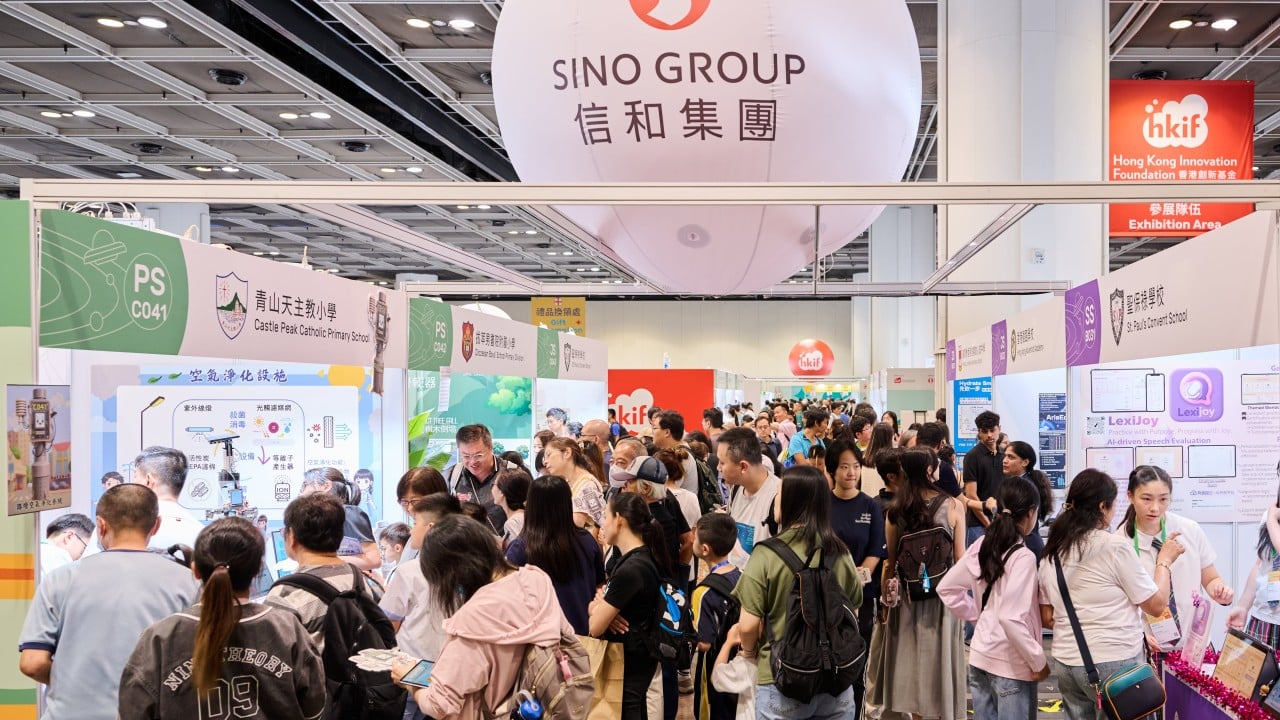
Global competition for tech supremacy has triggered an unprecedented rush to monetize student science fairs. Events like the Hong Kong Science and Innovation Fair are no longer just weekend showcases for papier-mâché volcanoes and clever coding tricks. They have transformed into highly calculated pipelines where state-backed venture funds and corporate talent scouts hunt for intellectual property. Governments worldwide are pouring billions into these youth competitions, betting that a teenager’s prototype can solve systemic economic vulnerabilities.
Yet this massive injection of capital exposes a stark reality. The path from a high school gymnasium to actual industrial impact is broken. While politicians celebrate photo opportunities with student inventors, the systemic infrastructure required to turn a raw prototype into a scalable market solution is largely absent. The real story is not the sudden brilliance of teenage minds, but the institutional desperation to secure a competitive edge in a hyper-fractured global market.
The Myth of the Solitary Young Inventor
The romanticized narrative of the lone student genius inventing a breakthrough in their bedroom obscures how modern innovation works. Behind almost every award-winning project at a major regional exhibition lies a vast, expensive apparatus of elite schooling, university laboratory access, and professional mentorship.
Consider how top-tier student projects are built today. A student identifying a novel method for filtering microplastics from ocean water rarely does so using household tools. They are frequently granted off-hours access to university centrifuges and mass spectrometers under the supervision of postgraduate researchers. When a project wins a grand prize, the public sees a triumphant teenager. Industry insiders see the footprint of a well-funded university lab operating by proxy.
This creates an immediate equity gap. Schools with deep institutional connections and substantial budgets can systematically engineer winning projects. They employ specialized staff whose sole responsibility is to navigate the complex rubric of international science competitions. Meanwhile, underfunded public institutions are left out of the pipeline, regardless of the inherent talent of their student bodies. The competition ceases to be a pure meritocracy of ideas. Instead, it reflects the uneven distribution of educational capital.
Why Venture Capital is Stalking School Gymniums
To understand why multi-billion-dollar investment funds are sending scouts to youth science fairs, one must examine the broader venture capital crisis. The traditional tech startup model is experiencing severe fatigue. SaaS (Software as a Service) platforms have saturated the market, and investors are increasingly wary of backing another app that promises to optimize internal corporate communications.
Investors are hunting for hard tech. They want physical innovations in materials science, biotechnology, and clean energy. Because corporate research and development budgets have been trimmed by decades of pressure for short-term quarterly earnings, early-stage talent pipelines have shifted outward. Youth science fairs serve as an incredibly cheap, decentralized research and development department.
- Free Intellectual Property Scouting: Corporations can view hundreds of raw concepts in a single day without spending a dime on preliminary research.
- Low-Stakes Talent Acquisition: Securing a relationship with a promising 17-year-old innovator via a small scholarship is infinitely more cost-effective than competing for top-tier graduates in their mid-20s.
- Geopolitical Posturing: National governments use high-profile youth exhibitions to signal to global markets that their future workforce is highly skilled, driving foreign direct investment.
The Manufacturing Bottleneck
The journey from a functional prototype at a science fair exhibition booth to a mass-produced product is where most student innovations go to die. This transition requires navigating what industrial engineers call the "Scale Gap."
Suppose a student team develops an exceptionally efficient, low-cost solar cell prototype using a novel chemical compound. The prototype works beautifully under laboratory conditions, producing a measurable increase in energy conversion efficiency. The judges are impressed, the local media runs a profile, and a corporate sponsor hands over a trophy.
Then comes the brick wall.
[ Science Fair Prototype ]
           │
           ▼
[ Industrial Scale-Up ] ◄─── THE BOTTLENECK: Tooling costs, supply chain
           │                 scarcity, regulatory compliance
           ▼
[ Mass Market Launch ]
To move that solar cell into commercial production, the technology must be optimized for manufacturing. This requires custom tooling, specialized assembly lines, and rigorous environmental safety compliance testing. A single injection mold for a custom plastic housing can cost upwards of $50,000. Sourcing rare earth minerals at scale requires established supply chain networks that no high schooler possesses.
Furthermore, student inventors rarely understand regulatory frameworks. A medical diagnostic tool built by a teenager might show remarkable accuracy in a controlled test, but navigating the multi-year approval process required by global health authorities requires millions of dollars and a army of specialized lawyers. Without institutional backing designed specifically for long-term incubation, the invention remains a permanent museum piece.
The Exploitation of Student Intellectual Property
A growing, quiet tension exists around who actually owns the ideas generated at these youth exhibitions. When an adult researcher at a university invents a new technology, a clear framework of tech transfer offices, patent sharing agreements, and equity distribution governs the process. When a minor does the same, the legal ground becomes incredibly murky.
Many science fairs require participants to sign extensive liability waivers and terms of participation. Hidden deep within the fine print of these agreements are clauses that grant event organizers or corporate sponsors the right of first refusal for any commercial exploitation of the displayed projects. In other instances, student inventors lack the financial resources to file for international patent protection before showcasing their work.
Once an unpatented idea is placed on a public stage and covered by journalists, it enters the public domain in many jurisdictions. A well-capitalized competitor can analyze the student’s publicly displayed research, modify it slightly to avoid direct copying charges, and rush a product to market before the student has even graduated. The student is left with a framed certificate, while the commercial entity reaps the long-term financial reward.
Reengineering the Youth Innovation Pipeline
If global economies want to turn youth science fairs into genuine engines of economic impact rather than public relations exercises, the entire model must be restructured.
First, the evaluation metrics must change. Competitions should place less emphasis on polished, media-friendly presentations and far more on the scalability and supply-chain feasibility of the concept. Judges should include industrial manufacturing experts alongside academics.
Second, winning an exhibition must automatically unlock a pre-negotiated incubation ecosystem. Instead of a one-time cash prize or a trophy, top-tier winners need immediate access to legal clinics specializing in intellectual property protection, pro bono manufacturing consultants, and long-term research grants that survive the transition from high school to university.
Third, governments must subsidize patent filing fees for student innovators from lower-income backgrounds. If an innovation pipeline only protects and scales the ideas of the wealthy, it is failing its primary economic objective.
The global race for technological dominance will continue to compress the timeline between education and commercialization. Turning school science fairs into corporate hunting grounds is a viable strategy only if the young minds being tapped are protected, compensated, and equipped to survive the brutal realities of modern industrial production. Until those structural reforms are implemented, these highly publicized exhibitions will remain what they have always been: expensive talent shows masquerading as industrial revolutions.
The next breakthrough won't fail because the student lacked imagination. It will fail because the adults lacked the infrastructure to build it.