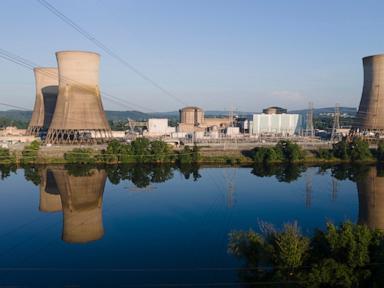
Tripling nuclear power by 2060 sounds inspiring. It also ignores how capital actually moves.
A headline about a United Nations agency projecting a threefold jump in nuclear generation by 2060 reads like a victory lap for clean baseload power. Press releases love big round numbers thirty-four years out. Nobody checks the spreadsheet until the concrete cracks or the interest rate resets.
The lazy consensus in that kind of coverage treats a projection as a plan. It assumes that if climate models want hundreds of gigawatts of dispatchable zero-carbon power, supply chains, licensing boards, and bond markets will politely oblige. They will not. Physics does not sign off on wishful thinking, and sovereign debt ceilings do not care about carbon budgets.
Tripling nuclear power by 2060 is not impossible because atoms refuse to split. It is improbable on current trajectories because nuclear projects fail on schedule, cost of capital, and institutional memory. Worse, chasing a triple by 2060 distracts energy planners from the real bottleneck: firming a grid dominated by cheap solar and wind without lighting tens of billions of dollars on fire.
The Lazy Consensus Behind 2060 Projections
Forecasts from international bodies usually rest on scenario modeling. A model asks: what mix of technologies gets us to net zero at minimum modeled system cost? When wind and solar hit curtailment limits or winter dark-dull stretches, the optimizer reaches for firm capacity. Nuclear sits right there in the variable list.
Turning a scenario output into steel, heavy forgings, and grid connections requires something a linear program never models: human friction.
Consider the numbers alone. Global nuclear capacity sits around 400 gigawatts electrical. Tripling it by 2060 means adding roughly 800 gigawatts net over three and a half decades, even after accounting for older reactors aging out. To hit that pace after 2030, the world would need dozens of gigawatts connected every single year. Look at recent Western construction history—Vogtle in Georgia or Flamanville in France—and you see multi-year delays and budgets multiplying past initial estimates.
China has built reactors far faster and cheaper than Western peers through standardized designs, serial construction, and state-backed financing. Even so, scaling from regional leadership to a global tripling means exporting supply chains, training thousands of nuclear welders and operators, and navigating wildly different regulatory regimes. A UN agency chart does not pour concrete.
Capital Cost Beats Carbon Math Every Time
Engineers talk about kilowatt-hours. Financiers talk about weighted average cost of capital.
A nuclear plant has high upfront capital expenditure and relatively low fuel and operating costs once running. That cost structure makes the project acutely sensitive to interest rates and construction duration. Every year a reactor sits half-built adds compounding interest before a single megawatt-hour hits the wholesale market.
I have watched industrial groups and energy funds blow millions chasing nuclear dreams on paper because they treated overnight capital cost as the whole story. Overnight cost ignores financing during construction, grid interconnection queues, and the risk that cheap midday solar depresses wholesale power prices when a baseload plant needs steady revenue.
When a merchant or even semi-merchant grid has abundant solar during sunny afternoons, a reactor running flat-out at 90% capacity factor does not automatically print money. Unless market design rewards firm capacity or long-term power purchase agreements lock in high strike prices, private capital hesitates. State balance sheets can step in, of course, but taxpayers eventually notice when a single project consumes the fiscal headroom of five hospitals and two rail lines.
Capacity Factor Is Not Dispatchability
Here is a nuance mainstream coverage routinely muddles. People hear capacity factor—the ratio of actual output over a period to maximum possible output—and assume nuclear is a magic switch for grid stability.
Nuclear plants excel at steady, continuous output. High capacity factors around 90% in well-run fleets prove how reliably they run when fueled and maintained. Yet steady output is not the same thing as fast ramping. Traditional large light-water reactors were designed primarily as baseload machines, though modern European and some newer designs have improved load-following capabilities.
Think about what a grid actually needs as variable renewables grow. You need power when solar drops at dusk, when wind dies across a region for a week, and during seasonal demand spikes. Keeping a massive thermal plant idling or cycling constantly changes its economics and mechanical stress.
Imagine a scenario where a regional grid builds massive solar capacity, hits frequent midday price dips, and brings a new gigawatt-scale reactor online. If the reactor cannot earn strong revenue during low-price hours and faces pushback when pushing power into congested lines, the financial model breaks even when the physics works. Baseload reliability is a huge asset, but treating it as a cure-all for every grid flaw is lazy analysis.
Redefining the Real Question for Energy Planners
Readers typing "will nuclear power triple by 2060" or "are small modular reactors ready to replace coal" are usually asking the wrong question. The real question is not whether nuclear can hit a neat multiple thirty-four years from now. The real question is: where is firm, zero-carbon power actually cheapest and fastest to deploy right now?
Let us test the common "People Also Ask" premises directly:
- "Can small modular reactors (SMRs) rescue nuclear timelines?" Not soon enough to carry a massive global expansion in the near term. Smaller units aim for factory fabrication and modular assembly, which could lower site risk over time. Right now, most designs are still proving commercial economics, licensing pathways, and supply chains. Counting on unproven commercial scale to fix near-term construction delays is a gamble, not a strategy.
- "Is nuclear waste an unsolved technical crisis?" No—the technical crisis is mostly political and institutional, not physical. High-level spent fuel volume is small compared to industrial waste streams, and dry cask storage has proven safe for decades. Deep geological repositories like Finland's Onkalo show a viable path exists, even when politics stall siting elsewhere.
- "Should countries abandon renewables and go all-in on nuclear?" That would be economic self-sabotage. Solar and wind already deliver low-cost electricity at massive scale in many regions. Pitting nuclear against renewables as an either-or religion wastes time. The practical question is how much firming capacity a grid needs alongside renewables, storage, and transmission—and whether nuclear beats alternatives on delivered cost per megawatt-hour.
The Heavy Hitters and the Uncomfortable Trade-Offs
Anyone serious about energy systems has to wrestle with voices like Jesse Jenkins on power system modeling and grid firming costs, or Vaclav Smil on energy transitions and physical scale. Their work points to the same sobering reality: big energy transitions take decades because physical infrastructure moves at industrial speed, not software speed.
International agencies like the International Energy Agency and the International Atomic Energy Agency produce valuable technical scenarios, yet their projections are bounded by assumptions about policy follow-through and cost curves. When policy shifts every election cycle, long-horizon capital projects pay the price.
Now for honesty about my own contrarian stance. Betting against rapid nuclear scaling can look cynical if a breakthrough in standardized construction, streamlined licensing, or state-backed industrial policy suddenly clicks into place across multiple countries. Countries with strong state capacity and clear nuclear mandates can defy Western cost overruns. If interest rates fall and modular manufacturing hits learning curves faster than expected, tripling by 2060 could look less like a fantasy and more like a conservative guess.
Even with that caveat, the burden of proof rests on execution, not press releases.
What Actually Works Instead of Hype
If you run an energy-intensive business, advise policymakers, or allocate capital in power infrastructure, stop treating 2060 targets as a business plan. Do this instead:
- Underwrite schedule risk like a hawk. Never accept an initial budget or timeline on a first-of-a-kind or long-dormant nuclear build without stress-testing multi-year delays and higher financing costs.
- Fix market design before pouring concrete. Firm power needs clear revenue mechanisms—long-term contracts, regulated asset models, or capacity payments—so operators do not bleed cash during renewable surpluses.
- Invest in the grid around the plant. A reactor without high-voltage transmission and regional balancing is a stranded asset waiting to happen. Pair firm generation planning with transmission buildouts and flexible demand.
- Keep proven options in the mix. Use nuclear where industrial heat, dense land constraints, or high-firmness grid needs justify its total delivered cost, while capturing cheap solar, wind, and storage where they win on speed and cost.
A UN projection can make tripling nuclear by 2060 look tidy on a slide. Concrete, steel, and interest rates do not care about slides.