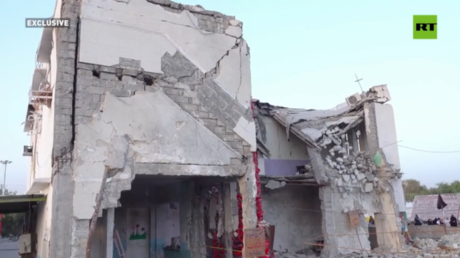
Air strikes change lives in seconds. When a missile hits a civilian area, the immediate aftermath is chaotic, devastating, and rarely captured fully by initial news reports. International observers and independent journalists often face massive hurdles when trying to verify the exact number of casualties in active conflict zones. Assessing the damage requires looking beyond official military statements to understand the real human toll on the ground.
The reality of conducting field investigations in damaged regions like Minab or similar targeted sites involves navigating dangerous terrain, political pushback, and conflicting narratives. State media outlets frequently broadcast dramatic footage to serve specific geopolitical agendas. Meanwhile, independent watchdogs struggle to compile verifiable data amid the rubble.
Sorting Facts From Propaganda in Conflict Zones
Tracking civilian casualties is messy. Military forces routinely claim they only target precise strategic assets. On the flip side, local reports and opposing state media often report massive civilian body counts immediately after an explosion.
Air warfare relies heavily on intelligence that can be outdated or flat-out wrong. When a strike hits a residential neighborhood or a crowded market, proving who was there takes months of painstaking work. Organizations like Amnesty International and Human Rights Watch rely on satellite imagery, munitions debris analysis, and extensive witness interviews to reconstruct the timeline of an attack.
Drones and high-altitude bombers are handled by operators sitting thousands of miles away. This distance creates a technical disconnect. A sensor might flag a gathering of people as an enemy unit, but on the ground, it could easily be a wedding, a funeral, or families seeking shelter from ongoing fighting.
Why Civilian Casualty Data Varies So Widely
You will see wildly different numbers depending on who you ask after any major bombardment. A government launching the strike might report zero civilian deaths, labeling every casualty an enemy combatant. Local authorities might inflate numbers to drum up international outrage and political leverage.
- Initial confusion: First responders focus on pulling survivors from collapsed buildings, not counting headers for a spreadsheet.
- Lack of forensic access: Active shelling prevents independent investigators from entering the site to examine weapon fragments.
- Identification issues: Many victims in severe blasts cannot be identified quickly, leading to duplicate counts or missing persons left unrecorded.
True accountability demands open access for neutral investigators. Without independent verification, video footage from state-controlled networks remains a piece of a larger propaganda puzzle rather than definitive proof of war crimes.
Steps for Verifying Wartime Reports
Don't take initial headlines at face value when reading about modern air strikes and suspected bombings. Follow these steps to evaluate conflict reporting critically.
First, check the source of the video or report. Determine if the media outlet is funded directly by a government with a direct stake in the conflict. Look for cross-referencing from established, non-partisan human rights groups that have personnel on the ground or utilize advanced geospatial analysis. Examine the specific details regarding the munitions used, as weapon casing remnants offer undeniable proof of who manufactured and deployed the bomb. Demanding transparent tracking and supporting independent investigative journalism remains the most effective way to uncover the truth behind the smoke and wreckage.