
Two massive earthquakes striking north-central Venezuela less than forty seconds apart have killed at least 1,430 people and left around 50,000 unaccounted for under collapsed infrastructure. The disaster, which occurred on June 24, 2026, registered magnitudes of 7.2 and 7.5, completely flattening coastal residential zones in La Guaira and causing widespread failures in Caracas. While official state reports frame the devastation as an unavoidable act of nature, an investigation into the collapse reveals a much deeper crisis of compromised building standards, deferred structural maintenance, and a severely under-resourced emergency response infrastructure.
Anatomy of a Doublet Shock
Seismologists describe the disaster as a rare doublet earthquake sequence. The first 7.2 shock destabilized foundations across the north-central coast, and before structures could settle, the second 7.5 shock tore through the region. This combination proved lethal for coastal towns like Macuto and Caraballeda, where multi-story housing complexes crumbled instantly into concrete dust.
Initial satellite data analyzed by international relief agencies places the economic physical damage at roughly 6.7 billion dollars, which translates to nearly six percent of Venezuela’s gross domestic product. However, the economic metric fails to capture the structural negligence that amplified the casualty numbers. For over two decades, safety codes regarding concrete reinforcement were ignored in municipal developments. The eight-tower Hugo Chávez housing complex in La Guaira, which housed thousands of working-class families, suffered immediate and catastrophic pancake failure because the buildings lacked proper internal steel skeletons.
The Broken Emergency Machine
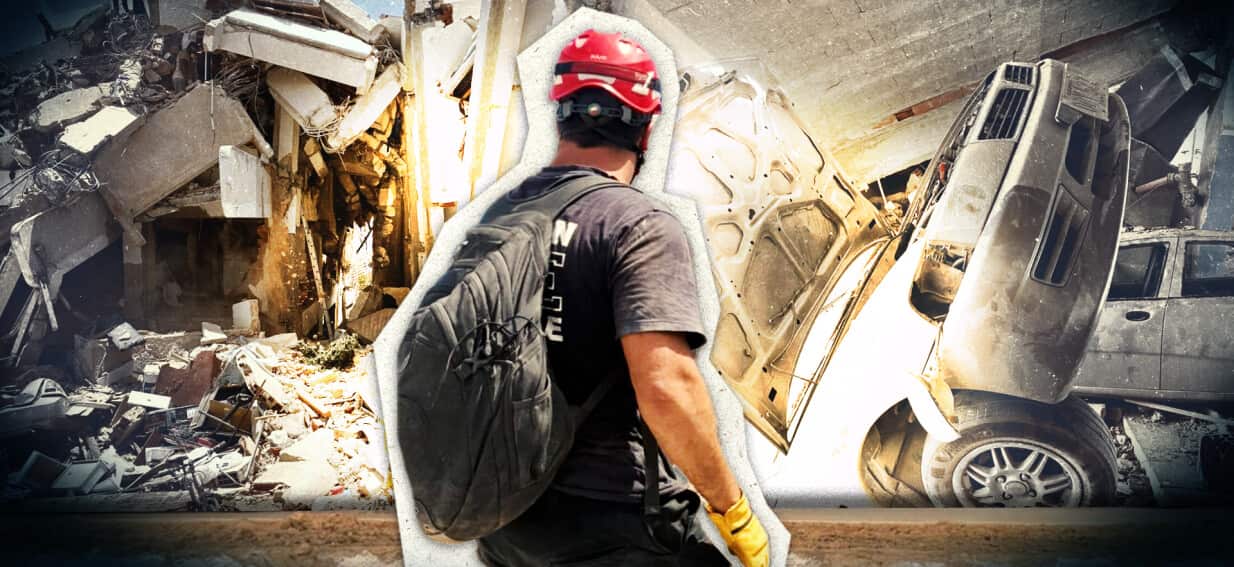
In the critical seventy-two-hour window following the initial shocks, the state response faltered significantly. Survivors and volunteer neighbors were left to clear massive concrete slabs with their bare hands, shovels, and car jacks. Heavy machinery like cranes and pneumatic drills remained stranded in distant depots due to severe fuel shortages and unmaintained regional roads.
Foreign rescue teams arriving from seventeen international flights brought specialized equipment and dog squads, but coordinating their deployment has become a logistical nightmare. Centralized control from Caracas failed to provide local maps or fuel to these inbound teams, leaving international personnel waiting at damaged transport hubs while cries for help faded beneath the rubble.
Public health networks collapsed under the sudden influx of severe trauma patients. Out of ninety-one emergency hospitals located within the high-shaking intensity zones, more than twenty suffered significant structural damage themselves. Operating rooms are running on intermittent generator power, lacking basic surgical supplies, sterile bandages, and orthopedic pins.
Hidden Risks in the Urban Centers
The danger extends far beyond the immediate coastal impact zone. In Caracas, hundreds of high-rise structures are showing deep diagonal cracks through load-bearing walls. Engineers warn that minor aftershocks could trigger a secondary wave of collapses in densely populated barrios.
Political friction has further complicated the accurate assessment of the missing. While state representatives initially downplayed the numbers to avoid admitting the failure of public infrastructure, local communities and independent digital portals tracked names village by village. This grass-roots accounting exposed the staggering scale of the disaster, revealing that tens of thousands of families remain buried under what was marketed as modern social housing.
International agencies are pivoting toward providing long-term emergency shelter and clean water to prevent outbreaks of waterborne diseases. The water distribution pipe network throughout north-central Venezuela has fractured entirely, forcing millions to rely on unpurified groundwater sources.
The rescue window has officially closed, and the operation has shifted to a grim recovery phase. The ultimate tragedy of this disaster lies not in the rare fury of the twin faults, but in the deliberate political choice to build high-density housing on known seismic lines without investing in the steel needed to keep them standing.
:max_bytes(150000):strip_icc()/parts-of-a-swamp-cooler-2718628-a477e6f0787b4f8bb62ddf2def31d495.png)