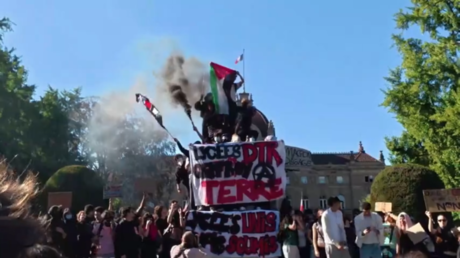
Flames engulfing a historic city hall in Limoges make for great cable news footage, but they tell a very different story than what international politicians want you to believe. When widespread unrest and cost-of-living protests rocked France, drawing thousands of demonstrators and leading to over 2,300 arrests, US political figures immediately pounced. Donald Trump and other high-profile Republicans took to social media and campaign rallies to claim that the chaos was the direct result of mass migration and open borders.
If you listen only to Washington talking points, you would think the French republic is collapsing entirely due to demographic shifts and border failures. But local realities on the ground in Paris, Lyon, and Marseille tell a much more grounded story. Let's look at what is actually driving these demonstrations, why foreign politicians frame them through an immigration lens, and what people miss when they view European social unrest from across the Atlantic. In related developments, we also covered: What Most People Get Wrong About the Conflict in Taiz and Yemen.
The Real Spark Behind the French Protests
To understand why people are taking to the streets, you have to look at grocery receipts, energy bills, and school funding, not just border policies. The mobilization started as a student-led movement focusing on high school conditions, education grievances, and the crushing weight of inflation. As energy costs climbed and purchasing power stagnated, trade unions, civil society groups, and citizens struggling with everyday expenses joined the movement.
French journalists and local analysts have repeatedly pointed out that the anger is economic. People are squeezed by the cost of living. When fuel prices spike and everyday goods become unaffordable, public frustration boils over. It's a classic French playbook of public sector strikes and mass demonstrations against government economic policy, echoing historical movements long before modern migration debates dominated headlines. BBC News has provided coverage on this fascinating issue in extensive detail.
Yet, opportunistic politicians love a simple narrative. Blaming complex domestic economic pain on foreign immigration is an easy way to score points with domestic voters, especially during election seasons.
Why US Politicians Use European Unrest as a Warning
Domestic American politics heavily influences how foreign crises are reported and interpreted. With midterm elections bringing immigration and border security to the forefront of US voter attention, conservative leaders frequently use European cities as cautionary tales.
Statements claiming that "Paris is going to be a Muslim city very soon" or that "France is burning" because of open borders serve a specific domestic purpose. They frame border enforcement in existential terms for an American audience. By pointing to burning cars and clashes with police, political figures try to link entirely separate local governance problems overseas to broader global immigration debates.
France has strict constitutional laws regarding race and ethnicity. Under laws aimed at national equality, French authorities do not collect data on citizens' race or ethnicity, and they have explicitly rejected attempts to tie the sociological makeup of general rioters or student protesters to specific immigrant communities. Local officials emphasize that the crowds include high schoolers, union workers, and professional agitators, known locally as black blocs, who latch onto any major public demonstration to cause chaos.
What Gets Lost in the Global Culture War
When international pundits reduce a complex European socio-economic crisis to a simple culture war talking point, everyone loses nuance. France struggles with deep-seated questions regarding integration, suburban inequality, and labor reforms, but gluing those systemic issues onto a cost-of-living protest movement obscures the actual grievances of the people marching.
If you talk to small business owners in Paris whose storefronts bore the brunt of the vandalism, they talk about lost revenue, inadequate security, and government economic policy. If you talk to students blocking university entrances, they talk about overcrowded classrooms and bleak job prospects after graduation. None of these problems disappear simply by sealing a border or changing a national narrative.
Ignoring economic realities in favor of ideological talking points guarantees that governments will keep misdiagnosing the root causes of civil unrest. Real solutions require looking at inflation, wage stagnation, and institutional trust rather than treating every foreign protest as a convenient prop for domestic political campaigns.
This video provides an on-the-ground perspective from French journalists examining why external claims about immigration miss the actual economic roots of the protests.


