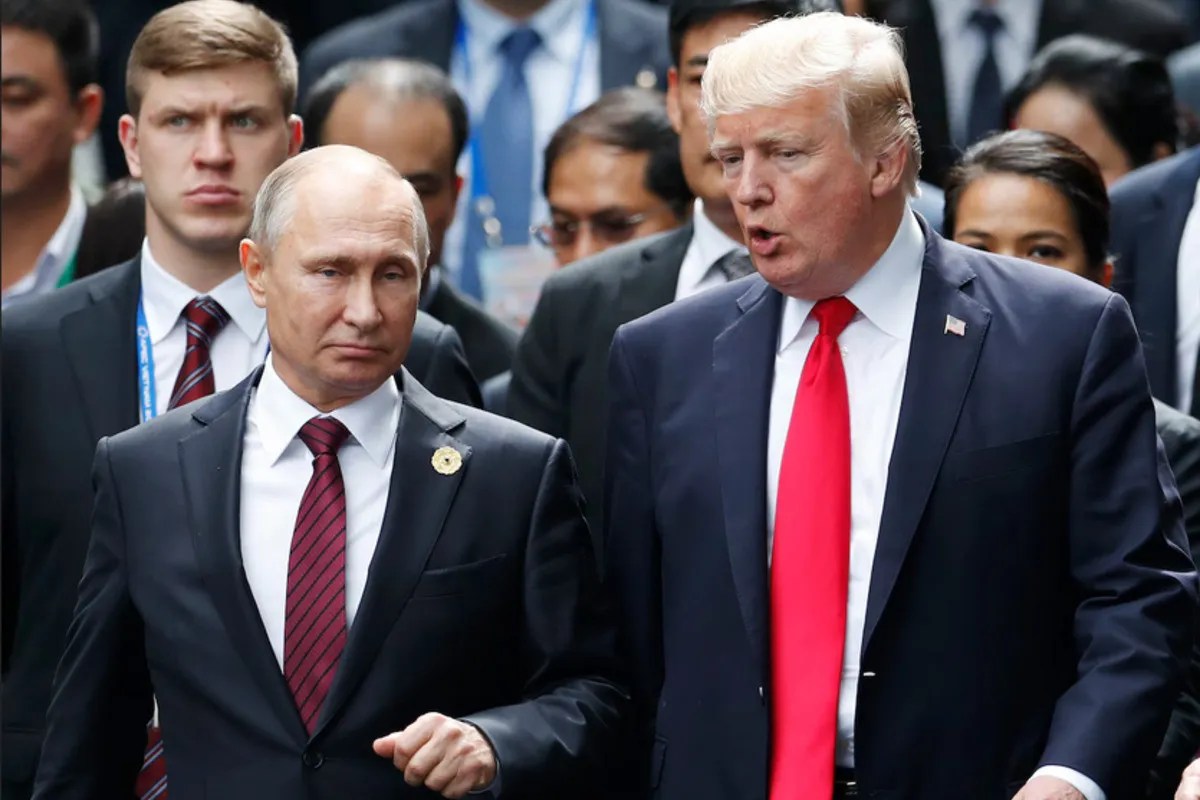
Donald Trump just flipped the global energy market on its head. While critics were screaming about $150 oil and a total economic meltdown, a quiet set of waivers for Russian oil exports basically saved your wallet at the pump. It’s a move that looks contradictory on paper—tough on Russia but easy on their exports. If you’re confused by the headlines, you aren't alone. The backlash was immediate. People called it a betrayal. Others called it a climbdown. Honestly, it was just cold, hard math.
The reality is that the global economy can't survive without Russian crude. Not yet. When the threat of $150 per barrel oil started looking like a certainty rather than a scary forecast, the administration blinked. Or, more accurately, they pivoted. Trump gave Russia a significant " छूट" (exemption) from the harshest sanctions to keep the supply lines open. This isn't just about diplomacy. It’s about preventing a domestic political disaster fueled by five-dollar-a-gallon gas.
The 150 Dollar Nightmare That Never Happened
Market analysts at firms like Goldman Sachs and JPMorgan had been ringing the alarm bells for months. They predicted that if Russian oil was truly choked off from the market, global supply would crater. When supply drops and demand stays high, prices skyrocket. We were looking at a world where $150 oil wasn't just a worst-case scenario. It was the baseline.
Think about what that does to a country. Every delivery truck becomes more expensive to run. Every plane ticket doubles in price. Every plastic product—which is basically everything you touch—gets a price hike. Trump knows his base cares about the economy above all else. He couldn't let that happen.
The "bawaal" (uproar) started because this move feels like a gift to Vladimir Putin. By allowing Russian oil to flow, the US is essentially allowing the Russian war machine to keep its lights on. It’s a messy compromise. You either starve the Russian treasury and break the global economy, or you keep the economy humming and keep Putin in the game. Trump chose the latter, and now he’s stuck explaining why.
Why the White House Had to Start Explaining
The clarification coming out of Washington right now is essentially damage control. The official line is that these waivers are "temporary" and "strategic." They want you to believe this is a chess move, not a surrender.
But let’s be real. It’s a supply issue. The US and its allies haven't ramped up production fast enough to replace the millions of barrels Russia puts out every day. The administration’s explanation focuses on "market stability," which is just code for "we don't want voters getting mad at gas stations."
Critics from both sides are pouncing. Hardliners say this proves Trump is soft on the Kremlin. Energy hawks say it shows the US isn't serious about energy independence. Meanwhile, the actual price of oil dipped slightly after the news of the exemptions broke. That’s the only metric the White House actually cares about right now. They’ll take the bad press if it means the CPI (Consumer Price Index) doesn't explode next month.
The Problem With Sanctions That Actually Work
Sanctions are a blunt instrument. When you sanction a tiny economy, it’s a localized sting. When you sanction a top-three global energy producer, you’re basically punching yourself in the face to hurt the other guy.
- Global Interdependence: Our supply chains are so tangled that a ripple in Siberian oil fields causes a wave in a Florida suburbs.
- The China Factor: Even with US sanctions, Russia just sells more to China and India. The oil still enters the market; it just takes a longer, more expensive route.
- Inflationary Pressure: Central banks are already struggling. High energy prices are the fastest way to trigger a recession.
Breaking Down the Russia Exemption Logic
Why now? Why give Russia this "badi chhoot" (big relief) just when the pressure seemed to be working? The timing suggests the internal data was looking grim. Internal memos likely showed that the "Price Cap" strategy was failing to keep prices low for Western consumers.
Trump’s team is trying to frame this as a "pragmatic pause." They argue that by allowing some oil to flow, they maintain leverage. If they cut it all off, they lose their biggest bargaining chip. It’s a tough sell. If you tell people for a year that Russia is the enemy, and then you sign a waiver that helps their biggest industry, people are going to ask questions.
The backlash isn't just coming from Democrats. Even within the GOP, there’s a faction that wants total decoupling from Russian energy. They see this move as a sign of weakness. But Trump has always been a "deal-maker" first and an ideologue second. If the deal keeps gas under $3, he’ll take the hit on his reputation.
How This Affects Your Monthly Budget
It’s easy to get lost in the geopolitics, but this hits your wallet directly. If the $150 prediction had come true, your life would look very different.
- Lower Shipping Costs: If oil stays around $70-$80, the cost of shipping goods stays flat. Your Amazon packages don't get a "fuel surcharge."
- Travel Prices: Airlines are notoriously quick to raise prices when oil spikes. These waivers keep your summer vacation plans somewhat affordable.
- Food Prices: Farming is energy-intensive. Fertilizer and tractor fuel are tied to oil prices. Keeping Russian oil in the mix actually keeps your grocery bill from climbing even higher.
The Reality of the US Energy Position
We talk a lot about the US being a top producer, and it’s true. Permian Basin production is at record highs. But the US doesn't have the right kind of refineries for all the oil it produces. We export light, sweet crude and often need to import heavier stuff—like what Russia produces.
It’s a structural flaw in the US energy grid. We aren't a closed loop. Until we can refine everything we pump, we're at the mercy of global markets. This is the part the politicians don't like to talk about. It’s much easier to blame a foreign leader or a specific policy than to admit our infrastructure is mismatched.
Trump's move is a temporary bandage on a deep wound. It prevents the $150 spike today, but it doesn't solve the problem of where we get our energy tomorrow. Russia knows this. They know they have the West over a barrel—literally.
What to Watch Next in the Oil Markets
Don't expect prices to stay low forever. These waivers have expiration dates. The market is currently "pricing in" this new supply, but any sign of more conflict or another policy shift will send prices back up.
Keep an eye on the OPEC+ meetings. If Russia and Saudi Arabia decide to cut production further to offset the "gift" from Trump, we're right back where we started. They want high prices. Trump wants low prices. It’s a tug-of-war where the rope is made of pipelines.
If you’re planning big expenses or looking at energy stocks, pay attention to the rhetoric versus the reality. The rhetoric says "tough on Russia." The reality says "we need their oil." Follow the barrels, not the tweets. The administration will continue to offer "safai" (clarifications) to keep the public calm, but the policy is clear: the economy comes first, even if it means making deals with the "enemy."
Stop waiting for a total break from foreign oil. It isn't happening this year, and it probably isn't happening this decade. The best move you can make is to hedge your own costs. Look into energy-efficient upgrades now while prices are relatively stable, because this "relief" is one political crisis away from disappearing.