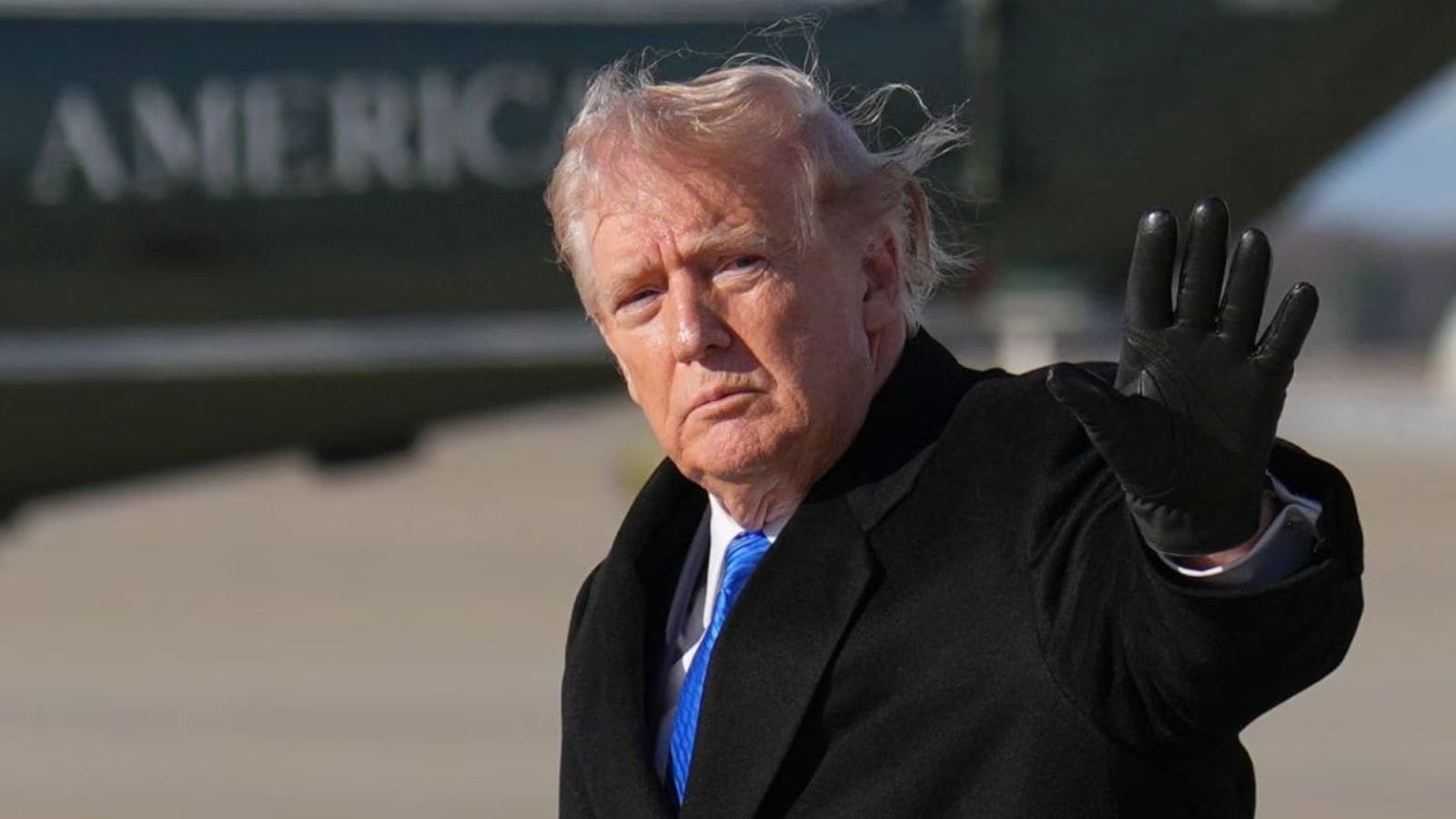
The mainstream press is vibrating with its favorite brand of manufactured anxiety. They see a single, cryptic post from Donald Trump regarding the US-Iran ceasefire talks and immediately reach for the "instability" playbook. They claim his unpredictability "hangs the balance" or "jeopardizes delicate progress."
They are wrong. They are fundamentally misreading the mechanics of high-stakes leverage.
What the pundits call "uncertainty," a seasoned negotiator calls "asymmetric pressure." The assumption that diplomacy requires a quiet, linear path toward a signed piece of paper is a relic of a failed foreign policy establishment—the same establishment that watched Iran build a regional shadow empire while they were busy polishing their gala shoes in Geneva.
If you think a Truth Social post is a "threat" to the process, you don't understand how the process actually works.
The Myth of the Linear Ceasefire
The "lazy consensus" dictates that peace is a fragile glass vase that can be shattered by a loud noise. This view suggests that Iran, a regime that has survived decades of sanctions, internal revolts, and shadow wars, would suddenly walk away from its strategic interests because of a social media post.
It is an absurd premise.
Real-world power dynamics don't care about "tone." They care about the cost of the next move. By injecting noise into the signal, Trump isn't breaking the machine; he's recalibrating the price of Iranian defiance. When the "unpredictable" actor enters the room, the status quo—which currently favors Iranian stalling—evaporates.
In traditional game theory, particularly the Chicken Game, the player who can convince the other side they are "crazy" or "unpredictable" gains an immediate tactical advantage. If your opponent knows exactly what you will do, they can price your reaction into their strategy. If they don't know if you’ll sign a deal or drop a payload of B-2 Spirit bombers on their enrichment facilities, they have to negotiate against the worst-case scenario.
The Failure of "Stable" Diplomacy
Look at the track record of the "stable" hands. For thirty years, the West has followed a predictable pattern of escalation and de-escalation with Tehran.
- Iran funds a proxy.
- The US expresses "deep concern."
- A round of sanctions is applied (and promptly circumvented).
- A "breakthrough" meeting is scheduled.
- Iran stalls for six months to build more centrifuges.
This cycle is a feature, not a bug, of the establishment approach. It provides the illusion of movement while the underlying problem rots. The "cryptic posts" that journalists weep over are a direct assault on this cycle. They break the rhythm. They force the Iranian leadership to wonder if the old rules still apply.
I’ve seen boardrooms fall into this same trap. A CEO wants to acquire a competitor and spends months on "polite" due diligence while the target company bleeds them dry on fees. The moment the CEO walks into a meeting and says, "I might just buy your debt and liquidate you tomorrow," the "delicate" talks suddenly find a very fast resolution.
Diplomacy is just M&A with higher stakes and more sand.
Deciphering the Post: It Isn't About the Words
Stop reading the text. Start reading the timing.
The competitor article worries about the content of the message. That is amateur hour. In geopolitical theater, the medium is the message, and the timing is the intent. A post during a lull in talks serves one purpose: to remind the negotiators that the "adults in the room" are not the ones holding the ultimate authority.
It reminds Tehran that they aren't negotiating with a faceless bureaucracy that follows a predictable flowchart. They are negotiating with a person who has demonstrated a willingness to take out high-level targets like Qasem Soleimani—an act the "experts" said would lead to World War III. It didn't. It led to a period of unprecedented Iranian caution.
The Mathematics of Deterrence
Deterrence is not a static state. It is a decay function.
$$D = \frac{C \cdot P}{T}$$
Where $D$ is deterrence, $C$ is the perceived capability of the actor, $P$ is the perceived probability of action, and $T$ is the time since the last credible display of force.
When you have a leader who posts "cryptically," the variable $P$ (probability) becomes impossible for the opponent to calculate. When $P$ is an unknown, the opponent must assume $P=1$ to avoid total catastrophe. This isn't "adding uncertainty"; it is maximizing the value of $D$.
The Hidden Advantage of Personalization
The media loves the idea of "institutional" foreign policy. They want 400 sub-committees and a stack of white papers. They hate personalized diplomacy because they can't leak it as easily and they can't control the narrative.
But personalizing the conflict—making it about the interaction between leaders rather than faceless "states"—removes the shield of bureaucracy from the Iranian side. It forces the Supreme Leader to consider personal survival over institutional inertia.
If the ceasefire talks "hang in the balance," it is only because the previous balance was tilted entirely in Iran's favor. Any shift away from that comfortable center is going to look like "chaos" to a bystander, but it looks like "rebalancing" to anyone who knows how the world works.
Stop Asking if it’s "Professional"
The most common "People Also Ask" query regarding this topic is: Is social media diplomacy effective?
The question itself is flawed. It assumes that "diplomacy" is a sacred ritual that must happen in wood-paneled rooms.
Ask yourself: Did the "professional" approach prevent the current regional escalation? Did the "stable" approach stop the development of the Iranian nuclear program?
No.
We are currently living in the wreckage of the professional approach. Using unconventional channels to disrupt a failing process isn't just "effective"—it’s the only option left. The disruption isn't the problem; the disruption is the cure.
The Risk Nobody Talks About
The contrarian view has one major downside: it requires the actor to actually be willing to walk away.
If you use "cryptic" posts and "unpredictable" threats as a bluff, and the bluff is called, you lose everything. You cannot play this game if you are terrified of the "uncertainty" the media keeps screaming about. You have to embrace the void.
The danger isn't that the post will "break" the talks. The danger is that the US side might flinch and try to "clarify" the post to appease the press. Every time a State Department spokesperson goes to a podium to "walk back" or "explain" a leader's raw rhetoric, they are burning leverage. They are turning a $P=1$ scenario back into a $P=0.1$ scenario.
The Reality of the "Balance"
The "balance" the competitor article mentions is a fiction. There is no balance. There is only a series of temporary alignments of interest.
Iran wants:
- Sanctions relief.
- Regional dominance.
- Survival of the regime.
The US (should) want:
- Total cessation of proxy funding.
- Permanent nuclear dismantlement.
- Freedom of navigation.
These are diametrically opposed. You don't get there through "steady" and "predictable" progress. You get there by making the alternative so terrifyingly expensive that the other side settles for a deal they previously called "unacceptable."
The Industry Insider’s Truth
I have watched diplomats "manage" conflicts for decades. "Management" is a euphemism for "letting people die slowly so the paperwork looks clean."
The "unpredictable" approach—the one that uses every tool from high-altitude drones to 280-character bursts of text—is an attempt to actually solve the conflict. Solving is messy. Solving creates headlines that make people uncomfortable.
The media calls it a "threat to peace." In reality, it’s the first time in years that the Iranian regime has had to wonder if they’re actually going to lose the game.
The ceasefire talks aren't "in jeopardy." They’ve finally become real.
Stop looking for the "stable" path. It led us to the edge of a cliff. If you want to get off the cliff, you’re going to have to make some moves that look like jumping.
Grab your popcorn. The era of the "delicate" talk is over. The era of the "cryptic" hammer is here, and it’s about time.