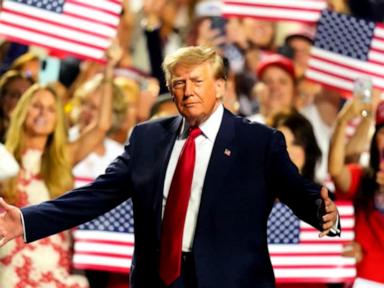
When a political campaign decides to hit five separate states in a single major swing, you're looking at a logistical marvel designed purely to manufacture momentum. Donald Trump’s aggressive multi-state travel strategy isn't just about showing up on a local tarmac. It's about dominating media markets, forcing opponents to play defense, and energizing base voters right when the math gets tight.
Most political commentary misses the mechanical reality of these swings. Campaigns don't choose these routes at random. Every stop is calculated to squeeze out specific demographic advantages, shore up competitive legislative districts, or counter an opposing party's narrative in real-time. In other developments, take a look at: When the Flight Deck Becomes a War Zone The FlyDubai Incident and Aviation Security Blind Spots.
The Strategy Behind Multi-State Deployments
Covering five states in rapid succession requires military-grade coordination. Air travel schedules, secret service logistics, local law enforcement integration, and venue security have to line up down to the minute. Why put a candidate through that grueling physical strain? Because modern attention spans demand constant visual proof of life and energy.
When a candidate flies into a critical region like Texas or deep-red Alabama within a compressed timeframe, it sends a clear signal. It tells local organizers that Washington cares about their backyard. It forces regional television networks to clear their schedules. Most importantly, it creates a cascade of short-form video content that floods social media feeds long after the motorcade has rolled away to the next airport. NBC News has also covered this important topic in extensive detail.
Mapping the Electoral Math
You have to look at where these swings land to understand the true objective. A typical multi-state tour balances two distinct targets.
First, you secure the base. Rallies in safe territories aren't wastes of time. They drive high-volume voter registration, harvest donor data, and rack up the raw vote totals needed to offset losses in hostile suburbs. Second, you punch into contested territory where a shift of a few thousand votes changes everything.
- Texas and High-Stakes Senate Battles: Deploying resources to Texas isn't just about presidential math; it's about protecting down-ballot margins in races that dictate the balance of power in Washington.
- Base Reinforcement in the South: Heading into conservative strongholds in Alabama rewards loyal precincts and keeps turnout machine operators motivated.
What the Media Gets Wrong About Campaign Swings
Mainstream analysis usually treats these events like rock concerts, focusing entirely on crowd sizes or the tone of a speech. That misses the entire point. The speech is secondary to the machine behind it.
Local precinct captains use these rallies as anchor points to organize door-to-door block walks for the following weekend. Volunteers who show up to a massive airplane hangar rally get plugged into local data apps. They receive specific walking lists for their neighborhoods. The rally is the spark, but the precinct data collection is the engine that actually delivers votes on election day.
If you are trying to read the tea leaves of a modern national campaign, ignore the talking points on cable news. Look at the flight logs. The states a candidate visits when the race tightens will tell you exactly where their internal polling shows vulnerability—and where they think they can run up the score.