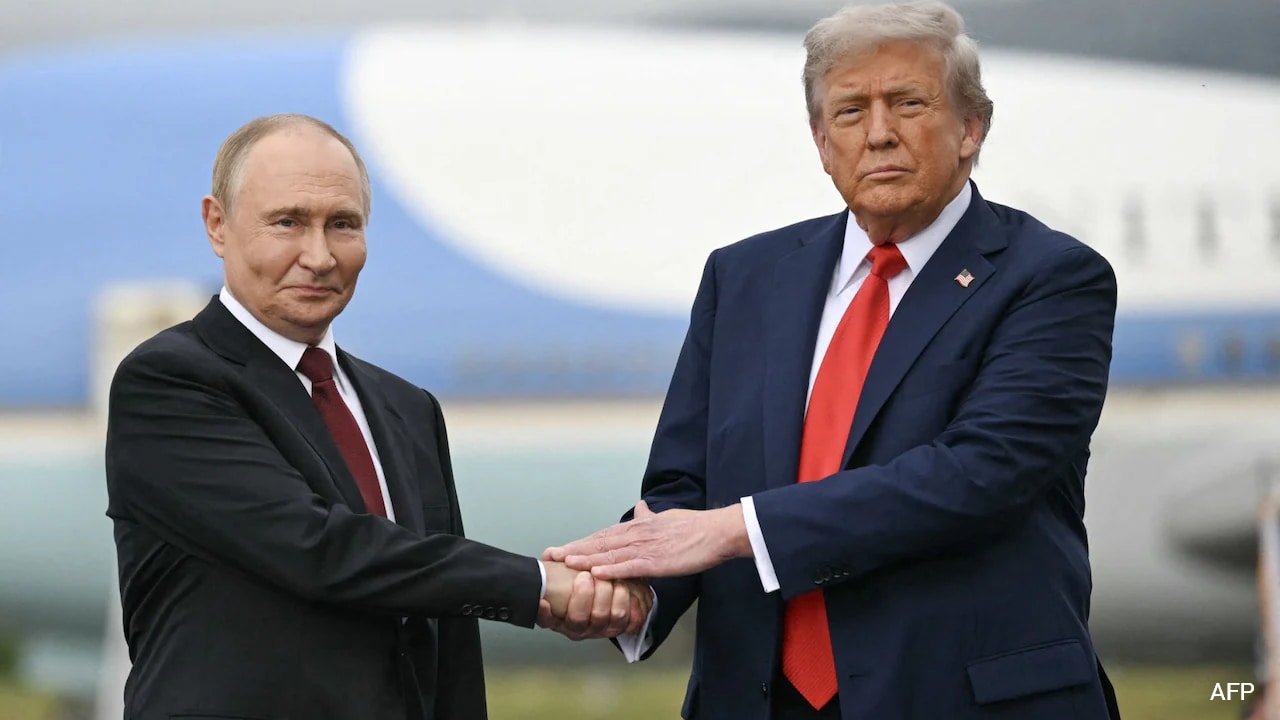
Everyone in Washington and Brussels is hyperventilating over the exact same headline. The conventional wisdom reads like a bad spy novel: Donald Trump wants to trade Ukrainian territory for cheap Russian crude, hand Vladimir Putin a massive economic lifeline, and call it peace.
They are looking at the wrong chessboard.
The mainstream political commentary treats global oil markets like a light switch. Flip it on, and Russia gets rich. Flip it off, and the Kremlin starves. That is the lazy consensus of pundits who have never spent five minutes looking at a physical crude terminal, a refinery configuration, or an OPEC+ quota spreadsheet.
If Trump actually pursues an energy-centric framework to freeze the conflict in Ukraine, it is not a bailout for Moscow. It is a structural squeeze designed to break OPEC+, flood global markets with supply, and chain the Russian economy to American terms of trade.
The Lazy Consensus on Sanctions and Crude
To understand why the prevailing narrative fails, look at how badly the existing sanctions regime has performed on its own terms. Following the 2022 invasion, Western architects designed the G7 price cap—set at $60 per barrel for Russian seaborne crude—with a clear mandate: keep Russian oil flowing so global prices wouldn't spike, while starving the Kremlin of windfall profits.
It worked on paper for about six months. Then physical reality took over.
Moscow assembled a "shadow fleet" of aging, uninsured tankers, bypassed Western maritime insurers, and rerouted millions of barrels per day to refineries in India and China. By 2024, the vast majority of Russian seaborne exports were moving outside G7 oversight. Meanwhile, Western consumers absorbed the inflation shock of rerouted global supply chains, while European manufacturers paid multiples of American natural gas prices to keep their factories running.
I have watched commodity trading desks burn tens of millions of dollars betting on policy announcements that ignore basic logistics. Politicians write press releases; physical traders move molecules. And the molecules never stopped moving.
The pundit class assumes that any easing of energy restrictions is a unilateral gift to Putin. They ignore the fact that current sanctions haven't stopped Russian volume—they have merely forced Russia to sell at a discount to Beijing and New Delhi, effectively subsidizing Asian manufacturing at the expense of Western industry.
Defining the Real Lever: Market Share Over Price
When insiders talk about an "oil deal" between Washington and Moscow, they confuse lifting sanctions with managing supply.
In the energy sector, there is a brutal distinction between price defense and market share dominance. Saudi Arabia and Russia, operating through the OPEC+ cartel, have spent the last several years cutting production to artificially prop up Brent crude prices above $75 or $80 a barrel. Russia needs high prices—ideally above $70 per barrel for its Urals blend—just to balance a federal budget bloated by military spending.
Now, consider what happens if Washington approaches Moscow with a transactional energy framework tied to a ceasefire in Ukraine.
The mechanism is straightforward: the U.S. offers a structured off-ramp from secondary financial and maritime sanctions, allowing Russian barrels back into legitimate financing, insurance, and Western-aligned shipping lanes. In exchange, Moscow doesn't just halt offensive operations in Ukraine; it abandons OPEC+ production discipline and pumps at maximum capacity alongside an unleashed U.S. shale sector.
Do the math on what happens next.
- Global supply surges. Between record U.S. Permian Basin output, rising production in Guyana and Brazil, and uncapped Russian volumes, the global market flips from managed scarcity to structural oversupply.
- Crude prices crater. Brent and West Texas Intermediate drop toward $50 a barrel—or lower.
- Inflation dies in the West. Lower diesel and gasoline prices immediately relieve cost-of-living pressures across the U.S. and Europe, neutralizing the single biggest political vulnerability for Western leaders.
- Putin’s war chest evaporates. Russia sells more barrels, yes, but at a fraction of the margin. At $50 oil, the Russian state faces a massive fiscal deficit, stripping the Kremlin of the excess cash required to rebuild its military-industrial complex.
Daniel Yergin, the Pulitzer Prize-winning energy historian, has repeatedly documented how oil price collapses—not embargoes—historically break petro-states. In the mid-1980s, when Saudi Arabia abandoned price defense and flooded the market, oil crashed below $10 a barrel. That single shock hollowed out the Soviet Union's hard currency reserves far more effectively than any diplomatic sanction ever achieved.
A deal that brings Russian oil out of the shadows and back into a supply-glutted global market isn't a lifeline. It is a golden handcuff.
Dismantling the Flawed Questions
Whenever rumors of a Washington-Moscow resource deal surface, the public discourse immediately drowns in panicked, poorly framed questions. Let's take a blowtorch to the most common ones.
"Wouldn't an oil deal reward Putin for invading Ukraine?"
This question assumes the alternative is a total Ukrainian military victory funded indefinitely by Western taxpayers. Look at the battlefield reality: attrition favors the larger industrial base, and Western ammunition stockpiles are stretched thin.
Sanctions are tools, not moral trophies. If a financial restriction fails to stop a war after years of implementation, clinging to it out of ideological purity isn't strategy—it is stubbornness. Using energy sanctions as negotiable leverage to secure a verifiable ceasefire and keep Ukraine sovereign is how statecraft actually operates. You don't keep your finger on the trigger after the negotiation starts; you use the threat of pulling it again to enforce compliance.
"Why would Russia agree to pump more oil if it crashes prices?"
Because Putin is trapped between two bad options, and Washington holds the keys to the lesser evil.
Right now, Russia’s energy infrastructure is decaying. Western oilfield services giants—companies like SLB (formerly Schlumberger), Halliburton, and Baker Hughes—pulled back or exited after 2022. Without Western drilling technology, hydraulic fracturing software, and specialized turbines, Russia cannot maintain production in its aging West Siberian fields over the long term. Permafrost wells shut in during winter freeze and die permanently.
Furthermore, Beijing has Putin over a barrel—literally. Knowing Moscow has nowhere else to go, Chinese state buyers demand steep discounts and refuse to fund new pipeline infrastructure like Power of Siberia 2 on Russian terms. Moscow desperately wants Western competition back at the negotiating table so it isn't reduced to a raw-materials vassal of China.
"Won't this destroy American shale producers?"
This is the sharpest objection, and it highlights the genuine downside of a low-price oil strategy.
U.S. shale operators in the Permian Basin have significantly improved capital discipline over the last five years, pushing breakeven costs for new wells down to roughly $45–$55 per barrel. However, if global prices sink below $50 for a sustained period, U.S. drillers will stop expanding, rig counts will drop, and domestic oilfield bankruptcies will rise.
An administration pursuing lower global energy prices has to walk a razor's edge: push prices low enough to starve petro-states and crush consumer inflation, without driving domestic shale producers out of business. That requires pairing supply diplomacy with aggressive domestic deregulation, faster pipeline permitting, and strategic refills of the U.S. Strategic Petroleum Reserve (SPR) whenever WTI dips into the low $50s—creating a synthetic price floor that protects American producers while capping upside spikes.
Imagine a Scenario Where Energy Replaces Aid
Imagine a scenario where the White House lays out a hard-nosed term sheet in early 2027. Instead of another $60 billion legislative brawl over military aid that gets stalled in Congress for six months, the negotiation centers on energy flows and European security architecture.
- The Freeze: Kinetic hostilities stop along existing lines of contact, backed by a heavily armed, European-funded buffer zone and U.S. intelligence guarantees—not NATO membership, which Moscow treats as an existential red line, but bilateral defense pacts that make a renewed invasion suicidal.
- The Energy Escrow: Sanctions on Russian oil majors and maritime insurers are suspended in phases, not repealed. Every six months, compliance is reviewed. If Russian forces violate the ceasefire, secondary sanctions snap back instantly, freezing tanker fleets in port overnight.
- The European Supply Shift: Rather than returning to total dependence on Russian pipeline gas—which left Germany exposed in 2022—Europe locks in long-term Liquefied Natural Gas (LNG) contracts with U.S. Gulf Coast exporters, while allowing limited, heavily taxed Russian crude back into European refineries to lower diesel costs for European industry.
- The Reconstruction Toll: A direct surcharge on every barrel of formerly sanctioned Russian crude sold into Western-aligned markets is routed straight into a multilateral reconstruction fund for Ukrainian infrastructure. Moscow pays to rebuild what it broke, barrel by barrel, as the price of market re-entry.
Notice what happens to the geopolitical balance in this scenario. China loses its monopoly discount on Russian resources. Iran and Venezuela—two other sanctioned petro-states—get squeezed out of Asian markets as buyers switch back to cheaper, higher-grade Russian Urals crude. OPEC+ loses its grip on global pricing. And Ukraine gets a funded reconstruction pipeline without relying entirely on fickle Western parliaments.
The Real Blind Spot in Washington
The danger with a Trump-Putin oil framework isn't that it is "too soft" on Russia. The danger is that Western diplomats lack the commercial ruthlessness to execute it without getting outmaneuvered.
Historically, Washington treats energy policy as an afterthought to foreign policy, while Moscow treats energy as foreign policy. Russian negotiators understand every nuance of pipeline transit fees, refinery cracking margins, and tanker insurance underwriting. American diplomats too often send lawyers and political scientists to negotiate against ruthless commodity operators.
If the U.S. simply lifts sanctions upfront in exchange for vague promises of peace, Putin will pocket the windfall, rebuild his tank factories, and resume the war in three years. That is the nightmare scenario the critics warn about, and it is entirely valid if the deal is structured like a traditional diplomatic treaty.
To work, any energy pact must be structured like a distressed debt restructuring:
- Zero upfront trust. Sanctions relief must be modular, reversible, and tied to verifiable, satellite-monitored demilitarization benchmarks.
- Control the chokepoints. Keep Western maritime insurance, dollar clearing, and oilfield service licenses on a short leash. Russia can pump the oil, but Western firms control the high-tech maintenance that keeps the wells alive.
- Weaponize abundance. Use the threat of unchecked U.S. and Russian supply to break OPEC+ cohesion permanently, ensuring oil never again serves as an inflationary weapon against Western economies.
Stop Reading the Headlines and Watch the Tankers
Political reporters cover foreign policy like a sporting event—who won the news cycle, who looked tough at a press conference, who betrayed an ideological talking point. Energy markets do not care about press conferences. They care about supply, demand, and leverage.
Right now, the West is paying higher energy costs to enforce a sanctions regime that still allows millions of barrels of Russian oil to reach global markets every single day via a shadow fleet operating outside environmental and safety laws. Meanwhile, Ukraine is bleeding territory in a war of attrition with no end date on the calendar.
Trading a broken sanctions status quo for a tightly controlled, snap-back energy framework that stops the killing, crashes global oil prices, breaks OPEC+, and forces Russian crude to fund Ukrainian reconstruction isn't surrender. It is using America's greatest asymmetric weapon—the power to make and break global commodity markets—to force an end to a war that artillery alone cannot finish.
Watch the tanker tracking data and the Permian rig counts over the next six months, not the cable news panels. That is where the real peace treaty is being written.


