A standard post office lobby carries a specific soundscape. The rhythmic thump-thump of a rubber ink stamp hitting paper. The dull scraped-plastic sound of a package sliding across a high counter. The faint, metallic rattle of brass keyholes lining walls of P.O. boxes.
It is the architecture of mundane reliability. You step inside to mail a birthday card, drop off a tax form, or collect a parcel that couldn't be left on the front porch. You expect the smell of corrugated cardboard and faint adhesive. You expect a short line of people staring at their phones, shifting their weight from one foot to the other.
You do not expect the air to shatter.
On a cold morning in Iowa, that baseline predictability vanished in a fraction of a second. Inside a local United States Post Office, the steady cadence of routine logistics gave way to the sharp, deafening pop of gunfire. Three people went down. Panic flooded a space designed for nothing more dangerous than processing certified mail. Within minutes, emergency vehicles were screaming toward the building, sirens echoing through the neighborhood while a suspect was taken into custody.
The raw facts fit neatly into a single sentence on a news ticker: Three injured in shooting at US post office in Iowa, suspect detained.
Yet a line of text on a screen strips away the physical reality of the moment. It erases the heavy, suffocating silence that follows gunshots in an enclosed room. It leaves out the texture of cold floor tile against a person's cheek as they scramble for cover behind a sorting bin, praying their breathing isn't too loud.
The Glass Wall of Security
Post offices occupy an unusual space in American civic life. They are federal facilities, yet they are as open and accessible as a neighborhood grocery store. Unlike courts, airports, or high-security government buildings, the lobby of a postal branch is built around a promise of friction-free access. Anyone can walk in off the street. There are no metal detectors at the front door. There are no armed guards pacing between the packaging supplies.
That openness is intentional. It represents a fundamental civic trust established centuries ago.
Consider the mechanics of the room. On one side of the lobby stands a long counter. Behind it, postal workers manage logistics, weigh packages, and process passports. On the other side stands the public. Separating them is usually little more than a waist-high wooden partition, or perhaps a sheet of acrylic glass designed to block winter sneezes rather than high-velocity lead.
When violence erupts in a space like this, the illusion of distance instantly collapses.
The three individuals struck by bullets in Iowa were caught in a environment where cover is almost non-existent. Lobbies are designed for flow, not defense. The floor plans are wide, open, and clear of large obstacles so that customers can move easily from the front door to the counter. When someone pulls a weapon inside those walls, there is nowhere to hide except under lightweight plastic counters or behind thin metal display racks holding books of stamps.
Emergency responders arriving on the scene face an equally volatile equation. They must navigate a public facility with multiple access points, uncertain numbers of bystanders, and the immediate imperative to locate the threat while applying field tourniquets to bleeding victims.
Seconds into Minutes
Time expands irregularly during a crisis.
For those outside the building—neighbors listening from a block away, family members watching local news updates, motorists pulling over to make way for speeding ambulances—the event unfolds in a sequence of verified facts. Officers arrive. A perimeter is established. The suspect is isolated and disarmed. The threat is neutralized.
For the human beings inside the lobby, those same three minutes feel like an eternity spent trapped inside a static nightmare.
The human brain reacts to unexpected violence in distinct physiological waves. First comes the acoustic denial. The initial sound of a gunshot in an enclosed space is rarely recognized as a firearm right away; the mind desperately tries to categorize it as something harmless. A heavy crate dropping onto concrete. A blown light fixture. A backfiring delivery truck outside.
Then comes the physical realization. The smell of burnt powder. The visual shock of someone falling. The sudden, instinctual flood of adrenaline that pulls blood away from the extremities toward major muscle groups, narrowing vision into a tight, frantic tube.
In that brief, chaotic window before law enforcement secures the floor, survival depends entirely on instinct. People duck. They press themselves into corners. They reach out to shield strangers.
When the news reports state that a suspect was detained, it marks the end of an active threat. But for the victims rushed to regional trauma centers, it is only the beginning of a long physical and psychological struggle. Bullet wounds in civilian settings inflict severe damage—tearing through muscle, shattering bone, and causing catastrophic internal bleeding that demands immediate surgical intervention.
The Quiet Aftermath
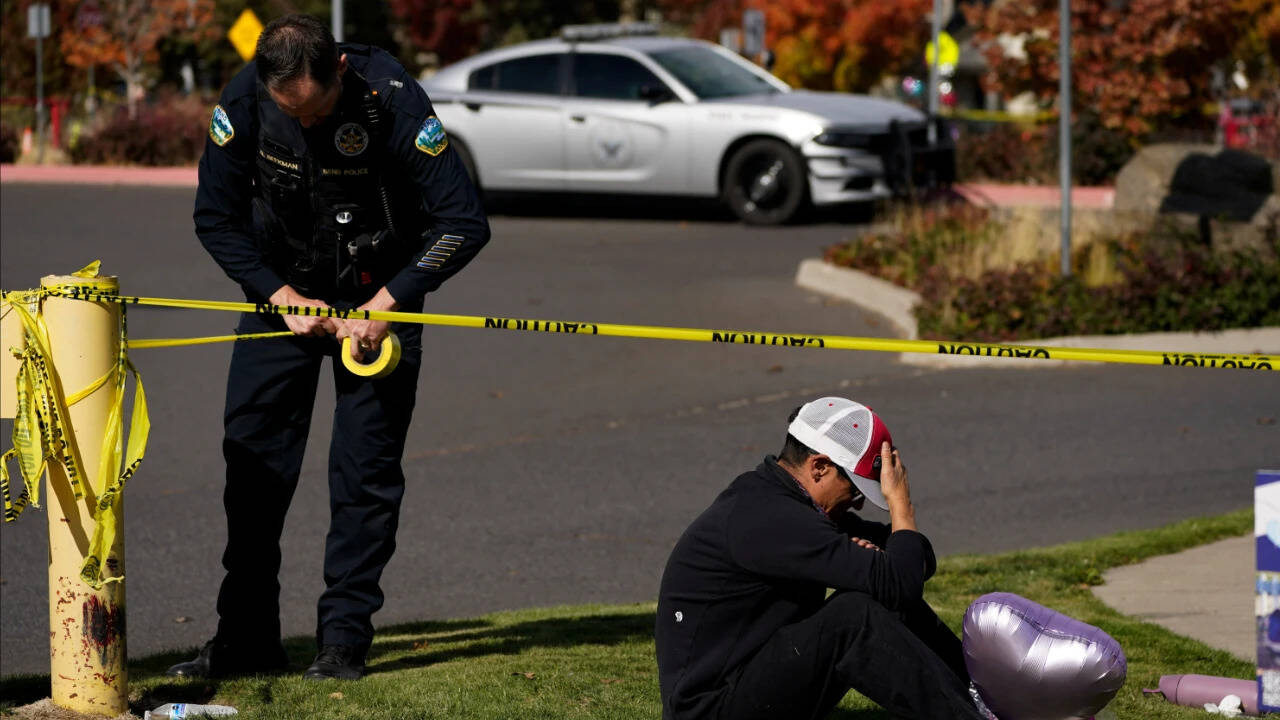
By late afternoon, the yellow police tape fluttering in the Iowa wind becomes the main visual indicator that something terrible occurred. Federal investigators move through the lobby under bright work lights, mapping trajectory angles, collecting shell casings, and photographing bloodstains on the floor.
Outside, the neighborhood continues to move, albeit with a muted, uneasy hesitation.
Public spaces carry memory. A post office is not just a commercial storefront; it is a anchor of daily community life. It is where small business owners drop off their daily shipments, where retirees come to speak with clerks they have known for a decade, and where neighbors bump into one another on cold mornings.
When violence punctures a hub like this, it alters how people experience their own streets. The simple act of stepping through a set of double glass doors to buy stamps becomes burdened with an unwanted awareness of vulnerability. You look for the exits. You eye the layout of the room. You notice who is standing near the door.
The suspect is in custody, facing the legal consequences of an act that shattered a routine morning. Investigators will piece together motive, timeline, and access to weaponry. Courts will process the case through legal filings and formal hearings.
Behind the legal terminology and the static headlines, three families are sitting in hospital waiting rooms, listening to the steady, artificial hum of heart monitors. The ink on the rubber stamps inside the dark post office lobby has dried. The mail sits uncollected in sorting bins. And a quiet Iowa community begins the slow, painful process of piecing together its shattered sense of safety.