The neon along the Cotai Strip never goes dark, even when the baccarat tables sit half-empty at four in the morning. For decades, that relentless electric hum served as the unofficial lullaby of Macao, a thirty-square-kilometer peninsula where neon light promised that tomorrow would always look roughly like yesterday—prosperous, predictable, and quietly insulated from the storms battering its louder neighbor across the Pearl River Estuary.
Then a courtroom door swung shut, and a gavel fell twelve and a half times. Meanwhile, you can find other developments here: Why Calling a New Zealand Election Too Close to Call Misses How MMP Actually Works.
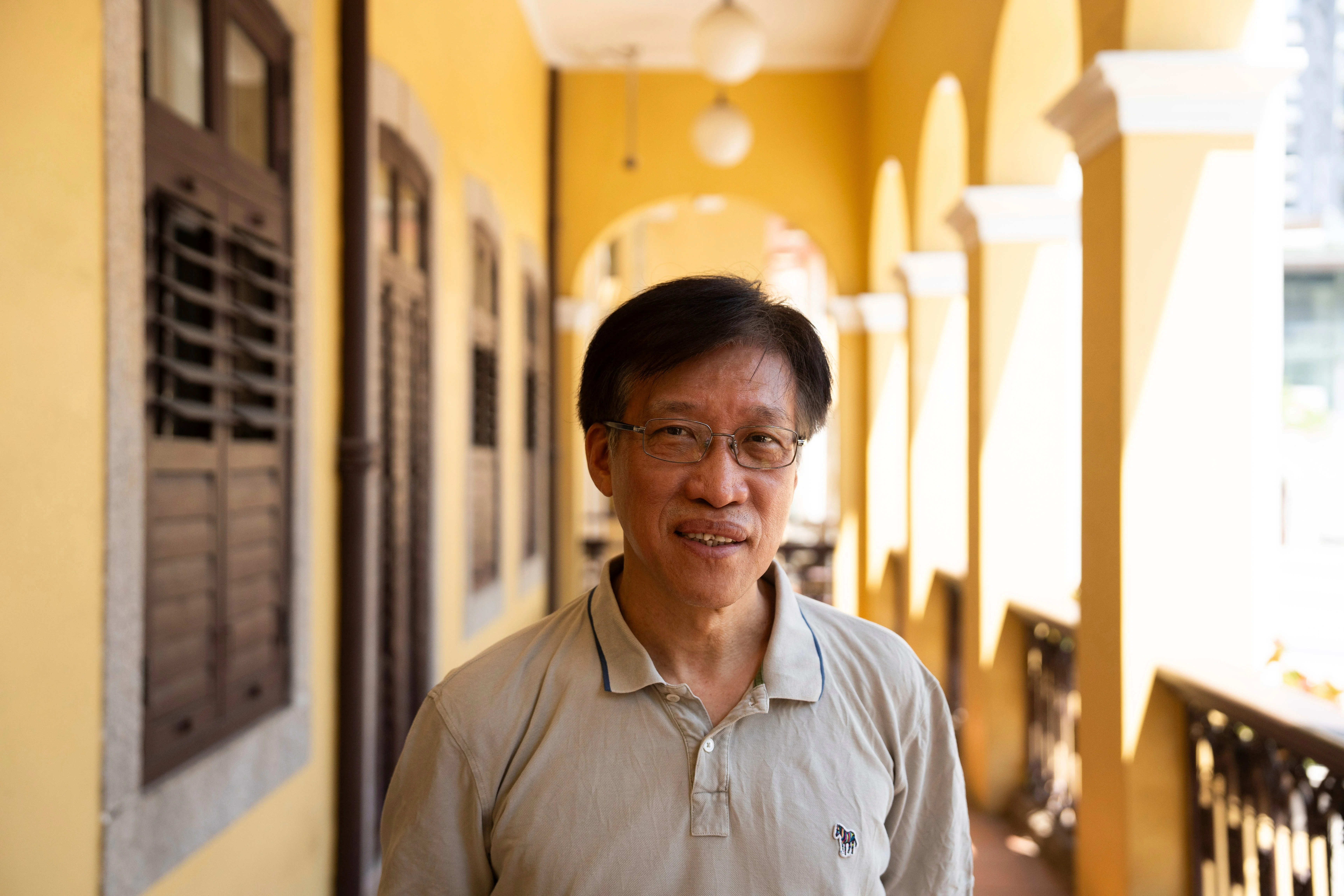
Wait. Not literally twelve and a half times. Just once, with the dull, bureaucratic thud that carries a sentence of twelve years and six months in prison for Au Kam-san, a sixty-eight-year-old former pro-democracy lawmaker who spent three decades arguing inside the very legislature that eventually watched him vanish into the state’s security apparatus.
If you only read the wire dispatches, the story arrives wrapped in the sterile cotton of legal terminology. First prosecution under Macao’s revised national security law. Collusion with foreign forces. Subversion. A former legislator sentenced. Readers outside the enclave scan the headline, nod at the predictable symmetry with Hong Kong’s sweeping crackdowns, and scroll down to the weather. To explore the bigger picture, check out the detailed article by The Guardian.
They miss the earthquake entirely. Because to understand what just happened in Macao, you have to understand what Macao was supposed to be—and what happens to human beings when the invisible lines beneath their feet suddenly turn into tripwires.
The Myth of the Quiet Cousin
To grasp the weight of this verdict, consider a hypothetical afternoon in a cramped teahouse near Senado Square just ten years ago. Picture two residents—let’s call them Mei, a secondary school civics teacher, and Kenji, a mid-level manager at one of the peninsula’s sprawling casino resorts. Over steamed shrimp dumplings and lukewarm pu-erh tea, they argue about politics the way people in Macao always argued about politics: softly, pragmatically, with one eye on their wallets and the other on the ferries arriving from Hong Kong.
In that hypothetical conversation, Mei worries about shrinking press freedoms. Kenji waves a hand, pointing out that Beijing treats Macao as its favorite child—docile, grateful, flush with gaming tax revenues that fund free healthcare and annual cash handouts for every permanent resident. Unlike Hong Kong, which erupted into million-person marches in 2019 and suffered the blunt-force trauma of its 2020 National Security Law, Macao was held up by state media as the gold standard of the "One Country, Two Systems" framework. No mass riots. No burning barricades. Just smooth governance and steady dividends.
That comforting story died in the spring of 2026, though its funeral had been scheduled years earlier.
When Macao originally passed its national security legislation back in 2009 under Article 23 of its Basic Law, critics barely flinched. For fourteen years, the law sat on the shelf like an ornate ceremonial sword—visible, respected, never drawn. Then came 2023. Following the central government’s push to harmonize security architectures across both Special Administrative Regions, Macao’s Legislative Assembly unanimously passed sweeping amendments to that 2009 law.
Suddenly, the ceremonial sword had a razor edge.
The revised statute expanded the definition of subversion beyond violent overthrow to include non-violent acts that undermine the constitutional order. It broadened the concept of collusion with foreign organizations to encompass sharing information, receiving funds, or even maintaining routine contact with overseas advocacy groups and foreign journalists. And it gave authorities the power to intercept communications, restrict travel, and conduct trials behind closed doors whenever state secrets were invoked.
Still, most people in the enclave assumed the new teeth were strictly for show. A deterrent. Nobody expected the state to sink them into a man whose gray hair and soft-spoken demeanor made him look more like a retired schoolteacher than a revolutionary.
The Man Who Kept Knocking on Institutional Doors
Au Kam-san was never a firebrand who threw bricks or stormed government buildings. Before entering politics, he actually was a schoolteacher.
Born in 1957, Au belonged to a small, stubborn generation of Macao democrats who believed that change came through petitions, legislative committee hearings, and painstaking constituent work. Alongside fellow veteran lawmaker Ng Kuok-cheong, Au co-founded the New Macau Association in the early 1990s, building a modest but durable opposition presence in a legislature heavily tilted toward pro-Beijing business interests and appointed seats.
From 2001 until 2021, Au sat in the Legislative Assembly. He questioned land deals. He demanded transparency over public housing waiting lists. He organized annual candlelight vigils marking the 1989 Tiananmen Square crackdown—gatherings that drew a few hundred quiet residents to Senado Square each June, tolerated for years as harmless safety valves in an overwhelmingly loyalist city.
Watch archival footage of him speaking on the legislative floor, and you do not see an insurrectionist. You see a man adjusting his glasses, shuffling stacks of printed budget reports, and pressing civil servants on bus route delays or hospital staffing shortages. Even when Hong Kong’s political space collapsed between 2020 and 2021, Au remained in Macao, continuing to write commentary, speak with international reporters trying to understand the enclave’s silence, and maintain relationships with overseas civic networks.
In 2021, Macao’s electoral authorities disqualified twenty-one pro-democracy candidates from running in that year’s legislative elections—effectively wiping out the entire opposition bloc in a single afternoon. Au, already stepping back from electoral politics, watched the door to institutional participation lock from the outside.
He did not flee to London, Taipei, or Vancouver like thousands of Hong Kongers. He stayed home. He kept talking. He kept believing that the boundaries of permissible speech in Macao, while narrow, remained legible.
That belief cost him his freedom.
When Yesterday’s Conversation Becomes Today’s Felony
In July 2025, Judiciary Police arrested Au under the amended National Security Law, accusing him of colluding with foreign organizations and engaging in acts aimed at subverting state power. The charges centered on his communications with overseas groups, media interviews, and dissemination of information deemed harmful to national security—activities that, a few years prior, constituted the daily bread and butter of any opposition politician anywhere in the democratic world.
Think of the legal mechanism here like a retrospective speed camera installed on a highway you drove down last summer. Imagine cruising at sixty miles an hour under a posted sixty-mile-an-hour sign, waving at passing cars, waving at tourists on the overpass. Months later, transport authorities lower the speed limit to twenty, classify waving at out-of-state license plates as reckless endangerment, and use old traffic footage to impound your car for a decade. That analogy captures the disorienting psychological whiplash felt across Macao’s civil society after Au’s arrest.
Because the case involved national security, transparency evaporated almost immediately.
Unlike ordinary criminal trials in Macao, which remain open to the public and press under the enclave’s Portuguese-influenced civil law tradition, national security proceedings operate under a veil of secrecy. Independent journalists were barred from observing key phases of the trial. The exact text of the evidentiary exhibits—which emails, which phone calls, which interviews crossed the invisible threshold into "collusion"—remained shielded from public scrutiny.
By the time the Court of First Instance handed down its verdict—twelve years and six months behind bars—the message was unmistakable, even if the evidence remained locked in a vault.
For a sixty-eight-year-old man, twelve and a half years is not merely a prison term. Without early release or medical parole, Au Kam-san will walk out of Coloane Prison in his eighties, into a city that will scarcely remember the sound of his voice.
The Architecture of Silence
Why did authorities choose Au Kam-san, and why now?
If you ask political analysts who have tracked Beijing’s governance of the Greater Bay Area over the past decade, a clear pattern emerges. Total security tolerates zero exceptions. In the eyes of national security planners, an unguarded back door in Macao poses just as much theoretical vulnerability as a broken lock in Hong Kong or Shenzhen. Having spent years dismantling Hong Kong’s opposition parties, independent unions, and critical newsrooms—culminating in high-profile sentences like Jimmy Lai’s twenty-year term and the sweeping convictions of the "Hong Kong 47"—leaving even a solitary, aging critic operating openly in Macao represented an unacceptable loose end.
Yet the true target of a landmark national security prosecution is rarely the defendant sitting in the dock.
Silence.
Consider the ripple effects moving outward from that courtroom across a territory of fewer than seven hundred thousand people. In a small city where everyone knows someone who works for the government, a state-linked bank, or a major casino concessionaire, fear travels faster than any official decree.
Take the hypothetical civics teacher Mei from earlier. Before this verdict, Mei might have assigned her high school students a comparative essay on how Macao’s Basic Law differs from mainland China’s constitution, or encouraged them to read international news coverage of local economic policy. Today, staring at the headline of a former lawmaker sentenced to twelve and a half years largely for speaking with overseas entities, Mei opens her syllabus and quietly deletes the unit. Nobody ordered her to delete it. No police officer knocked on her classroom door. She censored herself because the cost of miscalculating where the red line sits has become catastrophic.
The same quiet recalibration happens inside local newsrooms, university departments, labor associations, and neighborhood groups. When the legal definitions of "collusion" and "subversion" remain deliberately elastic, and when trials occur behind closed doors so citizens cannot study the exact boundaries of illegal conduct, caution becomes the only rational survival strategy.
People stop taking calls from foreign correspondents. Academics decline invitations to international conferences. Community organizers scrub years of Facebook posts and disband chat groups. The public square does not need barbed wire when every citizen installs a checkpoint inside their own head.
What the Rest of the World Gets Wrong About Macao
Watching this unfold from afar, outside observers often fall into one of two traps.
The first is fatalism—the shrug that says Macao was always completely under Beijing’s thumb anyway, so nothing really changed. That view erases decades of genuine, hard-won civic life. Macao never had Hong Kong’s massive street protests, true, nor its raucous tabloid press. What it did have was a distinct, intimate tradition of neighborhood advocacy, bilingual legal institutions inherited from centuries of Portuguese administration, and a handful of stubborn legislators like Au Kam-san who proved that dissent could exist peacefully alongside economic stability. Erasing that space isn’t a footnote; it is the amputation of an entire civic tradition.
The second trap is confusing quietness with consent.
Walk through the historic cobblestone alleys around St. Paul’s Ruins or past the gilded fountains of the Wynn Palace today, and everything looks effortlessly normal. Tourists snap selfies holding Portuguese egg tarts. Dealers flick cards across green felt tables. Ferries glide smoothly across the pearl-gray water. If you didn’t know who Au Kam-san was, you would never guess that the city just crossed a historic legal rubicon.
That smoothness is precisely the point. Modern authoritarian governance rarely announces itself with tanks rolling down avenues. More often, it arrives through amended statutes, closed courtrooms, and the quiet disappearance of one familiar voice after another, until the silence feels completely natural—as though nobody ever had anything else to say.
Yet memory has a stubborn habit of surviving beneath floorboards. Every resident in Macao who ever waited hours in line for public housing, who ever watched a neighborhood clinic struggle for funding, or who ever stood holding a small white candle in Senado Square on a humid June evening knows the difference between genuine harmony and enforced quiet.
Up on the southern tip of Coloane Island, surrounded by green hills and the slow gray swell of the South China Sea, the prison walls sit just a few miles from the gleaming glass towers of Cotai. At night, the casino lights reflect off the low clouds, turning the sky above the cellblocks a faint, artificial gold. Inside, a sixty-eight-year-old former teacher counts the first days of a twelve-and-a-half-year sentence, while outside, across thirty square kilometers of neon and concrete, seven hundred thousand people practice the art of looking straight ahead.