Paper makes a very specific sound when it is locked inside a secure vault. It does not rustle. It sits heavy, dense as a brick, smelling faintly of toner, recycled pulp, and fluorescent dust.
Picture a warehouse in Sacramento or Los Angeles. Rows of steel shelving stretch toward a high ceiling under buzzing white lights. Inside cardboard boxes stacked shoulder-high sit twenty thousand pieces of paper. Each one was folded by a human hand. Each one was slipped into a return envelope, licked or taped shut, and dropped into a blue mailbox or slid through the slot of a neighborhood drop box. Meanwhile, you can explore related events here: Tri-Lateral Convergence in Tehran and the Architecture of Regional Containment.
To an election clerk, those twenty thousand envelopes are data points waiting for signature verification. To a federal prosecutor arguing before an appellate bench, they are an abstract legal problem—a batch of contested records caught in a jurisdictional tug-of-war.
To the people who filled them out, they are something else entirely. To explore the complete picture, check out the excellent report by The Washington Post.
Consider a hypothetical voter—let’s call her Elena, a night-shift nurse in Fresno who finished a twelve-hour rotation at seven in the morning, drove home with grit behind her eyes, drank lukewarm coffee at her kitchen table, and spent twenty minutes researching local water-board candidates before filling in the ovals with a black ballpoint pen. She dropped her ballot on her way to sleep. She did not know that weeks later, her signature, her time, and her constitutional voice would become the center of an emergency federal motion designed to make sure her envelope is never opened at all.
When a three-judge panel of the U.S. Court of Appeals for the Ninth Circuit convened to hear arguments over a federal bid to block roughly 20,000 California ballots, the headlines treated it like another procedural skirmish in an endless season of election litigation. Dry. Technical. Bloodless.
That framing misses the pulse of the room. Because behind the statutory citations and emergency stays, a fundamental question was being asked from the bench—one that cuts straight to the bone of how democracy actually functions when the machines stop humming and the lawyers start talking.
Show us the proof.
The Architecture of an Emergency
To understand why those three judges leaned forward over their microphones, you have to understand how emergency litigation works when the clock is ticking down on certification deadlines.
In election law, speed is a weapon. A party seeking an emergency injunction—a court order halting the counting or processing of ballots—asks the judiciary to intervene before a full trial can ever take place. They are asking judges to freeze reality based on preliminary claims, affidavits, and legal theories that have not yet survived cross-examination.
The stakes of granting that freeze are asymmetric. If a court wrongly allows questionable ballots to be segregated and audited, administrative headaches follow. If a court wrongly blocks twenty thousand legitimate ballots from being counted, twenty thousand citizens are erased from the civic record after they have already followed every rule they were given.
You cannot un-disenfranchise someone once the certification gavel falls.
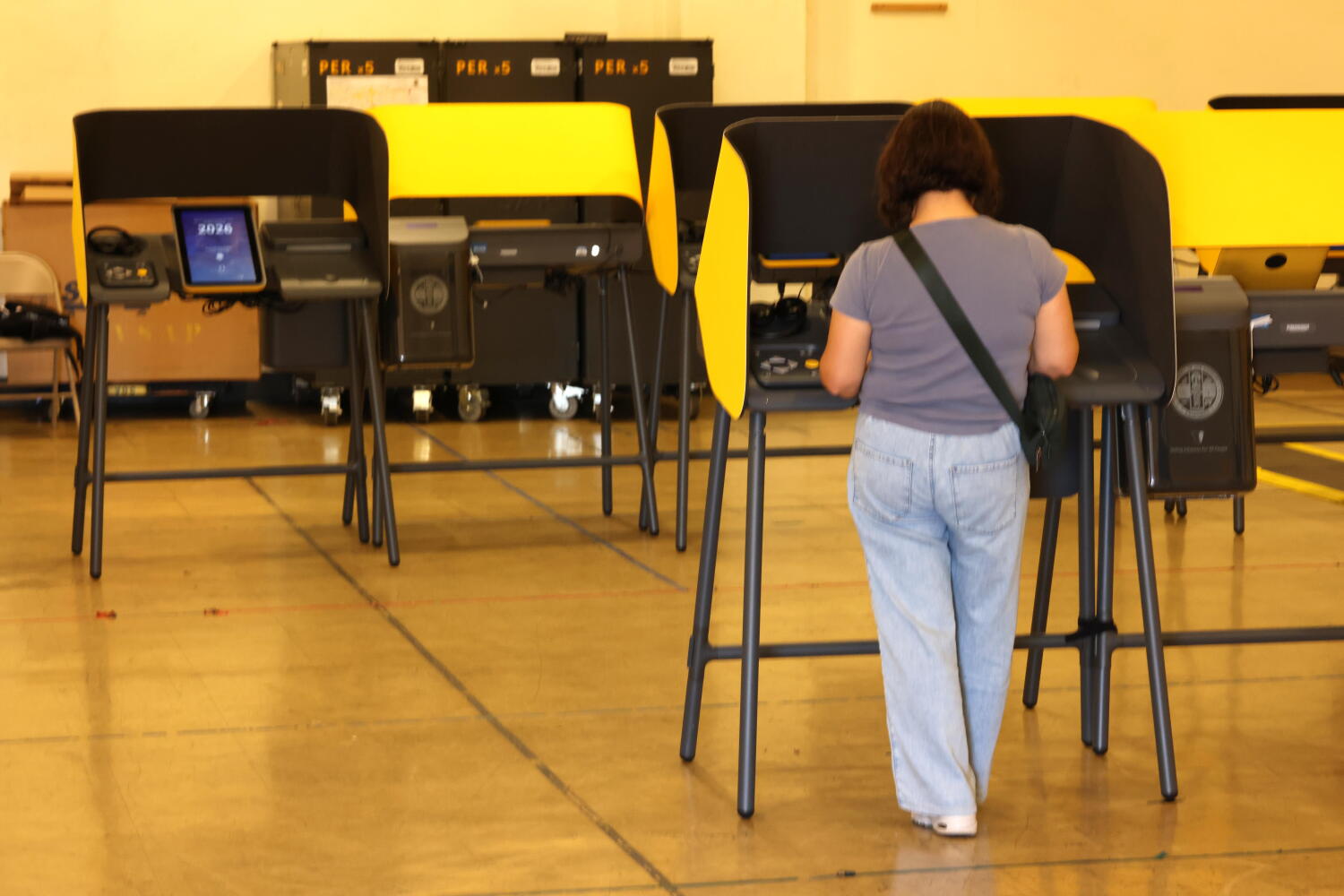
I have spent years watching local election boards operate from the public observation galleries—behind the plexiglass walls where citizens stand with clipboards and tired feet, watching bipartisan teams inspect torn envelopes and smudged postmarks. When you stand behind that glass for six hours, the rhetoric of national politics evaporates. What remains is excruciatingly mundane. A clerk holds a ruler up to a signature. Two observers from opposing parties lean in, squint, nod, and move the envelope to the "accepted" tray. Another envelope has a stray coffee stain or a missing date; it goes into a separate bin for cure notices, triggering a phone call or a postcard to the voter so they can fix the clerical error.
It is slow. It is human. And it is built on a single operating assumption: that a ballot cast by an eligible voter belongs to the voter, not to the state, and certainly not to whichever litigant reaches the courthouse steps first.
When federal attorneys asked the Ninth Circuit to step in and halt the processing of 20,000 California ballots, they were asking the court to override that entire machinery with a single stroke.
Where the Legal Theory Met Cold Water
The hearing itself turned on a deceptively simple problem. You cannot ask a federal appellate court to disenfranchise a small city's worth of people on a hunch.
Throughout the questioning, the Ninth Circuit panel zeroed in on the evidentiary foundation—or lack of it—beneath the government's request. Judges are trained to look for the load-bearing wall in any legal argument. Strip away the urgency, strip away the sweeping claims about statutory compliance and administrative authority, and ask: What is the concrete factual basis showing that these specific ballots are unlawful, and why does federal intervention need to happen right now?
Again and again, the panel pressed counsel on the gap between the scale of the remedy requested and the thinness of the record supporting it.
Think of it like a structural engineer inspecting a bridge. If someone runs into town hall screaming that the bridge must be dynamited immediately because twenty thousand rivets might be defective, the engineer does not hand over the plunger. The engineer asks to see the inspection logs. Which rivets? Tested by whom? Under what standard? And if the inspector admits they haven't actually tested the rivets—they just have a theory about the factory that manufactured them—the conversation changes tone very quickly.
That is precisely what happened in the courtroom.
The judges probed whether the federal government even possessed the standing—the legal right—to demand this kind of wholesale suppression of state-administered ballots. Under the American constitutional design, states run elections. California’s Election Code lays out exhaustive procedures for ballot receipt, signature matching, cure periods, and challenges. Those procedures do not happen in the dark; partisan observers, county registrars, and state courts monitor every phase.
For federal authorities to sweep in and demand that 20,000 ballots be locked out of the count requires showing not just a disagreement over paperwork, but an actual, concrete injury backed by hard evidence. Instead, the panel encountered broad assertions stretched over a massive number of voters.
The Invisible Math of Twenty Thousand
Numbers above a few hundred stop registering in the human brain. We read "20,000 ballots" the same way we read "20,000 tons of grain" or "20,000 square feet." The digits blur together.
So shrink the room.
Imagine a mid-sized minor league baseball stadium on a sold-out Friday night. Every seat from the third-base line around home plate to the right-field foul pole is full. Families eating peanuts, retired couples in windbreakers, college students checking their phones, warehouse workers still wearing their reflective vests. Look at the crowd in the upper deck, then look down at the lower bowl.
Every single person in that stadium represents one of the ballots targeted in the federal filing.
Now imagine walking up to the public address microphone and announcing that because of a dispute between lawyers three hundred miles away, nobody in the stadium gets to have their voice counted this year. Not because anyone proved they cheated. Not because anyone proved they lived out of state. Simply because their tickets were printed in a batch someone wanted to quarantine.
In close races—city council seats, school board measures, state assembly districts, congressional margins decided by a few hundred votes—twenty thousand ballots are not a rounding error. They are the entire ballgame. Even in statewide contests where the top-line winner is already clear, those envelopes contain down-ballot choices that decide whether a local clinic stays open, whether a bond passes to fix cracked elementary school roofs, or who sits on the local superior court bench.
When you block twenty thousand ballots, you do not merely alter a spreadsheet in Sacramento. You silence a town's decision about its own water pipes and fire trucks.
Why Appellate Judges Fear the Unforced Error
There is a quiet discipline to appellate judging that rarely makes it into cable news chyrons. District courts deal in witnesses and exhibits; appellate panels deal in precedent. Every ruling an appellate court issues becomes a loaded weapon sitting on a shelf, waiting for the next litigant to pick it up two or four years down the line.
If the Ninth Circuit were to bless an emergency freeze on 20,000 ballots based on a speculative or underdeveloped factual record, that ruling would not stay confined to California. Tomorrow, it would be cited in Arizona. Next cycle, in Pennsylvania, Georgia, or Nevada. Any losing campaign or hostile agency with a clever theory could file an eleventh-hour emergency motion, wave at a stack of envelopes, and demand that courts stop the count before the evidence is even tested.
Democracy cannot survive a rule where accusation equals suspension.
During the arguments, the panel's skepticism reflected an acute awareness of that trap. Judges across the ideological spectrum share an institutional allergy to being used as emergency levers to short-circuit normal fact-finding. Under well-settled Supreme Court doctrine—often referred to in election circles as the Purcell principle—federal courts are strongly cautioned against altering election rules or disrupting administration at the eleventh hour, precisely because sudden judicial interventions sow chaos and erode public confidence.
Here, the request went even further than changing a rule before Election Day. It asked the court to reach backward and invalidate or freeze ballots after voters had already cast them in reliance on existing law.
Consider the sheer unfairness of that sequence. A citizen checks the state website, verifies their registration, receives an official ballot, fills it out, signs the oath under penalty of perjury, and submits it before the deadline. They have completed their side of the social contract. Changing the terms of that contract retroactively—after the ink is dry and the deadline has passed—violates the most basic instinct of fair play any ordinary person possesses.
You don't move the goalposts while the ball is already in the air.
The Doubt Beneath the Noise
It is worth pausing here to admit something uncomfortable. Election administration in a state of nearly forty million people is messy. Anyone who tells you otherwise has never spent an afternoon inside a county registrar's office during canvass week.
Envelopes arrive with signatures that look nothing like the driver's license signature a voter scribbled on an electronic pad at the DMV twelve years ago when they were nineteen. Voters move and forget to update their apartment number. Mail carriers misroute trays. Machines jam.
People have genuine, visceral anxieties about whether the system works, and dismissing every question as bad faith only deepens the suspicion. When someone hears that 20,000 ballots are the subject of a federal court battle, their first instinct isn't to read the Federal Rules of Appellate Procedure. Their first instinct is to wonder: Wait. Is something actually wrong with those ballots?
That doubt is human. It deserves a straight answer, not a lecture.
And the straight answer is that California—like every other state—already has an explicit, verifiable mechanism for answering that question without throwing twenty thousand voters into limbo. Every single ballot in that disputed pool undergoes individual verification. Canvassers check registration rolls against state and federal databases. They compare signatures with trained eyes, escalating mismatches to multi-person review panels. Observers from political parties sit inches away, watching the screens and logging challenges ballot by ballot.
If an individual ballot is cast by someone who is not registered, who has already voted, or whose identity cannot be verified, the system already has the tools to reject that specific envelope—and build a documented paper trail explaining why.
What the system does not allow is collective punishment. You cannot sweep twenty thousand envelopes off the table with a broom because you suspect a few of them might be flawed. You inspect them one by one. You prove the flaw on the individual record.
That distinction—between targeted verification and sweeping suppression—is the entire fault line running through the Ninth Circuit hearing. When the judges pressed federal lawyers on the factual basis for their motion, they were enforcing the oldest rule in Anglo-American law: allegations are not evidence, and suspicion is not proof.
What Happens When the Gavel Drops
Eventually, the microphones in the San Francisco courtroom clicked off. The lawyers gathered their binders, zipped their briefcases, and walked out onto Seventh Street into the cool Bay Area air.
Back in the county warehouses across California, nothing dramatic happened at that exact second. No confetti fell. No sirens blared.
Instead, a clerk in a lanyard picked up a letter opener, slid the blade beneath the flap of a return envelope, and pulled out a folded sheet of cardstock. Another clerk checked the screen, verified the green checkmark beside the voter's name, and fed the ballot toward the high-speed optical scanner.
Whir. Thump.
One vote tallied. Then another. Then another.
Somewhere in Fresno, our night-shift nurse—Elena, or someone just like her—was waking up to an afternoon alarm, putting on clean scrubs, and checking her phone while the kettle boiled. She might never read the transcript of the Ninth Circuit's questioning. She might never know the names of the three judges who demanded to see the evidence before letting anyone touch her envelope.
She only knows that she kept her promise to show up, and that somewhere in a quiet courtroom miles away, the people entrusted with the law insisted that the system keep its promise to her.