Twenty-three state attorneys general recently sent a letter to Congress demanding immediate federal intervention and strict regulation over artificial intelligence, warning of catastrophic risks to infrastructure, security, and public safety.
It sounds noble. It sounds protective. It is also an absolute disaster disguised as public defense. If you enjoyed this article, you should read: this related article.
When bureaucrats and state officials pile into a room to demand guardrails for a nascent industry, they are not safeguarding citizens. They are pulling up the drawbridge. I have watched legacy incumbents lobby for compliance frameworks precisely because compliance costs money, and money kills competition. Every single time a coalition of states claims they want to "protect the public" from a technological shift, look at who benefits from the resulting red tape. It is never the scrappy startup out of Austin or Berlin. It is the trillion-dollar monopoly that can afford a compliance army of five hundred lawyers.
Let us dismantle the lazy consensus currently dominating Washington corridors. For another angle on this story, see the recent update from TechCrunch.
The core panic centers on infrastructure strain, security threats, and the potential for malicious actors to hijack model weights. The signatories point to potential electricity grid overloads and deepfakes as justification for preemptive controls. But this panic rests on a fundamental misunderstanding of how open markets handle technical turbulence.
The Compliance Trap That Big Tech Built
Let us look at the economic reality. When you introduce mandatory federal licensing, auditing mandates, and liability frameworks for open-source model releases, you do not stop bad actors. Bad actors, by definition, ignore laws. What you successfully eliminate is the independent developer who wants to fine-tune an open-weights model on a single server.
Large language models are rapidly commoditizing. Two years ago, training a frontier model cost tens of millions of dollars and required proprietary supercomputers. Today, open-weights alternatives match yesterday's proprietary giants at a fraction of the compute cost. This democratization terrifies the incumbents who spent billions locking customers into walled gardens.
State-level coalitions panicking over security are playing right into the hands of firms lobbying for closed ecosystems. If you force every developer to register their models, obtain federal clearances, and maintain exorbitant liability insurance, you hand a permanent monopoly to the handful of corporations with infinite balance sheets.
To understand why this is a catastrophic mistake, we must examine what actually happens when regulation outpaces technical literacy.
The Myth of Controllable Code
Lawmakers operate under the comforting illusion that software can be regulated like pharmaceuticals. You test a drug, you prove safety, you release it.
Code does not work that way. Code is logic; it is text; it is math that can be replicated, modified, and distributed across a peer-to-peer network in milliseconds. Trying to bottle up artificial intelligence through state mandates is like trying to regulate the spread of algebra. You can criminalize the distribution of specific weights, but you cannot legislate away the underlying mathematics.
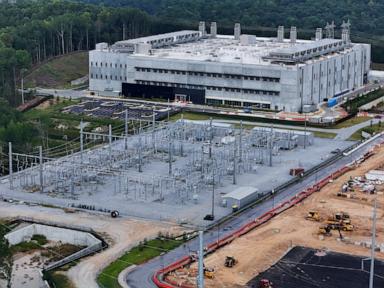
When twenty-three states demand that Congress step in to prevent infrastructure collapse, they are pointing at a real symptom—data centers draw massive amounts of power—while prescribing the wrong medicine. The grid is strained because local zoning laws, environmental obstructionism, and outdated transmission lines have choked energy infrastructure for decades. Blaming algorithmic expansion for a structural grid failure caused by municipal inertia is convenient scapegoating.
Instead of fixing the grid, politicians want to restrict the software. It is the equivalent of banning sports cars because the interstate system hasn't been repaved since 1974.
What Real Risk Mitigation Looks Like
If we want to address actual vulnerabilities—such as automated cyberattacks, fraudulent impersonation, or critical infrastructure disruption—we do not need preemptive licensing boards or congressional oversight committees staffed by people who still print out their emails.
We need targeted liability and market-based resilience.
If a system causes verifiable, direct financial or physical harm through negligence, the creators and operators should face severe, uninsurable legal consequences. That is how mature engineering disciplines operate. Civil aviation does not require a federal bureaucrat to approve every single design choice before a mechanic turns a wrench; instead, it enforces rigorous safety standards through post-incident accountability and rigorous certification of critical components.
By contrast, the AI governance movement wants to choke innovation before a single real-world harm has materialized at scale, purely based on speculative sci-fi dystopias peddled by lobbyists looking to crush upstarts.
Admitting the downside of this contrarian view is essential: a completely open, unregulated frontier does invite bad actors. Phishing attacks will become more sophisticated. Scams will scale. Misinformation will require better cryptographic provenance tools.
We combat those threats with better technical tooling—cryptographic watermarking, decentralized authentication, and aggressive prosecution of actual fraud—not by handing the keys of the digital economy over to the federal government and incumbent monopolies.
The Bottom Line
The twenty-three attorneys general writing letters to Congress are not protecting your future. They are protecting legacy power structures from the humbling reality of open competition.
Stop asking the state to save you from math.
Build better tools. Decentralize the infrastructure. Let the code run.


