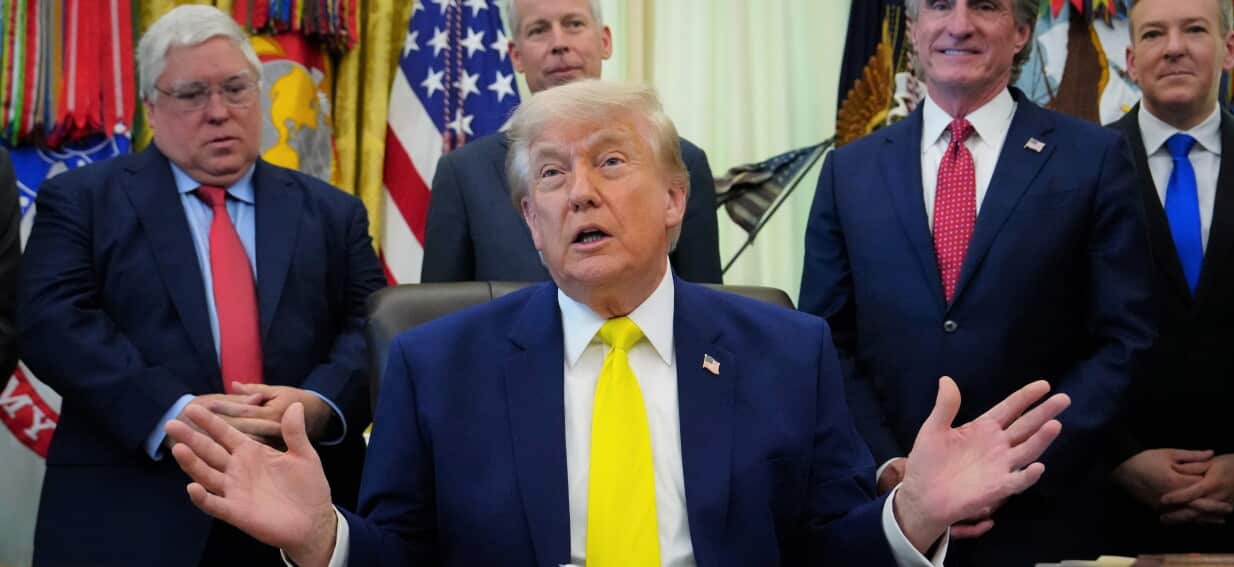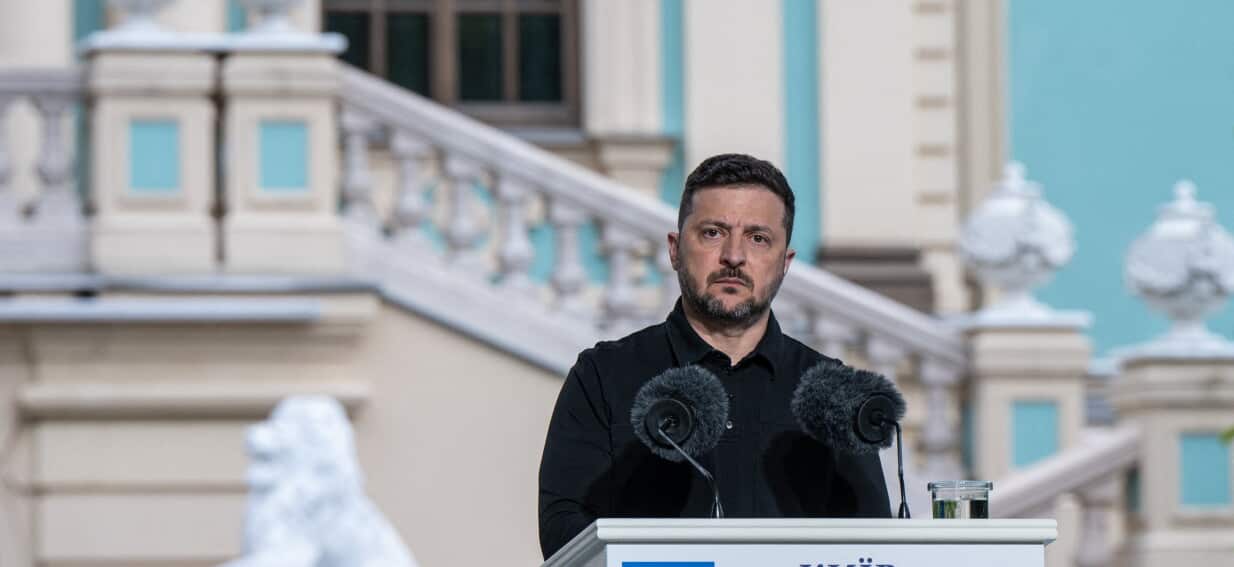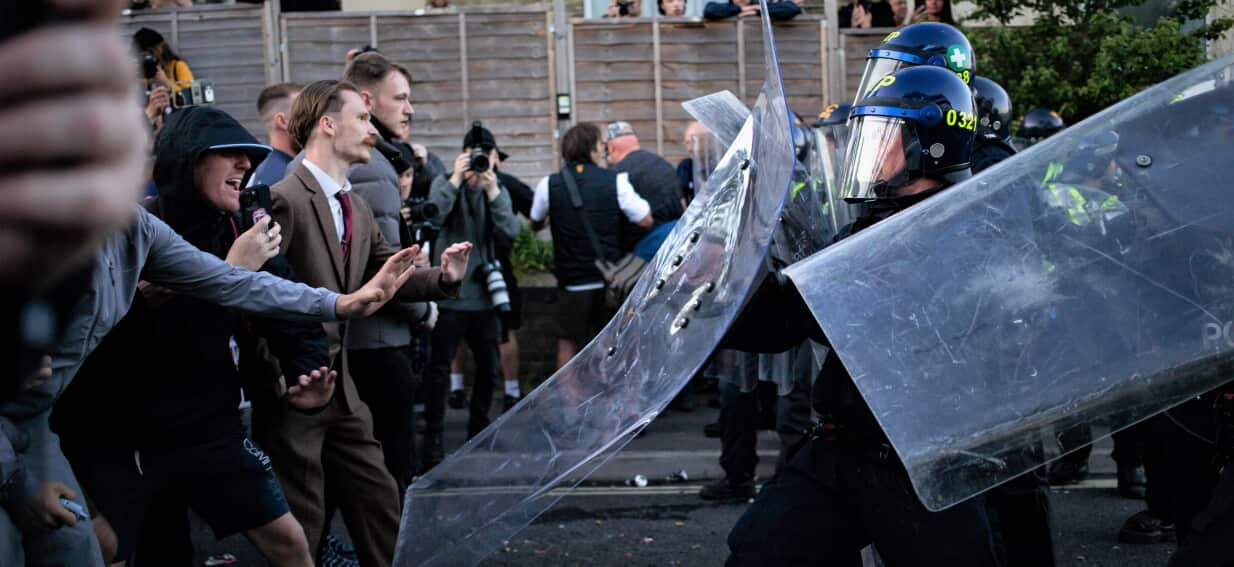
The transatlantic finger-pointing over "two-tier policing" is a masterclass in political theater. Following the tragic murder of a British student and the subsequent civil unrest, American political figures wasted no time accusing the UK of maintaining a double standard—policing right-wing protestors with a heavy hand while coddling left-wing or minority groups. The British establishment, predictable as ever, retreated into defensive posturing about operational independence.
Both sides are completely wrong. Meanwhile, you can read similar developments here: Why Russias Hypersonic Zircon Missile Strike Changes the War in Ukraine.
The lazy consensus dominating the headlines is that law enforcement agencies have succumbed to partisan ideology, deliberately choosing who to protect and who to prosecute based on a political agenda. This narrative is comforting to partisans because it suggests the system is functioning exactly as intended, just for the "wrong team."
The reality is far more unsettling. There is no ideological conspiracy. What critics call "two-tier policing" is actually the desperate, systemic triage of failing institutions that can no longer maintain basic public order. To see the complete picture, we recommend the recent article by The New York Times.
The Illusion of Ideological Bias
When a police force treats an aggressive crowd of rioters differently than a sit-in protest, commentators immediately cry foul. They point to the disparities in arrests, response times, and the use of force as definitive proof of a political tier system.
I have spent years analyzing public safety data, municipal budgets, and operational deployments. I have sat in the rooms where command decisions are made during civil crises. The truth behind these decisions is governed by logistics, risk mitigation, and resources—not political theory.
When the US accuses the UK of dual standards, it ignores its own fragmented policing structure. The American model relies on sheer numbers, heavy militarization, and overlapping jurisdictions (local, county, state, and federal) to crush unrest through overwhelming force. The British model, built on the principle of policing by consent, relies on a critically underfunded, unarmed frontline that is structurally incapable of handling multi-site civil disobedience simultaneously.
What looks like soft policing toward one group is almost always a tactical retreat driven by a lack of available personnel. Conversely, what looks like an iron-fisted response to another group is often the result of a panicked, consolidated deployment where a force finally musters enough mutual aid to make mass arrests. It is not bias; it is resource bankruptcy.
Tactical Triage is Not Two-Tier Justice
To understand why the mainstream narrative is broken, we must look at how police departments actually allocate resources during a crisis. Imagine a scenario where a city experiences simultaneous flashpoints: a highly volatile, disorganized riot in a commercial district and a peaceful but disruptive blockade outside a government building.
A department operating at a 30% staffing deficit cannot handle both effectively. Command staff face a brutal calculation:
- Option A: Split forces thinly across both sites, risking officer safety and failing to contain either event.
- Option B: Leave the peaceful blockade alone to concentrate every available unit on containing the volatile riot.
When commanders choose Option B, the media outlet sympathetic to the rioters screams "two-tier policing," claiming the blockade is being given a free pass due to political favoritism. This is a fundamental misunderstanding of operational triage.
[Operational Triage Flowchart]
CRISIS SCENARIO: Multi-Site Unrest
       │
       ▼
Staffing Deficit Exists? ──► YES ──► Prioritize High-Volatility Sites
       │                                     │
       ▼                                     ▼
   NO ACTION                             Resource Allocation Shift
       │                                     │
       ▼                                     ▼
Uniform Deployment                   Media Narrative: "Two-Tier Bias"
The data supports this resource crisis. Across both the US and the UK, police retention rates have plummeted over the last decade. According to data from the Police Executive Research Forum (PERF), officer resignations in the US jumped by over 45% between 2020 and 2025. In the UK, Home Office statistics reveal that voluntary resignations have hit record highs year after year.
We are asking hollowed-out agencies to manage complex societal fractures, and when they use basic triage to survive the night, we accuse them of playing politics.
Dismantling the "People Also Ask" Delusions
The public discourse surrounding this issue is filled with deeply flawed assumptions. Let us dismantle the most common premises directly.
Does two-tier policing actually exist?
No, not in the way the public thinks. It does not exist as a top-down directive to favor one political ideology over another. However, a structural two-tier system does exist based entirely on economics. If you live in an affluent neighborhood that can afford private security integration or boasts a high tax base to fund local precincts, you experience rapid response times and proactive policing. If you live in a marginalized, high-crime zip code, you experience reactive, slow-motion policing. The divide is financial, not ideological.
Why do police respond differently to different protests?
Because protests are not homogenous monolithic events. They have different risk profiles. A crowd that demonstrates high levels of internal organization and clear leadership is easier to manage with a light footprint. A decentralized, leaderless crowd fueled by online misinformation poses a highly unpredictable threat vector. Police tactics change based on crowd dynamics and crowd physics, not the slogans written on the cardboard signs.
How can governments fix the policing crisis?
Stop trying to fix the optics and start fixing the operational reality. The standard political playbook is to launch an independent inquiry, issue a report on systemic culture, and promise implicit bias training. This achieves absolutely nothing. It is a cosmetic bandage on a sucking chest wound.
The Danger of the Elite Narrative
The real danger of the "two-tier" accusation is that it creates a self-fulfilling prophecy. When mainstream political figures validate this myth, they erode the foundational legitimacy required for public safety to exist at all.
When the right believes the police are a tool of the progressive elite, and the left believes the police are an inherently oppressive tool of the state, cooperation vanishes. Witnesses stop talking to detectives. Communities refuse to cooperate with local precincts. Recruitment pools dry up completely, leaving only the least qualified candidates to fill the vacancies.
The downside to my contrarian view is stark: admitting that the system is broken due to resource exhaustion rather than malice is terrifying. It means there is no easy villain to fire. It means the solution requires massive, long-term structural investment, a complete overhaul of criminal justice metrics, and an honest conversation about the limits of state power during civil unrest. It is much easier for politicians to blame a imaginary biased chief of police than to admit that forty years of municipal mismanagement has left the state incapable of securing its own streets.
The Actionable Reality
If you want to understand where public safety is heading, ignore the political rhetoric and watch the capital allocation.
The institutional police force as a monoculture is dying. In its place, we are seeing the rise of a fragmented security environment. Wealthy enclaves are actively seceding from municipal police protection by funding private, armed security districts. Tech corridors are replacing physical patrols with automated surveillance architectures and algorithmic monitoring.
Meanwhile, underfunded municipal forces are being left to manage the fallout in areas that cannot afford to opt out. That is the real two-tier system developing right under our noses, and it has absolutely nothing to do with who is sitting in the White House or 10 Downing Street.
Stop viewing public order through the distorted lens of culture wars. The police are not prosecuting an ideological crusade against your movement. They are barely holding the line against total operational collapse, and they are running out of time.