Paper shuffles faster than hope when a country is tearing itself in half.
In the final stretch before a run-off election in Brazil, the loudest battle is not happening at rallies or on television debates, nor is it playing out in the quiet arithmetic of undecided voters weighing groceries against gasoline. It is happening inside courtrooms, electoral filings, and urgent motions aimed at a single, ruthless goal: knocking the other man out of the race before millions of citizens ever cast a second ballot.
To understand what that feels like on the ground, picture a fictional voter—let's call her Camila, a school nurse in a mid-sized city in Minas Gerais, and note clearly that she is a composite, hypothetical character created to mirror real-world pressures. On a Tuesday afternoon in October, Camila stands at the kitchen counter with a mug of cooling coffee and her phone buzzing beside a stack of bills. Her neighbor swears the election is already rigged through legal trickery. Her cousin in São Paulo insists the only way to save the republic is to strip the rival camp of its standing before Sunday. Camila just wants to know if her vote on Sunday will count, or if the lawyers in Brasília have already decided the menu before the guests sit down.
Confusion is exhausting. Sometimes I catch myself reading three legal briefs in a row and feeling like democracy has been turned into a closed-door chess match where the pieces are people's voices. Even seasoned observers of Brazilian politics admit how dizzying it can be when every speech becomes a potential court exhibit and every campaign ad is scrutinized for rule violations, abuse of economic or political power, or unlawful propaganda.
The Courtroom Becomes the Campaign Trail
Elections are supposed to be a test of persuasion. Disqualification petitions turn them into a test of survival.
When Luiz Inácio Lula da Silva and Jair Bolsonaro stand across from each other in a run-off showdown, each brings decades of political muscle, fierce loyalty, and deep polarization. Brazil's electoral system has strict rules designed to keep campaigns fair—limiting how candidates use public resources, policing disinformation, and barring abuses of power that could tilt the playing field. Those rules exist for a reason. A young democracy—and Brazil's current democratic constitution dates back to 1988 after twenty-one years of military rule—learned the hard way what happens when power goes unchecked.
Yet when rivals weaponize disqualification efforts days before a run-off, the motive rarely looks like quiet civic housekeeping. It looks like a shortcut. Winning at the ballot box requires convincing a skeptical slice of the electorate in a country of over two hundred million people. Winning in court—or weakening an opponent through high-stakes legal challenges and public accusations of illegitimacy—aims to remove the obstacle altogether, or at least stain their candidacy right as minds are hardening.
Think of it like two boxers stepping into the ring for the championship round, only one camp spends the final days trying to get the other fighter disqualified on a technicality in the locker room. Even if the referee waves off the protest, the crowd has already seen the commotion, and nobody trusts the bell the same way again.
I have stood in crowded squares during Brazilian election seasons where the air smells like grilled corn, exhaust, and wet flyers, and watched people argue until their voices cracked over things they hadn't even verified. In places like that, rumor travels faster than a bus on a rainy morning. When leaders accuse each other of cheating or try to push each other off the ballot at the eleventh hour, ordinary citizens feel the tremor in their own chests. Will there be protests blocking the highway? Will shops close early? Will my family stop speaking at Sunday lunch?
Why Last-Minute Disqualification Moves Cut So Deep
To grasp why a push to disqualify a rival days before a run-off hits so hard, look at the timing. A first round narrows a crowded field down to the two finalists. The run-off is the final funnel—a binary choice where every percentage point matters and undecided voters hold the balance.
Launching legal challenges or disqualification campaigns in that narrow window does three things at once:
- It floods the news cycle with procedural drama instead of concrete policy choices.
- It primes supporters to view an unfavorable outcome as stolen rather than lost.
- It forces courts and electoral authorities into a pressure cooker where every ruling is attacked as partisan.
Consider what happens next when a citizen like our hypothetical nurse Camila opens social media after a twelve-hour shift. Instead of hearing what either leader plans to do about hospital staffing, inflation, or public safety, she sees clips of lawyers sparring, slogans claiming the other side is illegitimate, and warnings that democracy itself is on the brink.
A common question people ask in moments like this is whether seeking to disqualify a rival is "allowed" or just dirty politics. Legally, candidates and parties have the right to bring complaints when they believe electoral laws were broken, and courts have the authority to review abuse of power or eligibility issues. Politically and emotionally, though, timing changes the meaning. Filing broad or dramatic disqualification bids right before a decisive vote often reads less like a calm appeal to justice and more like an attempt to overturn the voters before they speak.
Another question that nags at people is why voters stay so loyal even when their preferred leader goes on the offensive. Loyalty in polarized politics rarely runs on spreadsheets alone. For millions of Brazilians, Lula represents memory, social inclusion, and programs that lifted families out of poverty during earlier administrations, while Bolsonaro represents a fierce pushback against established institutions, traditional morality, and perceived corruption. When you see a leader as a shield protecting your way of life, an attack on them feels personal.
The Invisible Stakes Behind the Headlines
Strip away the legal jargon and you find something fragile underneath: trust.
Democracy is not a concrete monument like the cathedral in Brasília. It is a habit. It survives because millions of people agree to abide by the rules even when their side loses, trusting that they will get another shot next time.
Every time a campaign tries to disqualify its opponent at the finish line—or casts doubt on the fairness of the process itself—that habit frays a little more. Even when electoral courts reject sweeping attempts to knock major contenders out of a run-off, the residue remains. Doubt lingers like smoke in a room after the fire is out.
If we treat this moment as a purely hypothetical thought experiment—imagine a town square where two rivals each tell half the crowd that the scale is rigged and the other half that the rival shouldn't even be allowed to weigh his grain—nobody walks away calm. Everyone grips their bag tighter. Everyone prepares for a fight.
And that is the real danger beneath the headlines. A run-off is meant to give a divided country closure, a clear mandate to govern for the next four years. When the final days are consumed by mutual disqualification efforts, closure becomes harder to reach. The winner faces immediate legitimacy questions; the loser's supporters feel cheated before the tally is even finished.
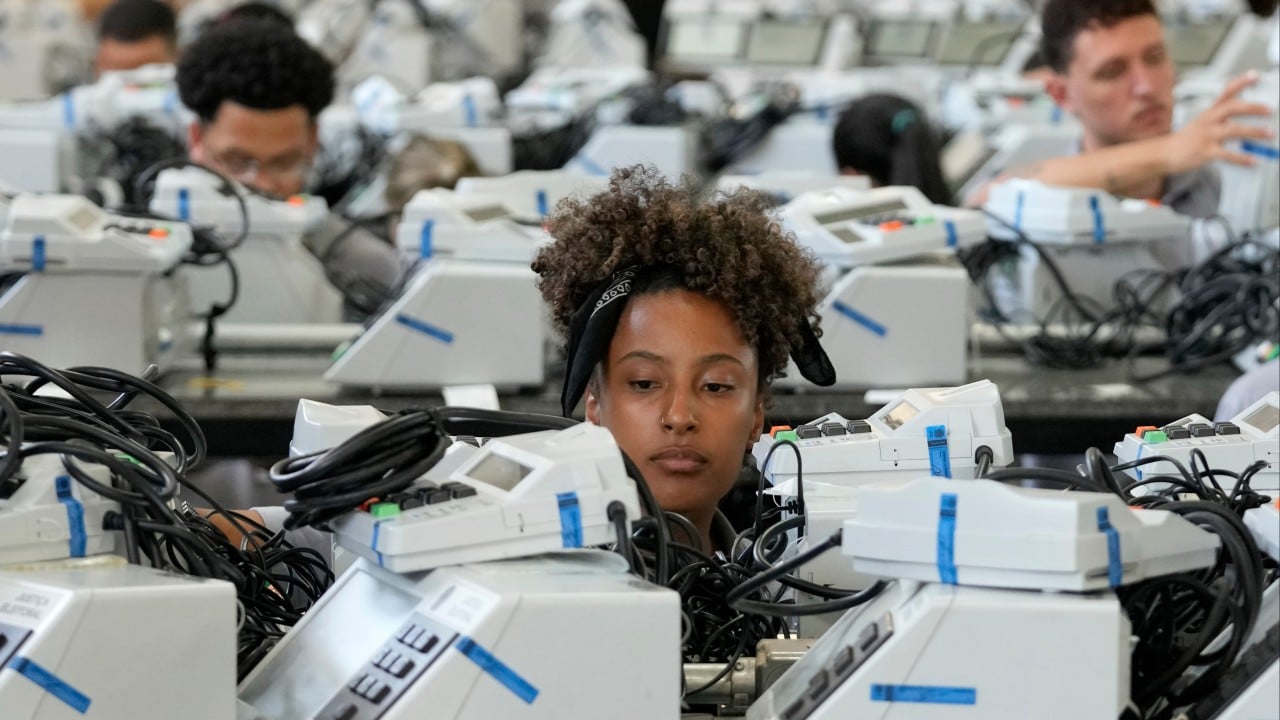
Back in Minas Gerais, Camila sets her coffee mug down and looks out the window at the streetlamp flickering on as dusk settles over the hills. She does not hold a law degree or a seat in Congress. Yet on election day, she will walk into the voting booth with the same quiet power as the loudest pundit on television—one person, one choice, holding a piece of the country's future in her hands.
A ballot box is a small, quiet thing, and no courtroom brief can ever replace the sound of millions of ordinary footsteps walking toward it on a Sunday morning.