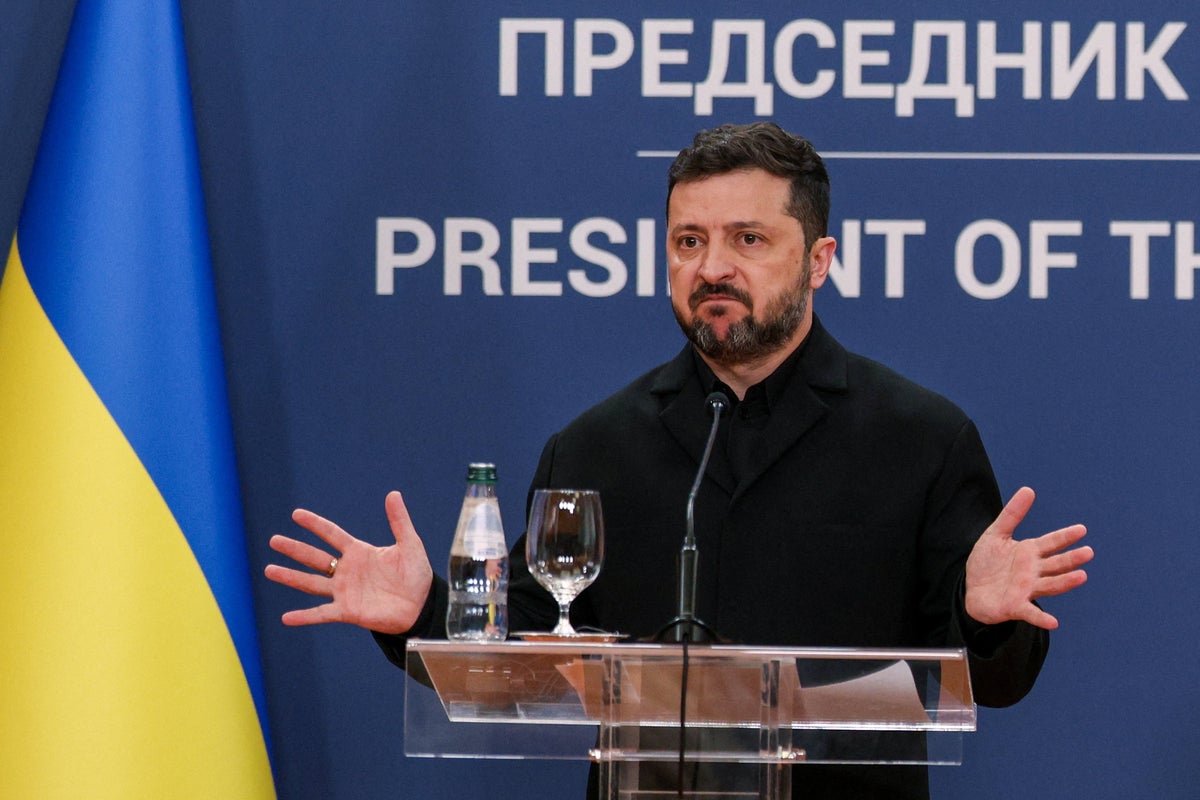
War updates often sound like endless chaos. Every week brings reports of grinding trenches, aerial bombardments, and shifting frontlines that leave casual observers wondering if anything ever actually changes. But President Volodymyr Zelenskyy’s recent operational update breaks that muddy narrative wide open. Kyiv’s forces didn't just stumble into a lucky counterattack. They methodically clawed back hundreds of square kilometers in a specific southern sector exactly as mapped out by their military command.
If you want to understand what is actually happening on the ground instead of relying on sensationalized headlines, you have to look closely at the Oleksandrivskyi sector. This is where precision planning meets hard execution.
The Real Numbers Behind Kyiv's Push
Let's look at the hard data instead of vague battlefield claims. Ukrainian forces recaptured 745 square kilometers—about 288 square miles—of Russian-occupied territory in this key operational zone over the course of the year.
Zelenskyy pointed straight to this success, stating that the entire operation ran with mathematical precision. Open-source intelligence outfits like DeepState back up these claims, confirming that dozens of frontline settlements have returned to Ukrainian control.
Here is what that operation actually achieved:
- Territory Regained: 26 settlements brought back under Kyiv's control in the targeted 60-kilometer stretch.
- Personnel Impact: Russian losses in this specific sector topped 9,550 killed and over 6,600 wounded.
- Exchange Fund: A fresh influx of Russian prisoners of war to replenish the pool for future swap negotiations.
Why This Operational Sector Matters
The Oleksandrivskyi sector sits at a crucial meeting point of the Dnipropetrovsk, Zaporizhzhia, and Donetsk regions. For months, Russian forces tried to use this axis to pressure southern supply lines and threaten surrounding infrastructure. By turning the tables through a planned, methodical push, Ukraine disrupted those offensive designs.
Military strategy isn't just about holding ground; it's about forcing the enemy to react to your moves. When you push back troops across multiple settlements, you strain their logistics and stretch their reserves thin.
Open-source mapping analysis shows that Ukrainian units managed to clear 19 settlements outright while pushing back opposing forces in several others. It's a textbook example of tactical counter-pressure neutralizing a larger adversary's momentum.
The Broader Air and Sea Campaign
Land offensives tell only half the story. While ground units advanced in the south, long-range capabilities struck targets of high strategic value. A coordinated drone and missile strike hit the Russian Black Sea naval base at Novorossiysk, forcing major grain terminals to pause operations.
When you target warships like frigates and landing vessels sitting inside a major naval hub, you send a clear message about reach and capability. Moscow's agriculture ministry immediately scrambled to redirect export routes, proving that these strikes carry real economic and operational consequences far from the immediate trenches.
What Most People Misunderstand About Air Defense
Everyone talks about tanks and artillery. But the real bottleneck heading into the colder months is air defense capacity.
Zelenskyy highlighted a stark reality during recent international briefings. Ukraine needs a small fraction of Western Patriot interceptor stocks—roughly five percent of total inventory—to secure its airspace and protect critical infrastructure from ballistic missile barrages through the winter.
Right now, supplies are running razor-thin compared to prior years, even as the volume of incoming missile threats increases. Relying on sheer grit on the front lines means nothing if civilian centers and energy grids freeze in the dark.
Actionable Takeaways for Following the Conflict
If you are trying to track this war accurately, stop scrolling through random social media clips. Focus on verifiable metrics and reports from ground-level mapping groups that cross-reference visual evidence.
Look past daily claims of village captures by either side. Pay attention to sustained logistics, prisoner exchange pools, and aerial defense resource allocations. That is where the actual trajectory of the conflict gets decided.