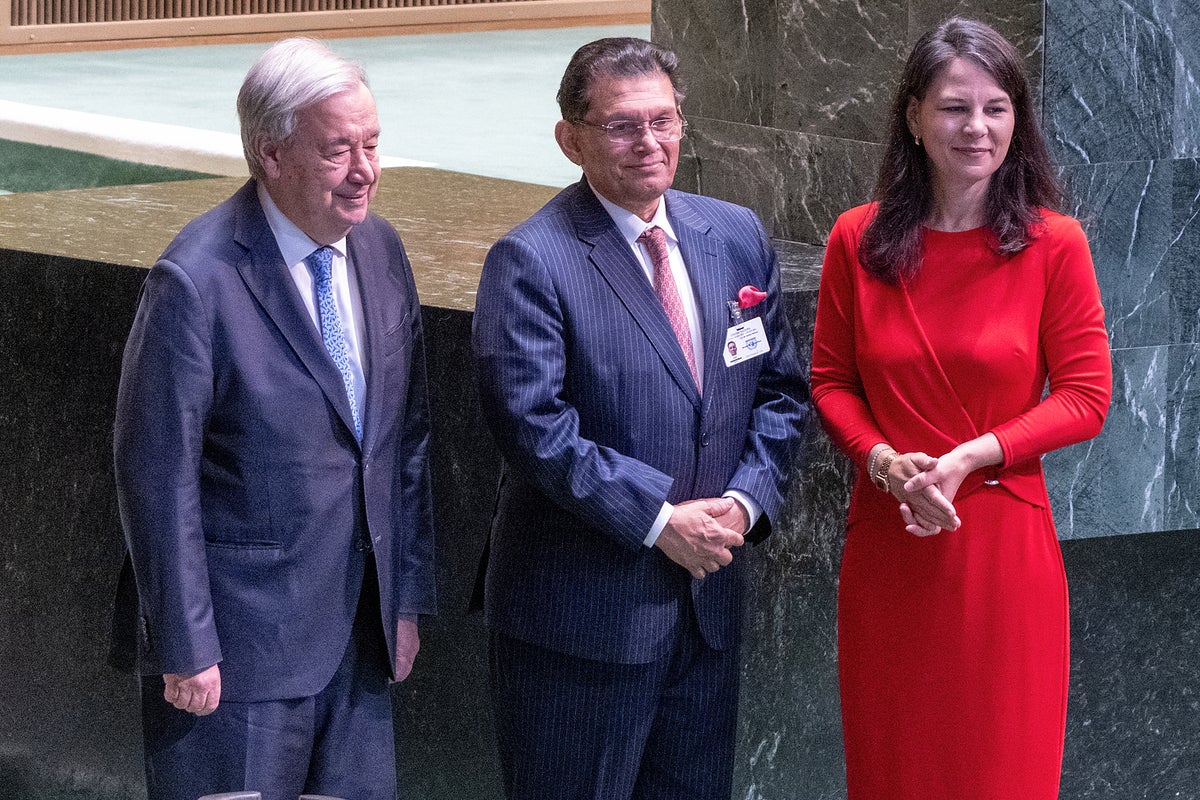
The international diplomatic corps is currently patting itself on the back. The mainstream media is running predictable headlines celebrating a "historic triumph" after Bangladesh’s Foreign Minister defeated Cyprus’s ambassador to claim the presidency of the 81st session of the United Nations General Assembly.
They want you to believe this vote was a rigorous evaluation of geopolitical strategy, a victory for the Global South, or a testament to superior diplomatic maneuvering.
It was none of those things.
The belief that the UN General Assembly (UNGA) presidency is won on merit, policy platforms, or vision statements is a fairy tale for idealistic undergrads. Having spent nearly two decades watching multilateral institutions burn through billions of dollars while spinning their wheels in New York and Geneva, I can tell you the brutal truth. This election was a cold, transactional numbers game dictated by regional rotation pacts and backroom horse-trading.
To understand what actually happened, we have to strip away the sanitised press releases and look at the raw mechanics of UN power.
The Illusion of a Bitter Geopolitical Showdown
The mainstream narrative framed this race as a high-stakes clash between competing visions for the UN. Cyprus put forward a seasoned diplomat; Bangladesh ran its sitting foreign minister. Analysts whipped themselves into a frenzy analyzing how each candidate would handle current global conflicts, climate finance, and institutional reform.
This is a fundamental misunderstanding of how the UNGA operates.
The UNGA presidency is a prestigious, highly visible position, but it is largely ceremonial. The president cannot veto resolutions. They cannot deploy peacekeepers. They cannot force member states to pay their dues. What they can do is control the gavel, set the daily agenda, and influence the tone of debate.
Because the actual policy output of the office is heavily constrained by the UN Charter, member states do not vote based on who has the best plan to save the world. They vote based on a ledger of sovereign IOUs.
The Math Behind the Gavel
The UNGA presidency rotates strictly among five regional groups: African, Asia-Pacific, Eastern European, Latin American and Caribbean, and Western European and Others. This year, it was the Asia-Pacific group's turn.
When a single regional group cannot agree on a consensus candidate, the choice goes to a secret ballot of the entire 193-member assembly. That is when the real auction begins.
When you look at Bangladesh's victory over Cyprus, do not look at their respective speeches. Look at the voting blocs.
- The Non-Aligned Movement (NAM): Bangladesh is a heavyweight within this 120-member bloc. Cyprus, despite its historical ties to the movement, is an European Union member state. In a secret ballot, NAM members almost always default to solidarity with one of their own over an EU nation.
- The Organisation of Islamic Cooperation (OIC): With 57 member states, the OIC represents a massive voting phalanx. Bangladesh leveraged this network effectively, securing a baseline of support before the first ballot was even cast.
- Bilateral Horse-Trading: This is the part the public never sees. A vote for the UNGA presidency is rarely traded for just a vote. It is traded for support on a upcoming human rights council seat, a promise of development aid, or reciprocal backing for a specialized agency directorship three years down the line.
To say one candidate "defeated" the other because of superior qualifications is like saying a corporate raider won a hostile takeover because they have a nicer smile. They won because they held the shares. Bangladesh had the institutional math on its side from day one.
The Flawed Premise of UNGA Reform
A question that inevitably surfaces during these election cycles is: "How will the new UNGA president reform the United Nations to make it more effective?"
This is the wrong question entirely. The premise itself is broken.
The UNGA president does not possess the structural authority to reform the UN. The structural paralysis of the United Nations resides entirely within the UN Security Council (UNSC) and its P5 veto power (United States, Russia, China, France, and the United Kingdom).
Imagine a scenario where a corporate board is completely deadlocked because five legacy shareholders hold absolute veto power over every major operational decision. The company is bleeding cash, its projects are stalling, and its relevance is tanking. Now imagine the shareholders hold an elaborate, expensive election to choose a new master of ceremonies for the annual general meeting.
That master of ceremonies is the UNGA president.
They can moderate the discussion beautifully. They can speak eloquently about the need for corporate synergy and agility. But they cannot change a single line of the corporate bylaws, and they cannot override the veto of the legacy shareholders.
Why the "Success" of the Presidency is a Lagging Indicator
True institutional efficacy at the UN is not driven by who sits in the president's chair; it is driven by external geopolitical realities.
When the major global powers are in alignment, the UN appears highly effective. When they are in a state of proxy conflict or diplomatic gridlock, the UN appears useless. The UNGA president is merely a cork floating on those geopolitical waves, not the current driving them.
| Metric | UN General Assembly President | UN Security Council Permanent Member |
|---|---|---|
| Source of Power | Temporal rotation, secret ballot victory | Historical post-WWII structural entrenchment |
| Legislative Authority | Passes non-binding resolutions | Passes binding international law resolutions |
| Enforcement Capability | None (Relies on voluntary compliance) | Can authorize sanctions, embargoes, and military action |
| Veto Power | None | Absolute over substantive matters |
When we celebrate the election of a new president as a major geopolitical shift, we are confusing pageantry with power.
The Hidden Cost of the Diplomatic Campaign
There is a dark irony to these high-profile UN elections that insiders rarely discuss publicly: the sheer drain on a developing nation's diplomatic capital.
Running a global campaign for a UN presidency requires a massive expenditure of time, money, and diplomatic leverage. For months leading up to the vote, a country's foreign ministry must pivot its embassies worldwide into campaign hubs. Ambassorships are leveraged, bilateral meetings are dominated by vote-solicitation, and political capital is spent.
For an emerging economy like Bangladesh, that capital is finite.
Every time a diplomat asks an African or Latin American counterpart for a vote in a ceremonial UN election, that is one less favor they can ask for regarding trade concessions, bilateral investment treaties, or labor migration agreements.
I have seen nations burn through millions of dollars in travel budgets and exhaust years of accumulated goodwill just to secure a prestigious chair for 12 months. Once the year is up, the president steps down, the circus moves on to the next regional group, and the nation is left with a pile of commemorative photos and a depleted reservoir of diplomatic favors.
The contrarian truth is that Cyprus may have actually won by losing. They kept their diplomatic capital intact, avoided the logistical nightmare of managing a fractured assembly for a year, and can now deploy their resources toward tangible European and Mediterranean policy goals that yield direct national benefits.
Dismantling the "Global South" Monolith
Another lazy consensus surrounding this election is that Bangladesh's victory represents a unified triumph for the "Global South."
The term "Global South" has become a catch-all phrase used by journalists and academics to imply a unified geopolitical bloc with shared interests. It does not exist. The economic and strategic realities of India do not align with those of Tuvalu. The energy priorities of Saudi Arabia are fundamentally opposed to those of low-lying coastal nations.
By framing this election as a victory for the Global South over an EU nation, analysts obscure the deep, systemic fractures within the developing world itself. Bangladesh did not win because it spoke for a unified collective of developing nations. It won because it successfully navigated the specific, highly localized grievances and self-interests of individual voting states.
If we want to understand international relations in the modern era, we must stop viewing votes through the simplistic lens of North vs. South or East vs. West. It is an anarchic marketplace of sovereign entities maximizing their own utility.
Stop Looking at the Gavel; Watch the Floor
If you want to know where the international order is heading, ignore the results of the UNGA presidential elections. Stop reading the profiles of the winners. Stop analyzing the voting margins.
Instead, look at the resolutions that fail to get implemented. Watch the bilateral corridors where actual trade routes, security pacts, and supply chain investments are negotiated while the assembly room is empty.
The UNGA presidency is a magnificent piece of theater. It gives the world the illusion of global democracy, where every nation has an equal voice and a shot at leadership. But theater does not govern the world. Power does.
Stop treating the seating chart of the Titanic as if it alters the trajectory of the iceberg.


