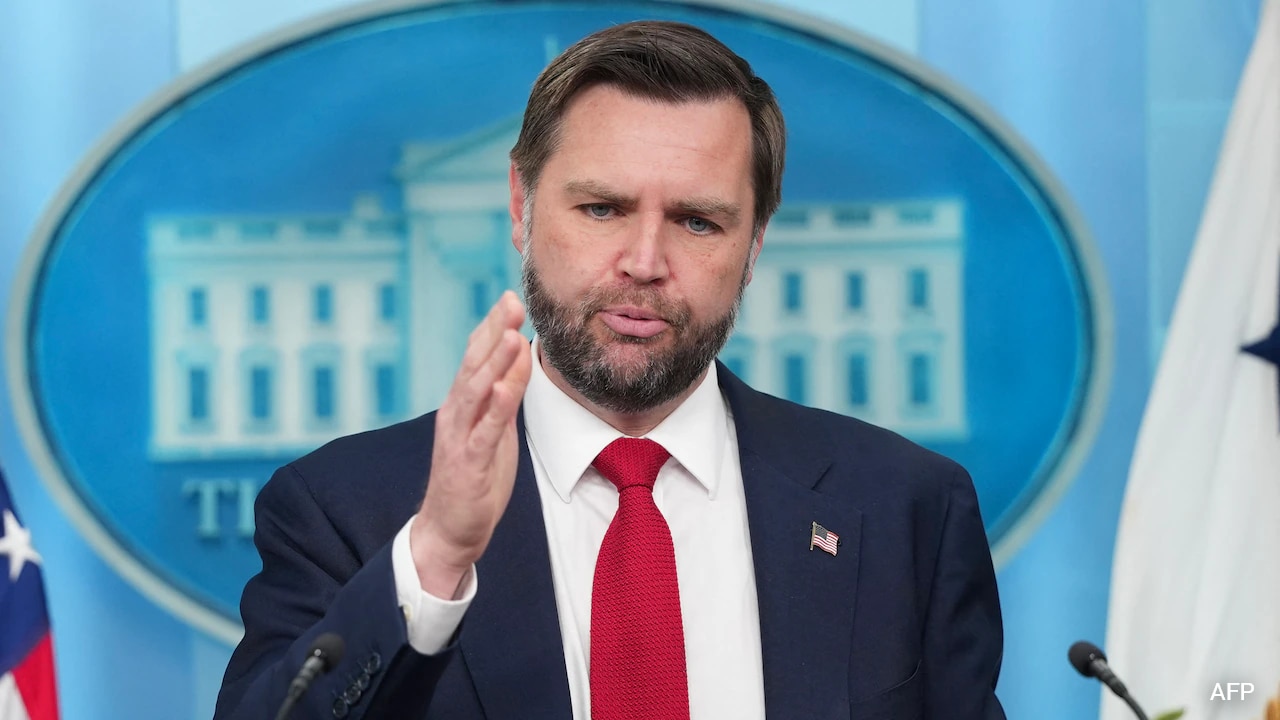
The frantic meltdown in Jerusalem over the White House's newly minted Memorandum of Understanding with Tehran is entirely predictable, totally unhinged, and mathematically illiterate. When Vice President JD Vance looked into the cameras and told Israel’s cabinet ministers to "wake up and smell the reality," he was not turning his back on a historic ally. He was delivering a calculated injection of cold, transactional realism to a defense establishment that has spent the last four months under the delusion that American military logistics are infinite.
The lazy consensus dominating the media right now screams that the Trump-Vance administration is pulling off a historic betrayal, selling out Jerusalem for cheap oil and a quick diplomatic win at Versailles. That narrative is built on lazy sentimentality. It ignores the hard physics of modern warfare. For years, I have watched defense intellectuals in Washington bankroll foreign military operations under the assumption that the American industrial base can indefinitely supply multi-front hot wars without facing a day of reckoning. That day has arrived.
Vance’s blunt rebuke to Israel’s far-right ministers—specifically Itamar Ben-Gvir and Bezalel Smotrich—was not an emotional outburst. It was an eviction notice served to a flawed strategic doctrine. When Vance asked, "What is your exact proposal? You're a country of nine million people. You can't just kill your way out of solving every single national security problem," he exposed the fatal flaw of the modern kinetic state. You cannot bomb your way to absolute security when your entire defensive architecture relies on a manufacturing supply chain located 6,000 miles away.
The Mirage of Infinite Interception
The core of the Israeli objection to the 14-point memorandum signed in France is that it limits their ability to completely dismantle Hezbollah in Lebanon and permanently crush the Iranian regime. They view any diplomatic off-ramp as an existential threat. But let us look at the ledger.
War is a matter of consumption rates. During the three months of intense ballistic and drone exchanges that kicked off in late February, the consumption of defensive munitions reached a pace that no Western economy can sustain over a multi-year horizon. Israel’s multi-layered defense network is a technological marvel, but it is also a logistical trap. Every single interceptor fired costs anywhere from tens of thousands to millions of dollars. More importantly, they take months to manufacture.
Vance dropped the most critical data point of the entire press conference, one that the critics purposefully gloss over: two-thirds of the defensive weapons protecting the Israeli homeland are built by American hands and paid for by American taxpayers.
Consider the operational reality of procurement cycles. The United States defense industrial base is already severely strained. Factories production lines for critical guidance systems, rocket motors, and specialized explosives cannot simply be dialed up by turning a knob. When a nation relies on foreign taxpayers to replenish its magazines every time an air-raid siren sounds, that nation does not possess absolute strategic autonomy. It possesses a conditional lease on survival.
By forcing a 60-day freeze on hostilities, the White House is not abandoning Jerusalem; it is preventing a catastrophic structural depletion of the Pentagon’s own reserve stockpiles. If the current rate of munitions expenditure had continued for another six months, the United States would have been left strategically exposed in eastern Asia and Europe. Realist foreign policy dictates that Washington’s global position will always override the maximalist war aims of a regional partner.
The Economics of a Trillion-Dollar Crater
The loudest critics of the Versailles memorandum claim that the lifting of crude oil sanctions and the creation of a proposed $300 billion economic rehabilitation fund will instantly revitalize the Islamic Republic, turning it into an unstoppable nuclear juggernaut. This argument relies on complete economic ignorance.
Iran is not entering these negotiations from a position of strength. The last ninety days of targeted kinetic operations have inflicted roughly one trillion dollars of structural damage on the Iranian industrial base. Their domestic economy is experiencing catastrophic hyperinflation, and their domestic distribution networks are completely fractured.
The idea that giving Iran permission to sell a few million barrels of oil will suddenly reverse a trillion-dollar economic crater is absurd. The cash flow generated under the early phases of this agreement is a drop in the bucket compared to what Tehran needs just to keep its electrical grids and basic infrastructure from collapsing. It is a tactical carrot designed to give the pragmatists inside the Iranian system leverage over the ideological hardliners.
Let us trace the structural mechanics of the agreement. The memorandum establishes a strict, conditional sequencing framework:
- Hostility Freeze: Immediate cessation of cross-border missile strikes and drone deployments.
- Maritime Reopening: The immediate restoration of commercial shipping lanes through the Strait of Hormuz under international supervision.
- Uranium Dilution: The immediate, verifiable dilution of Iran's highly enriched uranium stockpiles under strict international inspection.
- Conditional Relief: The phased, audited release of economic waivers tied directly to compliance milestones.
If Tehran steps out of line, if a single centrifuge spins past the agreed parameters, or if proxy funding resumes through back channels, the sanctions snap back instantly. The United States has not relinquished its economic leverage; it has merely weaponized it to buy time and reset the theater.
Dismantling the Meltdown Premise
The primary question being asked across corporate media outlets is whether this agreement leaves Israel completely exposed to its regional adversaries. The premise of the question is fundamentally flawed because it assumes that the alternative—an endless, unmitigated war of attrition—somehow guarantees security.
Let us run a thought experiment. Imagine a scenario where the United States gave Jerusalem the green light to reject the ceasefire, ignore the Lebanon component of the agreement, and continue striking targets in Beirut and Tehran indefinitely. What happens on day 180?
Israel’s domestic economy is already under massive strain from the prolonged mobilization of its tech sector and manufacturing workforce. Tourism is dead. Shipping ports face constant maritime insurance crises. Hezbollah’s stockpile of short-range rockets, while depleted, can still rain down chaos on northern communities for months on end. An endless war does not result in the total destruction of Iran; it results in the slow, grinding economic exhaustion of Israel.
The far-right cabinet ministers screaming about "total victory" are playing to their domestic political base. They are practicing theatrical politics while Vance is forcing them to look at an empty ammunition crate. You cannot sustain a total war posture against a nation of 85 million people when your domestic population is roughly ten million and your fiscal deficit is ballooning.
The Hard Truth of Transactional Alliances
The real friction here is psychological. For decades, the political establishment in both Washington and Jerusalem treated the alliance as a romantic, untouchable bond completely divorced from strategic costs and benefits. The Trump-Vance administration has definitively closed that chapter.
This foreign policy team treats alliances like balance sheets. If you are consuming American resources at an unsustainable rate, while simultaneously taking kinetic actions that disrupt global shipping lanes and jeopardize broader American regional strategies, you will be brought to the negotiating table.
The downside of this contrarian approach is obvious: it rewards an aggressive actor like Iran with a temporary diplomatic lifeline. It is a high-stakes gamble that relies entirely on Western intelligence capabilities to detect Iranian cheating before they can breakout to a nuclear weapon. It is uncomfortable, it is messy, and it requires a stomach for cold-blooded realpolitik.
But the alternative is a widespread regional conflagration that drags thousands of American service members back into a Middle Eastern meat grinder to solve a problem that cannot be solved by military force alone. Vance isn’t being a bad friend. He is being the only adult in the room, forcing an ally to accept the ultimate reality of limited power: no matter how sharp your sword is, you cannot fight if someone else is holding your shield.


