The desk lamp always hummed a low, tired note around three in the morning. For Mei, that sound was the soundtrack of ambition. Papers scattered across the hardwood floor, glowing circles of green code reflecting off her tired eyes, and the quiet knowledge that a single line of logic could bridge the vast ocean between her small hometown in Shenzhen and the sprawling technological hubs of America.
She wasn't just writing software. She was writing her future.
Mei is a hypothetical student, yet her silhouette occupies millions of desks across university libraries from Boston to Berkeley. She represents the architecture of desire that brings the brightest young minds to Western shores. They come for the libraries, the laboratories, and the unspoken covenant that hard work translates into opportunity. That covenant rests on a fragile, vital mechanism: the practical training programs allowing international graduates to transition from classrooms to contribution.
Now, that mechanism is fracturing.
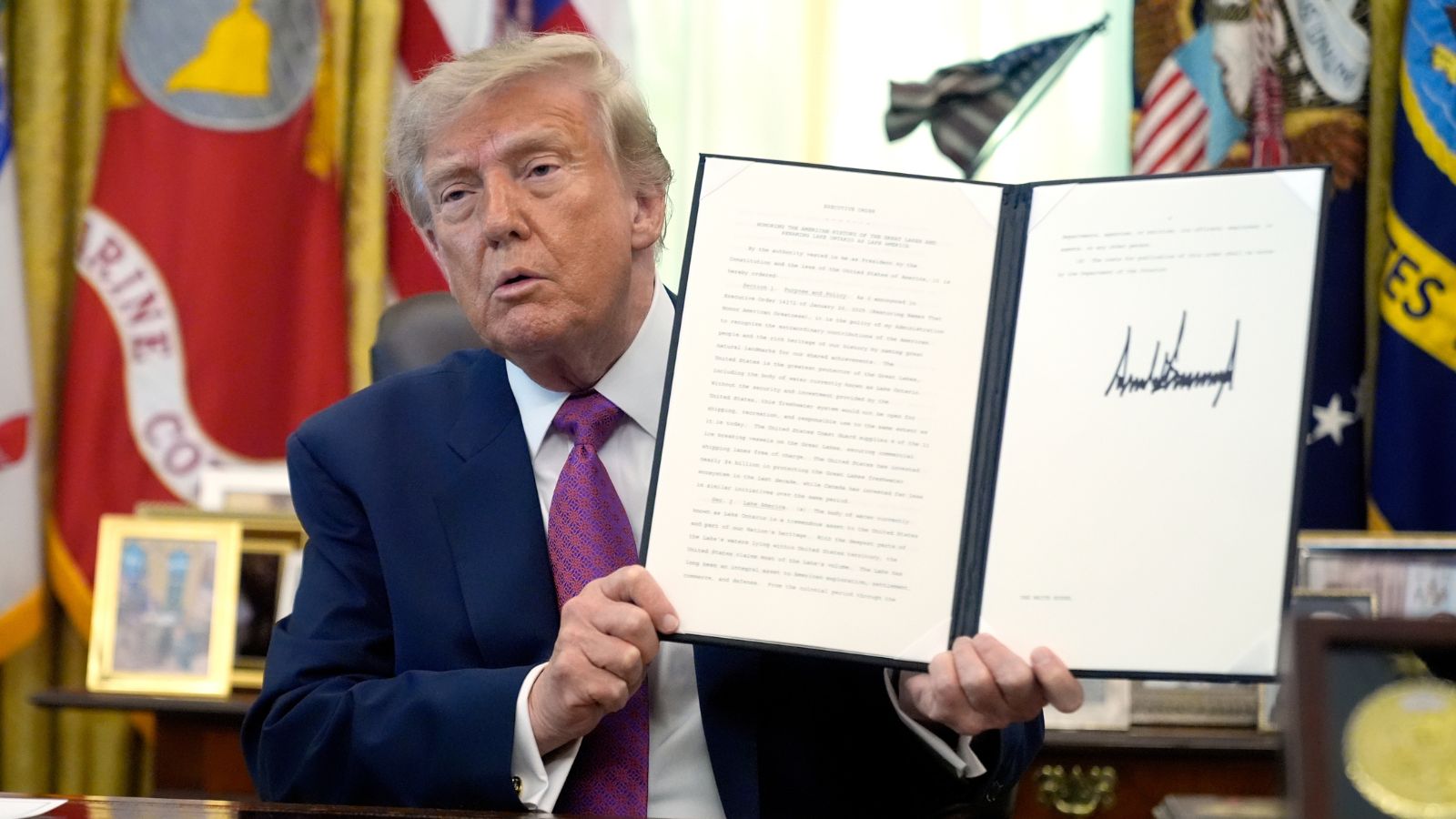
Policy memos do not usually bleed. They arrive in neat, bureaucratic paragraphs, filled with dry statutory references and sterile administrative goals. When whispers began circulating through Washington policy circles regarding an aggressive push by the Trump administration to restrict post-graduation and curricular internships for foreign students, the administrative language obscured the human toll. Officials argued about market protection, visa integrity, and domestic labor preference. They spoke in aggregates of hundreds of thousands of people, turning human lives into a spreadsheet debate.
Behind every data point stands a room with a closed door.
Consider what happens next when the door swings shut. A master's candidate in mechanical engineering at an Ohio university suddenly discovers that her corporate fellowship, secured after months of rigorous competitive interviews, is legally untenable. A hospital in rural Pennsylvania loses a brilliant data analyst whose predictive models were quietly reducing emergency room wait times. The university departments watch their tuition-paying pillars wobble, while local economies wonder where the talent pipeline vanished.
Protectionism wears a reassuring mask. It promises that by drawing boundaries, you preserve what is inside. But talent does not stay trapped by geography. It simply evaporates, or worse, flows toward competitors who understand that innovation is an immigrant sport.
To understand the weight of these proposed restrictions, one must look past the partisan talking points and examine the plumbing of the system. International students do not slide into academic programs by accident. They clear exorbitant financial hurdles, paying out-of-state tuition rates that frequently subsidize domestic research grants and campus infrastructure. They survive rigorous visa vetting processes that test their patience, character, and scholastic endurance.
When they graduate, the practical training periods act as a bridge. It is the professional equivalent of an apprenticeship. No medical doctor is trusted with a scalpel on day one without residency; no software architect is handed the keys to a financial network without a staging environment. Internships for international scholars serve precisely this purpose. They translate raw academic theory into applied, localized utility.
Restrict that bridge, and the traffic stops.
The administration’s logic relies on a zero-sum equation. If an international student secures an internship, the assumption runs, a domestic student loses one. Economists who study labor mobility point out the flaw in this arithmetic. Innovation is not a pizza where every slice taken by a guest leaves less for the host. It is an engine. Every qualified mind added to a research and development team expands the enterprise, creating downstream jobs, filing patents, and founding companies that eventually hire hundreds of domestic workers.
History offers a stern warning regarding closed doors. Nations that retreat into intellectual isolationism rarely find themselves stronger; they find themselves slower. The silicon revolution, the biotech boom, and the digital economy were built by coalitions of minds that did not share a birthplace, only a problem to solve.
Mei packed her notebooks last week, not because her visa expired, but because the horizon blurred. She still wants to build things that matter. She still looks at the American skyline with a mixture of reverence and skepticism. But the midnight hum of her desk lamp sounds different now. It sounds like a countdown.
When a country makes it harder for the world's best minds to stay, it sends a quiet, devastating signal. It tells them that their labor is welcome, but their roots are not. And long after the policy memos are archived and the political talking points fade, the true cost of that exclusion will be measured in the quiet hum of laboratories that were never built, and the brilliant minds that chose to light their lamps somewhere else.