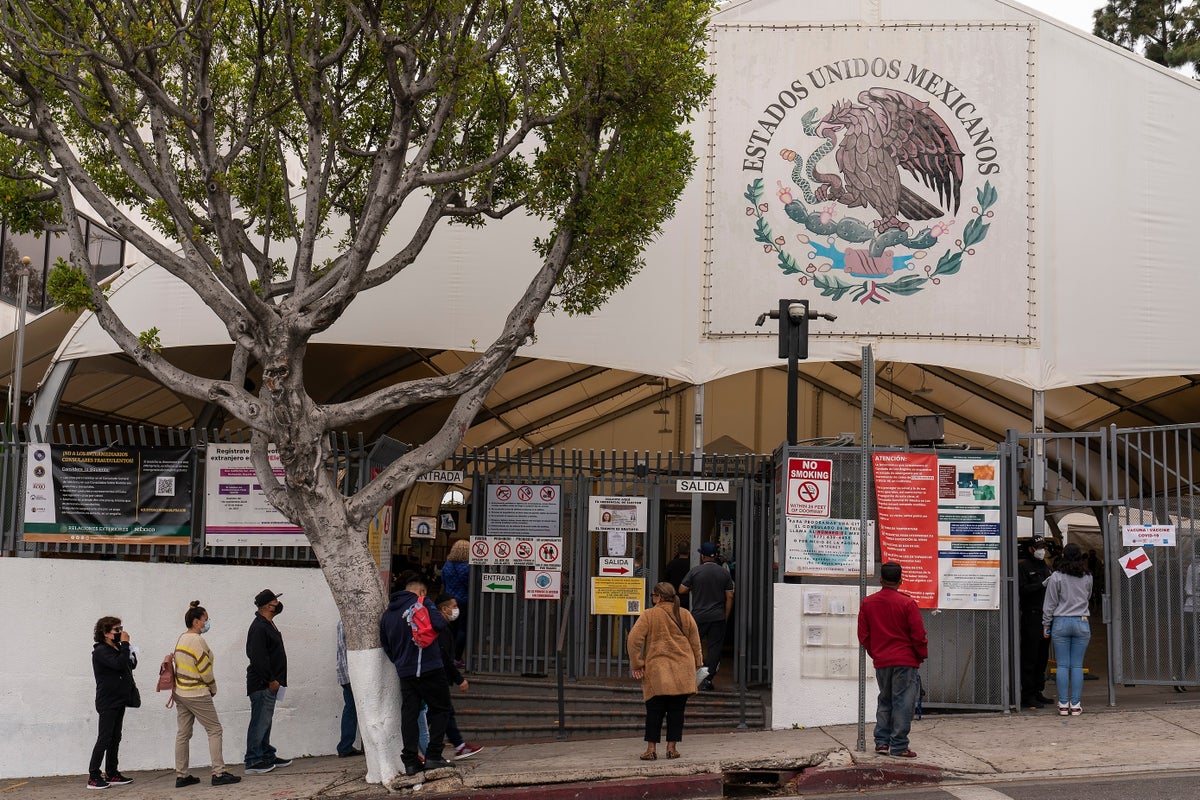
The State Department review of Mexico’s 53 consular offices across the United States is not a routine administrative audit. It is a calculated diplomatic offensive. By threatening to shutter portions of the largest foreign consular network in the world, the Trump administration is establishing a high-stakes leverage point aimed directly at Mexican President Claudia Sheinbaum. The strategy uses the legal and logistical safety net of millions of Mexican nationals residing in the U.S. as a bargaining chip to force compliance on explosive security, drug enforcement, and trade issues. Shutting these outposts would immediately cripple the legal defenses of migrants facing deportation, satisfying domestic political promises while squeezing Mexico City into submission.
The Catalysts Behind the Crackdown
Publicly, the administration frames the sweeping review under the broad mandate of aligning foreign relations with America First priorities. Privately, the reality is far more turbulent. Relations between Washington and Mexico City reached a multi-decade low following the deaths of two American CIA officers during a counter-narcotics operation in northern Chihuahua state. The incident triggered a sharp sovereignty dispute, with Sheinbaum publicly questioning whether the American agents were authorized to operate on Mexican soil.
Washington responded with a series of aggressive legal maneuvers. The U.S. Justice Department indicted high-ranking officials within Sheinbaum’s ruling party on drug trafficking and weapons charges, including issuing a high-profile extradition request for Sinaloa Governor Rubén Rocha Moya.
U.S.-Mexico Flashpoints (2026)
┌─────────────────────────────────────────────────────────┐
│ • Deaths of 2 CIA officers in Chihuahua                 │
│ • U.S. drug indictments against ruling party officials  │
│ • Extradition showdown over Governor Rubén Rocha Moya   │
│ • State Department audit of all 53 Mexican consulates   │
└─────────────────────────────────────────────────────────┘
The consular audit functions as the diplomatic hammer in this escalating feud. By targeting the diplomatic offices that provide passports, birth registrations, and critical legal counsel to an estimated 4.3 million Mexican nationals living in the U.S. without legal status, Washington is hitting Mexico where it is most vulnerable.
Dismantling the Migrant Support Infrastructure
For decades, the Mexican consular network has functioned as an parallel administrative system within the United States. In major hubs like Los Angeles, Chicago, and Houston, as well as isolated agricultural communities in Arizona and Texas, these offices do more than issue travel documents. They run weekly public forums, track detained citizens, and retain American immigration attorneys to represent nationals caught in the crosshairs of domestic enforcement.
Dismantling parts of this network would immediately accelerate the administration's mass deportation efforts. When an undocumented national is detained, the consulate is often the only entity capable of verifying identity, issuing necessary documentation, and ensuring access to due process. Stripping these facilities away creates an institutional vacuum. Without swift consular intervention, the legal machinery of deportation can move with significantly less friction, effectively removing the primary speedbump to large-scale removals.
The Influence Narrative and Border Economics
The review also serves a dual purpose by feeding a specific political narrative that has gained traction among conservative policymakers. Right-wing commentators have increasingly advanced theories claiming that Mexican consulates actively interfere in domestic politics and facilitate irregular migration. While veteran diplomats dismiss the idea of systematic electoral meddling, the narrative provides the necessary political cover to justify an unprecedented reduction in a neighbor’s diplomatic presence.
The timing of the review also aligns with the run-up to critical free-trade negotiations. By signaling a willingness to take the extraordinary step of closing consulates—an action historically reserved for hostile states like Russia or China—the administration signals that it will not bound itself by traditional diplomatic norms.
Mexican President Claudia Sheinbaum has attempted to de-escalate the situation through targeted anti-cartel operations and diplomatic messaging, but her options are shrinking. If the State Department proceeds with forced closures, Mexico City may feel compelled to retaliate in kind. The U.S. maintains nine consulates and an embassy in Mexico, critical outposts for intelligence sharing, security cooperation, and assisting the millions of Americans living or traveling south of the border. Weaponizing consular access risks snapping the fragile threads of cooperation that keep the bilateral security apparatus functioning at all.