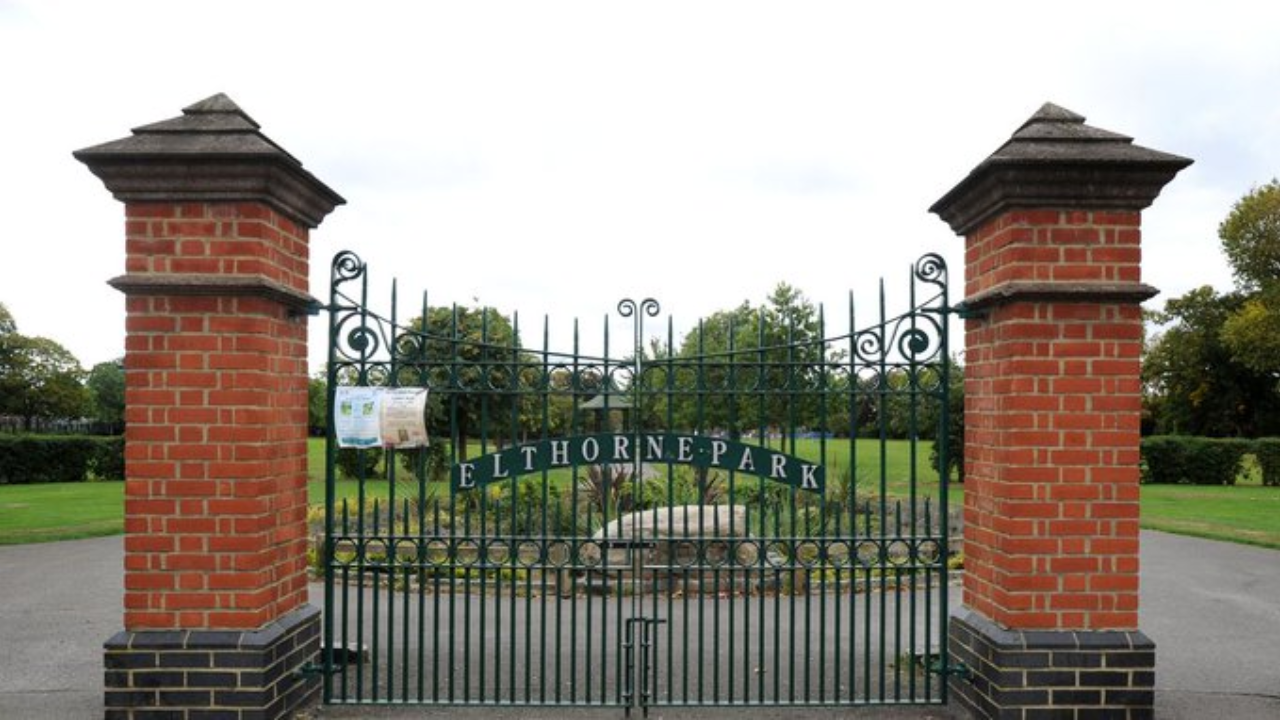
The quiet surface of a suburban pond often hides a lethal reality that municipal safety standards fail to address until it is too late. In the wake of the devastating deaths of a mother and her young child at a park in west London, the Metropolitan Police were quick to issue the standard refrain. They confirmed that the incident was not being treated as suspicious and that no "foul play" was suspected. For the grieving family and a shaken community, this official line offers a shallow form of closure. It effectively closes the case file while ignoring the systemic questions regarding public safety, water management, and the hidden hazards of urban green spaces.
The tragedy occurred in an environment designed for leisure, yet it ended in a double fatality that has left investigators looking at the mechanics of the event rather than the environment that permitted it. To understand why these incidents continue to happen in one of the most monitored cities in the world, we have to look past the police tape. We must examine the gap between perceived safety and the actual risks present in public water bodies, especially during transitional weather or in areas with deteriorating infrastructure.
The Illusion of Safety in Managed Spaces
Public parks are managed under a specific set of liability frameworks and safety guidelines. However, there is a recurring disconnect between what a council deems "safe" and how a person in distress actually experiences a water hazard. Most urban ponds in London are not natural formations. They are heavily engineered or modified Victorian-era features, often characterized by steep, concrete-lined banks or silt-heavy bottoms that act like quicksand.
When a child slips into such a body of water, the natural instinct for a parent is an immediate rescue attempt. This is where the "double drowning" phenomenon occurs. The rescuer, driven by adrenaline and panic, often underestimates the cold-water shock or the difficulty of exiting a pond with slippery, vertical edges. In many west London parks, the water is deceptively shallow near the edge but drops off into deep, oxygen-depleted silt just a few feet further out.
Standard safety measures usually consist of a few lifebuoys, many of which are frequently vandalized or missing, and signage that people stop noticing after their third or fourth visit. If the police say there is no foul play, they are technically correct in a criminal sense. But in an administrative sense, the failure to provide physical barriers or "self-rescue" infrastructure—such as textured slopes or submerged grab-bars—is a silent contributor to these statistics.
Cold Water Shock and the Physiology of a Crisis
The temperature of London’s open water rarely reaches a level that could be considered safe for an unexpected immersion, even in the milder months. The moment a body hits water below 15°C, the "gasp reflex" takes over. This is an involuntary physiological response. If the head is underwater during that initial gasp, the lungs fill immediately.
Even for a strong swimmer, the loss of motor control happens within minutes. Blood moves away from the extremities to protect the core, making it nearly impossible to climb out of a pond if the bank is steep or muddy. This is the "why" that the standard news reports miss. They focus on the tragedy of the loss but ignore the biological trap that these water features represent. A mother attempting to save her child isn't just fighting the water; she is fighting a shutdown of her own nervous system.
We often see these incidents labeled as "accidents," but risk analysts argue that many are predictable. If a park is designed to attract families, and that park contains an accessible, unguarded water feature, the probability of an immersion event is a mathematical certainty over a long enough timeline. The question is not if it will happen, but when the local authority will be forced to reckon with the design flaws of the space.
The Problem with the No Foul Play Narrative
By declaring a lack of "suspicious circumstances" within hours, authorities manage public perception and prevent local panic. While this is necessary for civil order, it often stifles the rigorous public inquiry needed to prevent a recurrence. When a death is deemed non-suspicious, the momentum for structural change often dies with the investigation.
There is no criminal to hunt, so there is no perceived "threat" to the public. Yet the threat remains in the form of an unfenced pond or a lack of emergency lighting. In west London, where property values and park aesthetics are high, councils are often hesitant to install "unsightly" fencing or railings. They prioritize the "uninterrupted view" over the physical safety of the most vulnerable users. This is a trade-off that is rarely discussed in the open until a body is recovered.
Infrastructure Versus Responsibility
- Bank Graduation: Many modern safety standards call for a 1 in 12 slope in public ponds, allowing someone to walk out. Older London parks often have a 1 in 2 or vertical drop.
- Signage Fatigue: Warnings that are too wordy or poorly placed are ignored. Visual icons are more effective but less common in traditional park settings.
- Emergency Access: In several recent incidents across the UK, emergency services struggled to reach the water’s edge due to locked gates or narrow paths intended only for pedestrian use.
The Mental Health and Social Context
While the police have ruled out foul play, the investigative lens should also consider the broader social pressures facing parents in high-density urban environments. Access to green space is a vital mental health resource, but for many living in cramped flats in west London, the park is the only outlet. This puts a massive amount of "footfall" on these spaces, increasing the statistical likelihood of a mishap.
We must also consider the lack of water safety education provided to the public. Most people believe they could save a drowning person by jumping in. Professional lifeguards know this is the last resort. The lack of "Reach, Throw, Don't Go" training in the general population means that every time a child falls in, an adult is likely to follow them into the hazard. This is a failure of public health communication as much as it is a failure of park design.
The Cost of Inaction
The legal reality for local councils is that "natural" water features are often exempt from the stricter fencing requirements applied to swimming pools. This loophole allows authorities to maintain the status quo. They rely on the concept of "obvious danger"—the idea that a person should know a pond is dangerous and therefore the council is not liable if they fall in.
But a three-year-old does not understand "obvious danger." A mother in the throes of a rescue attempt is not weighing liability. The moral responsibility of the state is to protect those who cannot protect themselves. If we continue to accept the "no foul play" conclusion as the end of the story, we are essentially accepting that a certain number of mothers and children will die in our parks every decade as a "cost" of maintaining aesthetic landscapes.
Reevaluating the Urban Pond
To prevent the next tragedy in west London or elsewhere, the approach to urban water must change. It requires more than just another lifebuoy. It requires a hard look at the topography of our parks.
Submerged fencing, which sits just below the water line, can prevent someone from drifting into deep water without ruining the view. Vegetation buffers—thick, thorny planting—can act as a natural barrier that keeps toddlers away from the edge. These are not radical ideas; they are standard practices in high-hazard industrial environments that have yet to be fully adopted in the "lifestyle" spaces of our cities.
The investigation into this specific west London tragedy may be closed in the eyes of the police, but the audit of the environment where it happened should only be beginning. We owe it to the victims to stop calling these events "tragic accidents" and start calling them "preventable infrastructure failures."
Council members and park authorities often wait for the public outcry to fade before returning to business as usual. They count on the fact that the news cycle will move on once the "no foul play" headline has been read. But the physical conditions that led to this double drowning remain. The water is still cold, the banks are still steep, and the next family is already walking through the gates.
Real safety is not found in a police report that finds no crime was committed. It is found in the physical interventions that make a crime, or an accident, impossible to execute in the first place. Until every public pond in a family-oriented park is ringed by more than just "thoughts and prayers," the quiet waters of west London remain a trap.
Verify the safety protocols of your local park. Demand a risk assessment of the water features. Do not wait for the next set of flowers to be laid by the water's edge.