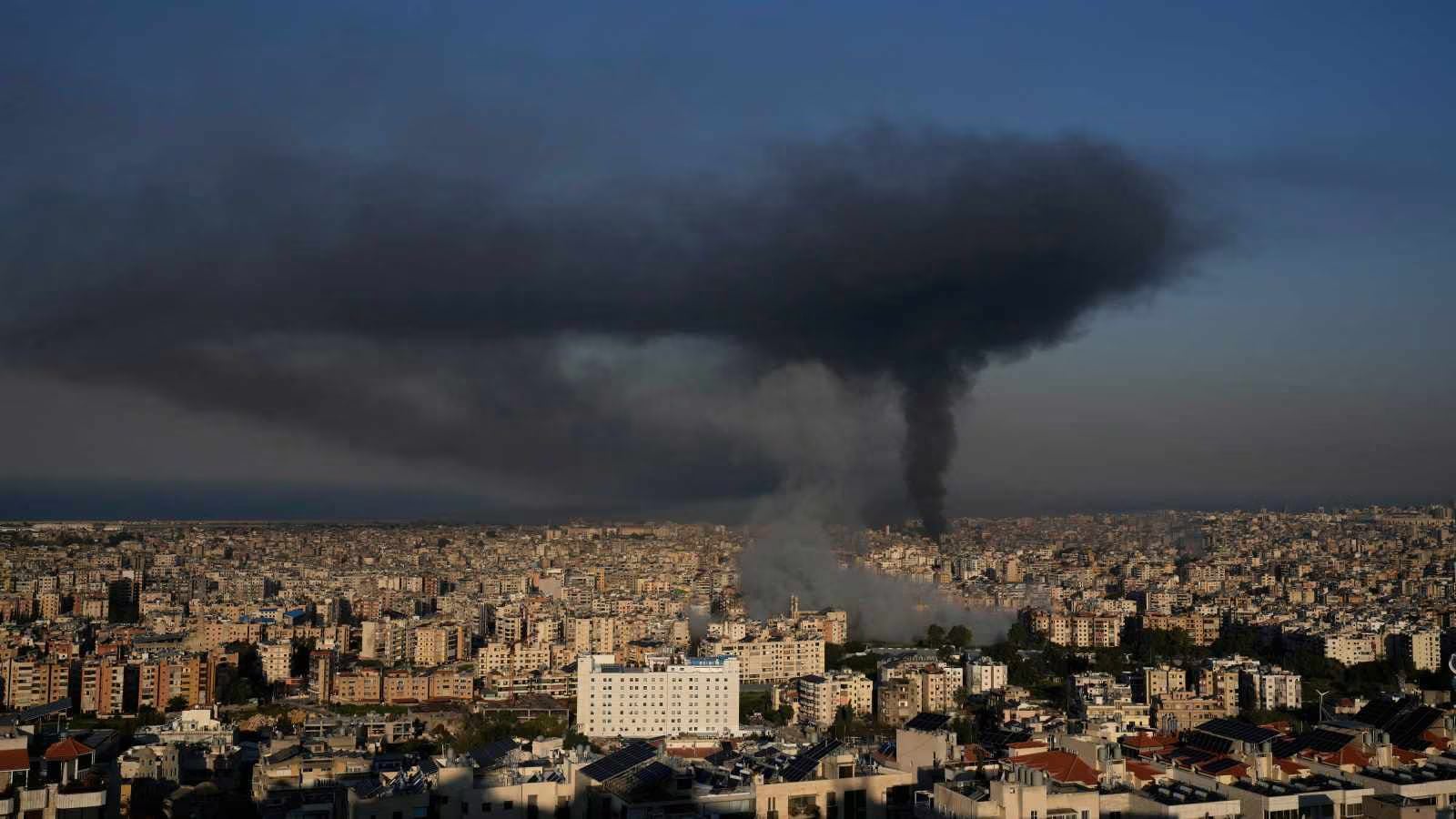
Mainstream news feeds are currently clogged with a wave of triumphant press releases from US Central Command. The narrative is neat, clean, and entirely predictable: the Islamic Revolutionary Guard Corps launched a dramatic barrage of missiles and drones at Naval Support Activity Bahrain and assets in Kuwait, CENTCOM air defenses knocked them down with pinpoint precision, and the status quo remains perfectly intact. The corporate media is treating this as a simple tale of American technological superiority over an erratic regional actor.
They are missing the entire point of modern asymmetric warfare.
By focusing entirely on the kinetic outcome—whether an Iranian warhead physically dented a concrete bunker in Manama—analysts are falling for a dangerous illusion. Tehran never expected those baseline ballistic missiles to level the Fifth Fleet headquarters. They did not need to. The fact that Iran launched a multi-axis strike against the nerve center of American naval power in the Persian Gulf proves that Washington's aggressive naval blockade is not working. It is burning through millions of dollars in defensive interceptors while failing its primary objective: deterrence.
The Cost Curve of Kinetic Delusions
We are witnessing a profound misunderstanding of military economics. I have spent years analyzing regional security supply chains, and the numbers behind these theater ballistics simply do not favor Western forces over a sustained timeline.
When the IRGC fires a wave of one-way attack drones and low-tier ballistic missiles, the financial burden they impose on the coalition is disproportionate. An Iranian-manufactured drone costs next to nothing to assemble. The interceptors fired from US and Bahraini air defense systems cost millions per shot.
- The Attacker's Cost: A cluster of standard loitering munitions and short-range liquid-fueled missiles assembled via localized supply chains. Cost: tens of thousands of dollars.
- The Defender's Cost: SM-2, SM-6, and Patriot PAC-3 interceptors. Cost: $2 million to $4 million per unit.
When CENTCOM tweets that an attack "failed" because threats were neutralized, they are looking at a tactical scorecard while losing the strategic ledger. If an adversary can force you to spend $20 million to neutralize a $100,000 salvo, a prolonged blockade ceases to be a position of strength. It becomes a resource drain.
The Blockade Fallacy
The current escalation stems directly from Washington's enforcement of a total naval blockade on vessels entering and exiting Iranian ports, including high-profile incidents like the disabling of the M/T Lexie and strikes on Qeshm Island. History proves that naval blockades are rarely static operations that force submission; instead, they inevitably force the blockaded nation to expand the conflict zone to break the economic chokehold.
Imagine a scenario where a state's primary economic lifeblood is systematically strangled at the Strait of Hormuz. The regime does not simply sit back and let its domestic infrastructure collapse. It leverages its geographic advantage to make the surrounding waters untenable for commercial transit, driving up maritime insurance premiums and forcing global shipping syndicates to reroute.
By striking back at Bahrain and Kuwait, Iran is signaling that if its ports are closed, no port in the Gulf is safe. The goal is not tactical destruction; it is the accumulation of systemic friction. When global shipping entities see missiles flying toward the Fifth Fleet HQ, they do not read CENTCOM’s reassuring tweets. They look at the risk profile of the entire region and adjust their global logistics accordingly.
Dismantling the PAA Conventional Wisdom
The common questions circulating in mainstream foreign policy circles expose how deeply flawed the public understanding of this conflict is.
Did Iran actually strike the Fifth Fleet HQ?
No, the kinetic impact did not occur. But answering this question with a simple "no" validates a broken premise. The assumption is that an attack only matters if it leaves a crater. In reality, the willingness to target the command-and-control hub of the US Navy in broad daylight is a massive escalatory leap. It demonstrates that the fear of overwhelming American conventional retaliation no longer deters Iranian command structures. The strike is a psychological and political victory for domestic and proxy consumption, showing that the IRGC can dictate the timing and geography of confrontations.
Can US air defenses protect regional allies indefinitely?
Absolutely not. Air defense is a finite game of capacity. Every battery has a limited number of ready-to-fire canisters, and reloading naval vessels or stationary systems requires time, secure logistics, and deep stockpiles. By launching multi-axis salvos involving drones, cruise missiles, and ballistic threats simultaneously, an adversary tests the radar tracking limits and saturation thresholds of these defensive networks. Relying entirely on interception is a losing long-term strategy because the offense can always scale faster and cheaper than the defense.
The Uncomfortable Truth About Deterrence
The Biden administration and defense officials are attempting to paint these defensive actions as a total validation of their regional posture. They point to the interception rates as proof that the US can enforce a tight maritime blockade without risking significant American casualties.
This is a fundamental misreading of how deterrence breaks down. True deterrence means the adversary chooses not to launch the weapon in the first place because the consequences are unmanageable. When the IRGC openly claims responsibility for targeting major American bases in response to actions near Qeshm Island, deterrence has already vanished. The US is no longer deterring Iran; it is merely managing the incoming fire.
The downside to acknowledging this reality is uncomfortable for Western policymakers. Admitting that the blockade is triggering a more dangerous, decentralized conflict means recognizing that conventional naval power has structural limitations in tight littoral waters. You cannot use a multi-billion-dollar carrier strike group to stop every asymmetric threat without exposing major vulnerabilities.
The current consensus celebrates a tactical win while ignoring a burning strategic paradigm. The blockade has not contained the threat—it has metastasized it across the entire Gulf theater.