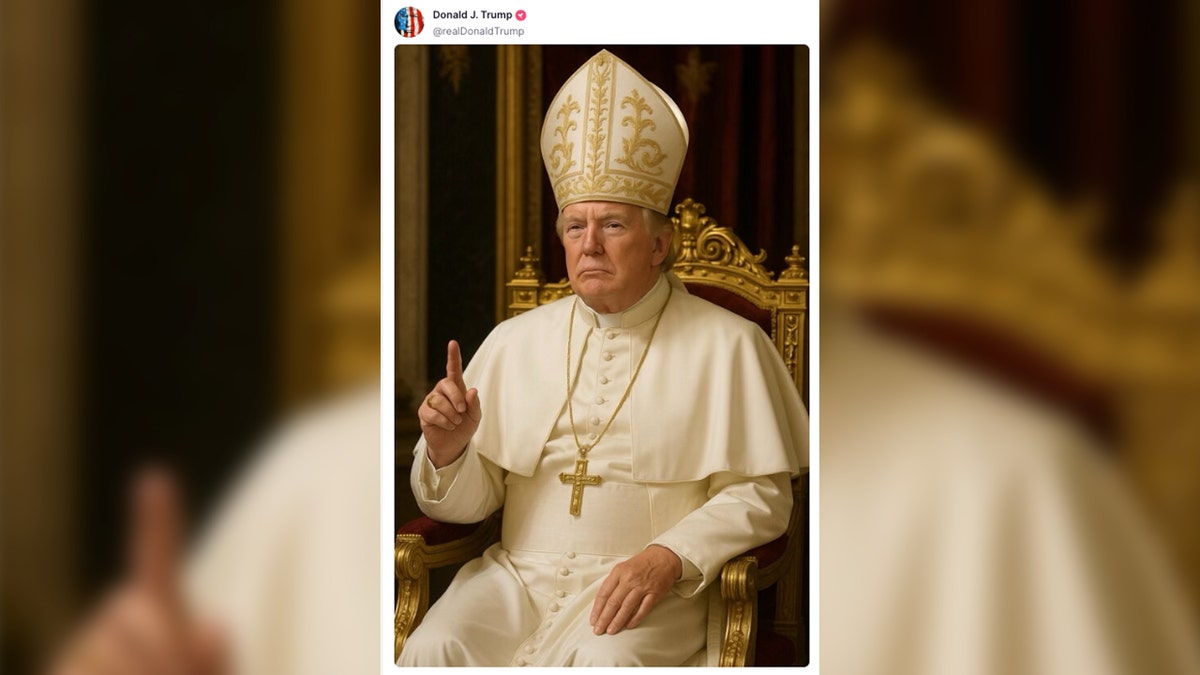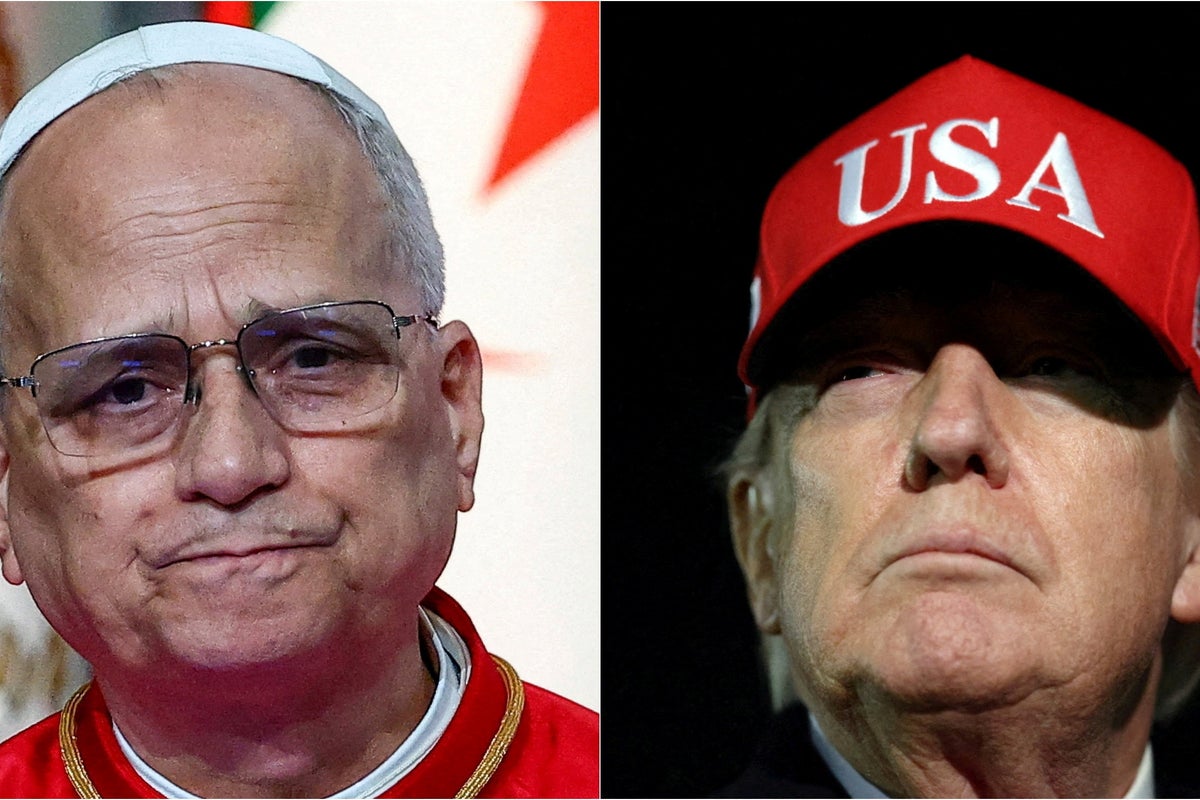
The media is obsessed with the theater of the "feud." Headlines paint a picture of a holy war, a clash of civilizations between the populist firebrand and the Vicar of Christ. They want you to believe we are witnessing a fundamental fracture in the global order. They are wrong.
The supposed "escalating feud" between Donald Trump and Pope Leo is not a breakdown of diplomacy. It is a highly choreographed dance of mutual validation. Both men are institutional survivalists. Both understand that their respective "brands" depend entirely on having a high-profile antagonist to rail against.
If you look at the mechanics of power instead of the aesthetics of the pulpit, you realize that the White House and the Holy See aren't fighting over the soul of humanity. They are fighting for the same demographic of disgruntled, identity-starved citizens who feel left behind by secular globalization.
The False Narrative of the Humble Bridge-Builder
The lazy consensus suggests that the Pope is a progressive hero fighting for open borders while Trump is the isolationist villain. This is a surface-level reading that ignores centuries of Vatican history. The Catholic Church is, by definition, the oldest and most successful hierarchy on the planet. It does not do "horizontal" power.
When Leo critiques "walls," he isn't advocating for a world without boundaries. He is asserting the Church’s historical claim to be the only authority that gets to decide where those boundaries lie. The Vatican is a walled city-state with some of the strictest immigration controls on earth. It’s not hypocrisy; it’s sovereignty.
Trump understands this better than the pundits. When he swings at the Pope, he isn't attacking religion. He is attacking a rival CEO. By framing the Pope as a political adversary, Trump elevates himself to a peer of the divine. He moves the conversation from "Is this policy legal?" to "Is this policy moral?"—a ground where he can fight with much more populist fervor.
The Theology of the Base
Modern political analysis fails because it treats religion as a set of beliefs. It isn't. It’s a signaling mechanism.
For the Trump base, the "clash" with Leo is a gift. It allows them to separate their cultural identity as Christians from the institutional bureaucracy of the Church. You see it in the pews every Sunday: "I'm a Catholic, but the Pope is too woke." This isn't a crisis for Trump; it’s his business model. He thrives in the space between the follower and the institution.
Leo, conversely, needs Trump to stay relevant in a secularizing West. Without a "strongman" to oppose, the Pope’s calls for social justice become background noise in a crowded media environment. Trump provides the necessary friction that turns a papal encyclical into a front-page news cycle.
Realpolitik Behind the Incense
Let’s talk about the data that the "feud" stories ignore. Despite the rhetorical fireworks, look at the actual intersections of policy:
- Judicial Appointments: The Trump administration’s reshaping of the federal judiciary was the greatest gift to the Catholic hierarchy in fifty years. The dismantling of Roe v. Wade wasn't a secular victory; it was the culmination of a decades-long Vatican-aligned project.
- School Choice: Both the Trump platform and the Holy See’s educational wing are perfectly aligned on the voucher system. This is about funneling public funds into private, religious institutions.
- The Middle East: While they bicker over the Mexican border, their alignment on the protection of Christian minorities in the Levant is nearly identical.
The "clash" is a distraction from the collaboration. I’ve seen this play out in corporate mergers—the CEOs scream at each other in the boardroom to satisfy their respective boards of directors, while the legal teams are already signing the joint venture agreements in the back room.
The Myth of the "Political" Pope
The media treats Leo’s interventions as unprecedented. They aren't.
- John Paul II was a key architect in the collapse of the Soviet Union.
- Pius XII navigated the most treacherous moral terrain of the 20th century with calculated silence.
- Leo is simply using 21st-century tools—Twitter-friendly soundbites and viral photo-ops—to exert the same territorial influence.
The "feud" is actually a sign of the Church’s shrinking footprint. A truly powerful Pope wouldn't need to argue with a president on social media; he would influence the policy through silent, systemic pressure. The fact that this has become a public spat proves that both the Presidency and the Papacy are struggling to maintain their grip on a fractured public.
Why the "Feud" Will Never End (And Why That’s the Point)
If Trump and Leo ever actually shook hands and agreed on a platform, they would both lose.
Conflict is the fuel of the modern attention economy. If you are an industry insider in the world of political consulting, you know that a "friendly" Pope is useless to a nationalist leader. You need a foil. You need someone to point to and say, "Even the global elites in their gold palaces don't understand your struggle."
And the Pope needs a "caudillo" to point to and say, "See? The world is falling into darkness, and only the Mother Church offers a moral compass."
It is a symbiotic relationship disguised as a rivalry. They are two legacy brands trying to figure out how to sell a 19th-century product to a 21st-century audience.
The Misunderstood Mechanism of Power
People ask: "How can Trump win the Catholic vote if he's fighting with the Pope?"
The question is flawed because it assumes the Catholic vote is a monolith that takes orders from Rome. It hasn't been that way since the 1960s. In reality, the American Catholic is more likely to be influenced by their Twitter feed than a homily. Trump isn't fighting the Pope for control of the voters; he's fighting for the definition of what it means to be a "good" person in a chaotic world.
The "feud" is the most effective marketing campaign in the history of both offices. It provides a clear binary in a world that is increasingly, confusingly gray.
Stop looking for the moment they make peace. Peace is bad for business. Peace doesn't drive donations. Peace doesn't win primaries. Peace doesn't fill the collection plate.
The escalations, the "feuds," the pointed remarks about who is or isn't a Christian—these are not errors in diplomacy. They are the core product. The next time you see a headline about Leo "blasting" Trump or Trump "clapping back" at the Vatican, don't ask why they can't get along.
Ask yourself who profits from the noise.
The answer is both of them. They aren't tearing down the establishment; they are the establishment, using a simulated war to keep you from noticing that the walls they are building are designed to keep you in, not the other guy out.