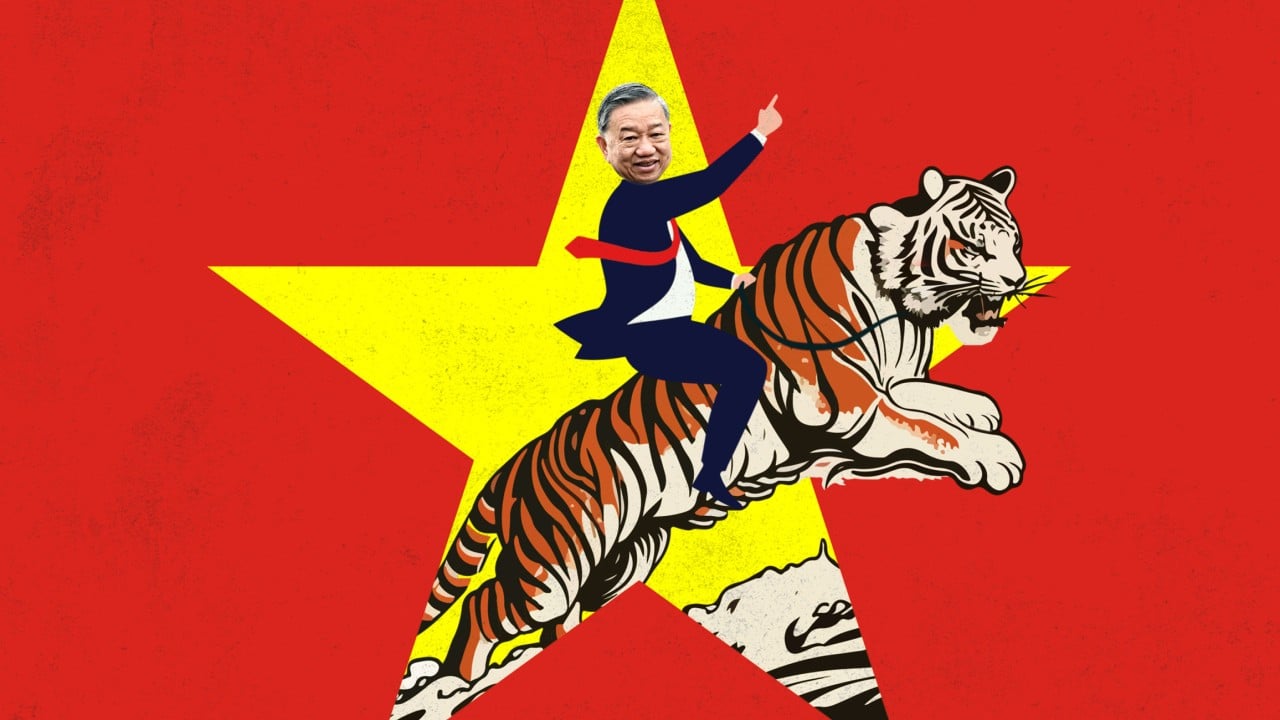
Vietnam is tired of waiting. For years, the story of this Southeast Asian nation was one of immense potential constantly tripped up by its own shadow. You’ve seen the headlines about the "Blazing Furnace" anti-corruption campaign that, while necessary, effectively paralyzed the bureaucracy. Officials became too scared to sign a single document for fear of ending up in a jail cell. Projects stalled. Foreign investors started looking at their watches.
General Secretary To Lam is changing that narrative with a bluntness we haven't seen in decades. He isn't just talking about stability anymore. He's talking about wealth. Specifically, he’s pushing a "build fast, grow rich" strategy that prioritizes infrastructure and digital transformation over the slow, grinding caution of the past. It's a pivot from a wartime mindset to a high-tech future. If you're watching the global supply chain shift away from China, Vietnam's current moves aren't just local news. They're the blueprint for the next decade of Asian economics.
The End of the Bureaucratic Freeze
To Lam stepped into the top spot during a period of deep uncertainty. The passing of Nguyen Phu Trong left a vacuum, but Lam hasn't spent much time mourning the old ways of doing things. He’s spent his first few months signaling that the era of "doing nothing to stay safe" is over.
The biggest bottleneck in Vietnam hasn't been a lack of money. It’s been a lack of guts. Thousands of infrastructure projects sat in limbo because local leaders refused to approve land clearances or budget allocations. Lam’s approach is a calculated risk. He’s essentially telling the bureaucracy that while corruption won't be tolerated, stagnation is now a fireable offense too.
He's calling this a "revolution" in the state apparatus. That's a strong word for a Communist Party leader to use, but it fits. He wants to trim the fat from a government that has become bloated and redundant. When you have five different departments needing to sign off on a single power plant, nothing gets built. Lam wants to slash those layers. He's pushing for a leaner system where responsibility is clear and results are the only metric that matters.
Digital Transformation or Bust
Vietnam knows it can't rely on cheap labor forever. The "middle-income trap" is a real threat that has swallowed other nations in the region. To avoid it, Lam is betting everything on the digital economy. We’re talking about AI, semiconductors, and data centers.
It’s an ambitious play. Vietnam recently passed a landmark Law on Data, which is a signal to tech giants like Google and Meta that the country is ready for serious investment. They’re moving away from being just a place that sews sneakers and assembles smartphones. They want to own the data and the logic behind the devices.
The numbers back up the urgency. The government wants the digital economy to account for 30% of GDP by 2030. That isn't going to happen with the current internet speeds or the sporadic power outages that plagued the north last year. Lam's blueprint involves a massive overhaul of the national power grid and a frantic build-out of 5G infrastructure. He's looking at the tech sector not as a luxury, but as the primary engine that will drive the country toward its goal of becoming a high-income nation by 2045.
Why the World is Betting on the North
Investors aren't just looking at Ho Chi Minh City anymore. The northern provinces, particularly those surrounding Hanoi, are becoming a massive hub for electronics. This is largely thanks to the proximity to China and a concerted effort to build out the "Two Corridors, One Belt" infrastructure.
Samsung already produces about half of its smartphones in Vietnam. Now, Apple’s suppliers like Foxconn and Luxshare are pouring billions into the North. They aren't doing this because they love the scenery. They're doing it because the Vietnamese government is finally making it easier to move goods.
The push for a high-speed railway connecting the north and south is a prime example. For years, this project was a fantasy. It was too expensive, too complex, and too controversial. Under Lam, it’s back on the front burner. He understands that a country split by 1,600 kilometers of rugged terrain needs more than just a few paved roads to function as a modern economy.
The Delicate Balance of Bamboo Diplomacy
You can't talk about Vietnam's growth without talking about its neighbors and the two giants: the U.S. and China. Vietnam calls its strategy "Bamboo Diplomacy"—firm roots, but flexible branches.
To Lam is keeping this balance perfectly. He visited Beijing early in his tenure to reassure China that the relationship is stable. But he's also courting Washington, seeking "market economy" status from the U.S. Department of Commerce. This status is a big deal. If Vietnam gets it, tariffs on their exports would drop, making their goods even more competitive on the global stage.
It’s a tightrope walk. Vietnam needs Chinese investment and raw materials, but it also wants American technology and consumer markets. Lam’s "build fast" mantra applies here too. He’s trying to secure as many trade agreements and partnerships as possible before the global geopolitical climate shifts again.
Real Challenges That Could Derail Everything
Let’s be honest. This isn't going to be a smooth ride. Vietnam’s energy crisis is a massive hurdle. You can build all the factories you want, but if the lights go out in June because the reservoirs are low, the assembly lines stop. The transition from coal to renewables is slow, and the infrastructure to move wind power from the south to the industrial north isn't there yet.
Then there's the human element. The education system is struggling to produce enough engineers and skilled technicians to meet the demands of companies like Nvidia or Intel. Vietnam produces plenty of graduates, but the gap between a university degree and the skills needed in a semiconductor lab is wide.
Lam’s "revolution" also faces internal pushback. There are plenty of old-guard officials who aren't fans of the rapid pace or the loss of their traditional power bases. Trimming the government means people lose jobs and influence. That never happens without a fight.
What This Means for You Right Now
If you're an investor, a business owner, or just someone tracking global trends, Vietnam is the place to watch. The shift from a cautious, "safety first" bureaucracy to a growth-at-all-costs mindset is a seismic change.
To Lam’s blueprint is basically a high-stakes bet that efficiency can outweigh ideology. He’s betting that by cutting the red tape and forcing the country into the digital age, he can secure the Party’s future and the nation’s wealth at the same time.
Stop thinking of Vietnam as a "frontier market." That label is outdated. It's an emerging powerhouse that is actively clearing its own path. Watch the progress of the high-speed rail and the 5G rollout. If those move forward on schedule, the "Vietnamese Miracle" isn't just a possibility—it's an inevitability.
The next logical step is to look at the specific provinces benefitting from the new decree on industrial zones. Places like Bac Ninh and Hai Phong are seeing a massive influx of capital. Keep an eye on the upcoming legislative sessions in Hanoi. If they pass the proposed tax incentives for high-tech R&D, the floodgates for Western tech capital will open even wider. You should also track the progress of the Power Development Plan VIII. Its success or failure will determine if Vietnam can actually power the "rich" future it’s trying to build.