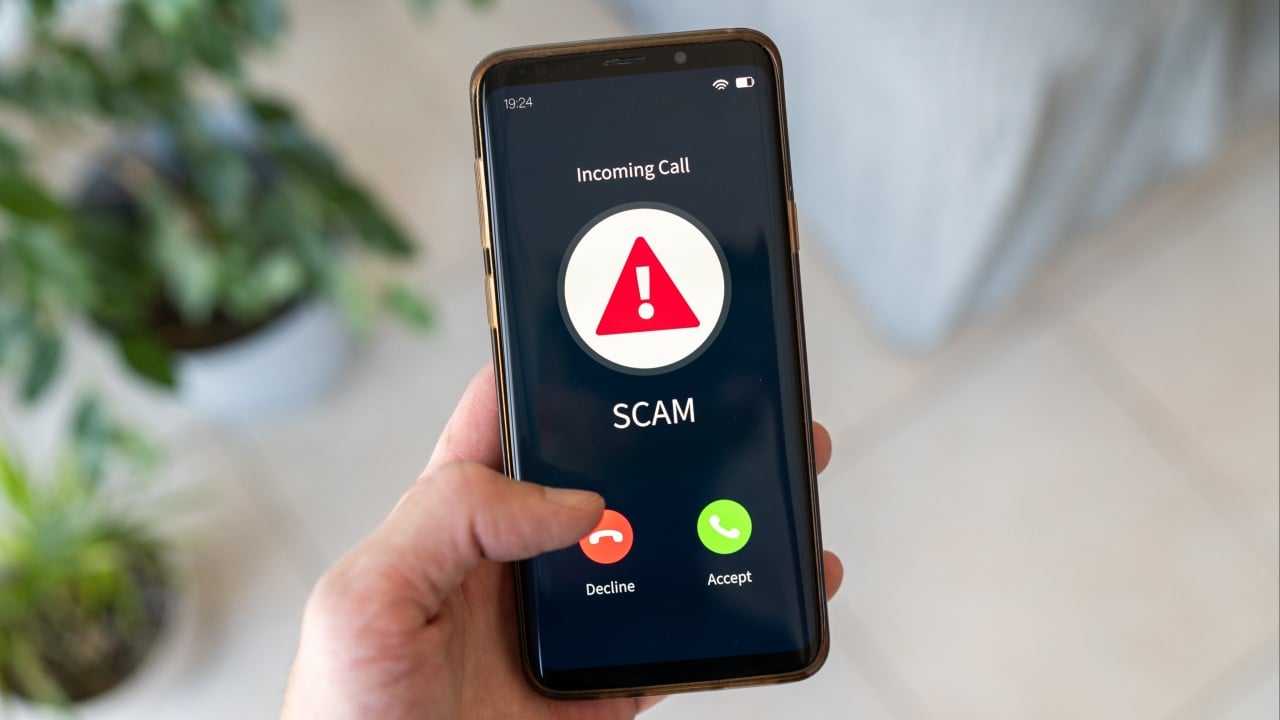
The Call That Never Was
The phone rings at 8:14 PM. It is a Tuesday. You are standing in the kitchen, wiping down the counter with a damp sponge, watching the gray water smear across the laminate. Your mother is seventy-two. When you see her number flashing on the screen, your stomach does not drop with panic; it drops with routine. You swipe to answer, expecting another long monologue about a leaky gutter or the price of tomatoes at the local market.
Instead, a voice crackles through the speaker. It is high-pitched, metallic, frantic. It is not your mother.
"Help me," the voice screams, breathless, punctuated by the unmistakable sound of breaking glass and a harsh, male shout in the background. "They have me. They took my purse. Please, I'm scared."
For three agonizing seconds, your heart stops beating. The kitchen vanishes. The sponge slips from your fingers, hitting the linoleum with a dull wet slap. You are no longer standing in your own home. You are suspended in a terrifying, weightless void where your worst nightmare has just materialized. You shout back. You demand to know where she is. You scream her name until your throat rawly aches.
Then, the connection cuts.
You stand there in the quiet hum of the refrigerator, chest heaving, cold sweat tracking down your ribs. You dial her direct line with trembling thumbs. It rings twice. Three times. Four.
"Hello?" her voice asks calmly, sounding slightly confused by your hyperventilating gasps. "Is everything alright, sweetheart?"
She was sitting on her sofa watching television the entire time. The voice on the phone—the tears, the breaking glass, the terror—was not your mother. It was a machine. It was a digital ghost synthesized from three seconds of audio lifted from a birthday video posted on Facebook two years ago.
And somewhere thousands of miles away, inside a sleek glass tower or a cramped basement office with flickering fluorescent lights, an algorithm recorded your panic, logged your emotional surrender, and prepared to dial the next number on the list.
The Anatomy of an Invisible Siege
We tend to think of cybercrime as a technical problem. We picture masked hackers in dark rooms slamming keyboards, typing long strings of green code onto black monitors while a progress bar ticks slowly toward one hundred percent. We think of firewalls, encrypted packets, and server ports.
We are looking in the wrong direction.
The real architecture of modern fraud does not live in code. It lives in human psychology. It preys on the primal, hardwired instinct to protect our families, to answer a cry for help, and to trust the familiar cadence of a human voice.
Consider what happens next on a grander scale. This is not just happening to you in your kitchen. It is happening to millions of people simultaneously across time zones. Entire call centers—industrial operations disguised as legitimate tech startups or customer service hubs—churn out billions of automated dials every single day. They use robocalling software capable of spoofing local area codes, making it look like your neighbor is calling when the call is actually originating from an offshore server farm.
The scale is staggering. According to tracking data and legislative inquiries, American consumers receive tens of billions of robocalls annually. Billions. That is not an annoyance. That is a sustained, daily bombardment designed to wear down the collective psychological immune system of an entire nation.
When you pick up the phone and hear a recorded message claiming your social security number has been suspended, or that the IRS has issued an immediate warrant for your arrest, your brain undergoes a sudden, sharp spike of cortisol. That spike is the product. Fear is the commodity. The scammers are not trying to fool everyone. They are casting a massive, indiscriminate net, waiting for the one tired parent, the one distracted retiree, or the one overworked student whose defenses happen to be down at the exact second the phone rings.
Following the Money Trail
Where does it go?
When a victim falls prey to these operations—wiring life savings to an offshore account, purchasing thousands of dollars in cryptocurrency to clear a non-existent debt, or handing over gift card PINs over the speakerphone—the money vanishes in a blur of digital hops. It is laundered through shell companies, bounced through international wire services, and converted into assets that are nearly impossible to trace back to the original perpetrators.
The perpetrators know this. They also know that national borders are the best defense lawyers money can buy.
When a scam call originates overseas, local law enforcement agencies hit a brick wall. A police department in Ohio cannot dispatch officers to a server farm in Southeast Asia or a suburban office park in Eastern Europe. Jurisdiction stops at the coastline. International treaties are slow, bureaucratic, and bogged down by geopolitical friction. Foreign governments often look the other way, viewing these call centers as lucrative employers that bring foreign currency into local economies, even if that currency is stolen from elderly teachers and blue-collar workers halfway across the world.
This is the impunity gap. For years, cybercriminals have operated in this gray zone, confident that the sheer complexity of international borders will protect them from consequences. They can steal a grandmother's retirement fund on a Monday morning, pack up their laptops by lunchtime, and walk out the door as wealthy, untouchable citizens of a different hemisphere.
The Legislative Awakening
Change rarely arrives like a thunderclap. More often, it starts as a low rumble of frustration in committee rooms where lawmakers finally realize the old rules no longer apply.
US lawmakers are currently attempting to pierce that veil of international impunity. The strategy is straightforward in theory, though brutally complex in execution: follow the infrastructure, expose the syndicates, and pressure foreign governments to clean their own houses or face severe diplomatic and economic repercussions.
This requires identifying the specific foreign countries harboring these operations. It sounds simple. It is not.
Imagine trying to track a river that splits into a thousand underground tributaries before emptying into an unmarked ocean. Scammers use layered voice over IP providers, decentralized cloud servers, and encrypted communication channels that constantly shift locations. A single scam operation might route its calls through three different continents before hitting your phone with a friendly, local-looking prefix.
To map this labyrinth, intelligence agencies, telecommunications watchdogs, and legislative committees must collaborate in unprecedented ways. They are analyzing call routing patterns, tracing cryptocurrency wallets, and tracking the financial flows that sustain these overseas empires. When Congress demands answers from foreign nations, they are not just asking for cooperation; they are holding up a mirror to governments that have allowed their digital infrastructure to become safe havens for global theft.
The Cost of Silence
We talk about these crimes in numbers. Billions of dollars lost annually. Millions of calls blocked. Average losses per victim climbing steadily upward.
Those numbers are sterile. They allow us to file the problem away as an economic statistic, something akin to inflation or supply chain delays. But money is only the medium of exchange. The real currency being traded is peace of mind.
Ask the grandfather who refuses to answer his phone anymore, missing genuine calls from his doctor because he assumes every ring is a trap. Ask the daughter who spent her inheritance trying to recover her father's lost dignity after he fell for a tech support scam that cleaned out his checking account in twenty minutes. Ask the millions of citizens who now live with a low-grade, chronic suspicion of every text message, every email, and every ringing telephone.
The erosion of trust is the most damaging casualty of the scam economy. When you can no longer trust the voice on the other end of the line, the social fabric begins to fray at the edges. We pull inward. We become defensive. We lock our digital doors just as tightly as our physical ones.
The Final Ring
The legislative push in Washington will not solve everything overnight. Laws do not rewrite human behavior, and software patches cannot fix greed. Cybercriminals will adapt. They will find new loopholes, new encryption tools, and new psychological triggers to exploit.
Yet, the pursuit itself matters.
Every time a fraudulent gateway is shut down, every time a shell company is unmasked, and every time a foreign government is forced to acknowledge that its jurisdiction is being used as a staging ground for mass theft, the invisible walls begin to close in around the operators. The game gets harder. The margins get thinner.
Back in the kitchen, the silence returns. The gray water has dried on the counter, leaving faint, cloudy streaks across the laminate. You pick up the sponge, rinse it under the tap, and watch the dark water swirl down the drain. Your phone sits quietly on the island, its black screen dark and still, waiting for the next ring to test the boundaries of what we believe, what we fear, and what we are willing to answer.