Don't let the headlines fool you. While a new flare-up in the Middle East or a prolonged conflict in Europe might seem like a golden ticket for green energy, China’s solar titans aren't celebrating. They're bleeding. For years, the narrative was simple: the world needs more panels to ditch fossil fuels, so Chinese factories should just keep humming. But we've reached a point where the supply isn't just ahead of demand—it's lapping it.
Honestly, the math is brutal. Even with a sudden "war-induced" surge in orders from nations desperate for energy security, China's manufacturing machine is too big for its own good. It's like trying to drain a swimming pool with a cocktail straw. The water is coming in faster than it can ever go out.
The Overcapacity Trap Nobody Wants to Admit
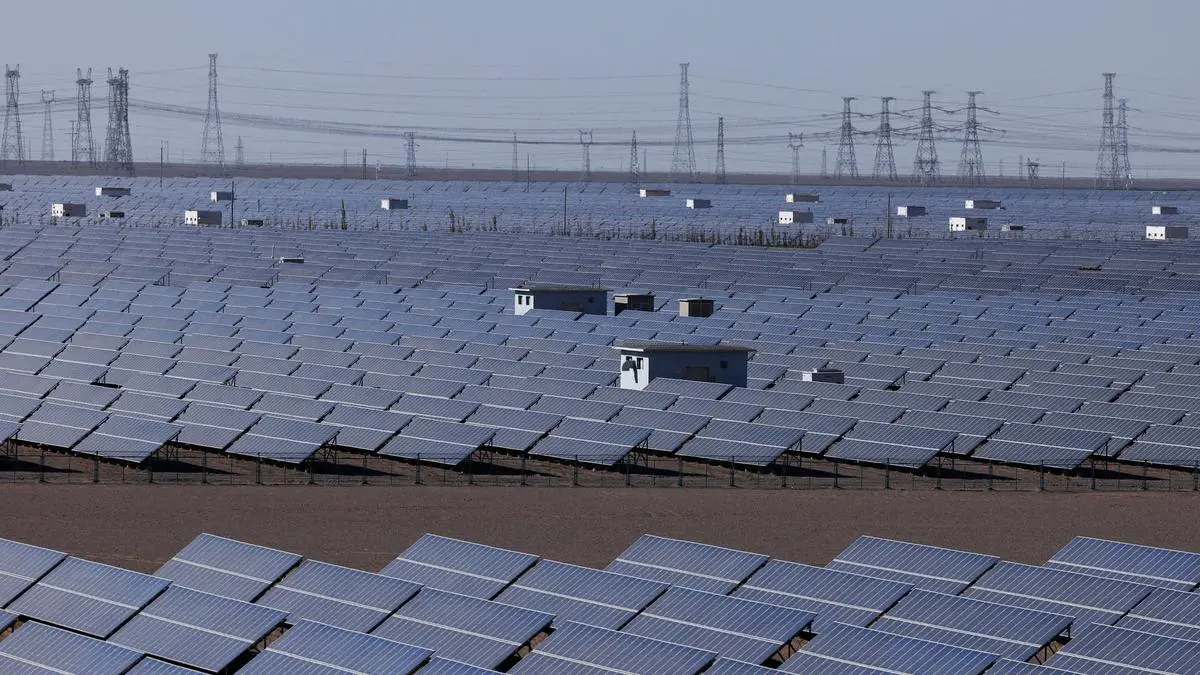
We’re looking at a structural mess that no single geopolitical crisis can untangle. In 2024, China’s production capacity for solar modules hit roughly 500 GW. Global demand? Only about 270 GW. You don't need a PhD in economics to see the problem. Even if a war in Iran or Ukraine pushes Europe to buy 20% more panels than expected, you're still left with a massive, soul-crushing surplus.
I've watched this industry for a long time, and what we're seeing now is a phenomenon the Chinese call "involution." It's basically a race to the bottom where everyone works harder, produces more, and loses more money just to stay in the game. Look at the balance sheets from early 2026. Giants like LONGi Green Energy and Tongwei are reporting losses in the billions. Not millions. Billions.
- LONGi Green Energy: Narrowing its losses but still down about 6 billion yuan.
- Tongwei: Widening its deficit to nearly 10 billion yuan.
- JA Solar: Stuck in the red with losses around 4.5 billion yuan.
These aren't just numbers on a page; they represent a fundamental breaking point for the global supply chain. When the biggest players in the world can't make a profit during a global energy transition, the system is fundamentally broken.
Why the Export Tax Rebate Scrap is the Real Story
While everyone is distracted by war, Beijing just dropped a bombshell that will change your energy bill by April. They’re scrapping the VAT (Value-Added Tax) rebates for solar exports. For years, these rebates acted as a 9% to 13% discount for international buyers, essentially subsidizing the world's green transition with Chinese tax money.
Starting April 2026, that’s gone. You’re going to see panel prices jump 10% to 15% almost overnight. This isn't a "market adjustment"—it's a calculated move by the Chinese government to stop the bleeding and force the industry to consolidate. They're tired of subsidizing cheap energy for the rest of the world while their own domestic champions go bankrupt.
If you're a developer or an installer, you've probably already noticed the "pre-buying" frenzy. Everyone is trying to lock in the old prices before the April 1st cutoff. It’s a temporary spike in demand that looks good on a chart but actually makes the overcapacity problem worse by pulling future demand into the present.
The Myth of War as a Market Fix
There’s a common misconception that conflict-driven energy shifts—like Europe’s REPowerEU plan—will soak up the excess inventory. It won't. Here is why.
First, the "boom" after the 2022 invasion of Ukraine was a one-time event. Europe’s warehouses are still stuffed with unsold modules from that era. Second, the logistical nightmares of war—rising shipping costs and oil price spikes—actually make manufacturing more expensive. Solar panels are energy-intensive to make. If oil and electricity prices go up because of a conflict in the Middle East, the cost of silicon processing and glass melting goes up too.
You’re left with a "scissors effect": your production costs are rising while the market price for your finished product is suppressed by the massive glut of inventory. It’s a nightmare scenario.
The Survival of the Smartest
In this environment, "big" isn't better. "Efficient" is. We’re seeing a divergence in the market. Companies like Aiko Solar are actually narrowing their losses significantly—down 70%—because they’ve pivoted to high-efficiency "All Back Contact" (ABC) cells.
If you're still pumping out standard, low-margin panels, you're essentially a walking ghost. The industry is currently shedding its skin. Over 40 smaller firms have already disappeared since 2024, filed for bankruptcy, or been swallowed by larger competitors. This isn't a "slowdown." It's a purge.
What This Means for Your Next Project
If you're waiting for solar prices to drop even further, you've missed the bottom. The "era of ultra-cheap solar" is officially in the rearview mirror. Between the removal of Chinese tax breaks and the inevitable consolidation of the market, the floor has been reached.
- Lock in prices now. If you have a project slated for late 2026, buy your hardware before the VAT rebate removal fully ripples through the supply chain.
- Look beyond the price tag. Focus on "high-efficiency" tech. In a world where panels aren't being given away for free anymore, the ROI comes from how much power you can squeeze out of every square inch, not how cheap the pallet was.
- Watch the trade barriers. The U.S. and EU aren't just worried about overcapacity; they're worried about dependency. New tariffs on battery graphite and diversified-origin rules mean "made in China" is getting harder to ship and more expensive to buy.
Stop looking at the war in the Middle East as a savior for the solar market. It's a distraction. The real battle is happening inside Chinese factories and Beijing’s policy offices. The glut is real, the losses are deep, and the "cheap solar" party is over.