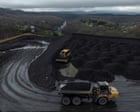
The federal government is executing one of the most aggressive economic interventions in the modern history of energy markets. By invoking Cold War-era military emergency authority, the White House is injecting roughly $700 million into the collapsing domestic coal sector. The administration frames this sweeping financial rescue package under the banner of national security, explicitly pegging the survival of coal generation to the voracious power demands of the booming artificial intelligence sector and systemic grid instability worsened by international conflicts.
The structural blueprint of the federal package unloads capital across three primary vectors. The single largest share, $425 million derived from the Defense Production Act, will fund critical technology upgrades across 13 existing coal plants spread throughout 10 states, including West Virginia, Kentucky, and Arizona. Another $185 million, sourced via Department of Energy grants and repurposed carbon-capture appropriations, will underwrite the construction of two brand-new coal-fired facilities in Alaska and West Virginia, alongside the resurrection of a shuttered 200-megawatt plant in Maryland. The final $75 million piece of the capital allocation bypasses local environmental blockades to construct the West Gateway Terminal in Oakland, California, providing a direct, Pacific-facing export corridor to send American coal straight to energy-starved Asian markets.
The Strategic Execution of the Emergency Coalition
To circumvent the traditional checks of energy regulatory commissions and the financial headwinds of a market that has favored cheap natural gas and solar production for a decade, the executive branch relies on the Defense Production Act of 1950. This statute, originally designed by the Truman administration during the Korean War to prioritize steel and manufacturing output for national defense, gives the presidency sweeping power to influence private industrial capacity.
The legal calculus behind this move relies entirely on framing the ongoing artificial intelligence data center expansion as a matter of critical national defense.
The infrastructure requirements of high-performance AI computing arrays are breaking existing utility projections. Data center operators are hunting for what engineers call dispatchable baseload power, meaning electrical generation that can be kept online at a consistent output twenty-four hours a day, completely independent of weather conditions or storage limitations. While environmental groups point out that coal combustion produces roughly 820 grams of CO2 equivalent per kilowatt-hour—nearly double the carbon footprint of natural gas and vastly higher than wind or solar—the administration’s focus is centered strictly on raw, unyielding grid reliability.
| Funding Stream | Allocation | Funding Source | Strategic Mandate |
|---|---|---|---|
| Existing Fleet Upgrades | $425 Million | Defense Production Act | Life extension for 13 aging plants across 10 states |
| New Plant Construction & Restarts | $185 Million | Department of Energy Grants | Two new builds (AK, WV), one 200-MW restart (MD) |
| West Gateway Export Terminal | $75 Million | Defense Production Act | Bypassing local resistance for Oakland export hub |
The Industrial Geography of the Coal Rescue Plan
The localized distribution of these federal millions maps perfectly over areas where local grid operators have warned of near-term capacity shortfalls. In Maryland, the capital will restart the 200-megawatt facility previously shuttered because its operation was deemed deeply uneconomic by regional grid monitors. The new plant constructions in West Virginia and Alaska will mark the first time a new utility-scale coal plant has been built on American soil since 2013.
The Alaska project is particularly telling of the administration's broader vision. Developed by an affiliate of Flatlands Energy, the massive 1.25-gigawatt installation is designed from the ground up with a singular operational purpose: to feed electricity directly into dedicated, isolated hyperscale data centers. By tethering the coal asset directly to technological computing hubs, the developers bypass the multi-year queues required to connect new power generation to the traditional public civilian grid.
The inclusion of the Oakland, California export infrastructure is the most politically volatile element of the entire package. For nearly two decades, West Coast environmental coalitions and city governments have successfully utilized environmental review procedures and zoning ordinances to block bulk coal transport terminals along the Pacific. They cite concerns ranging from local particulate pollution to regional air quality degradation caused by coal dust blowing from uncovered rail cars. By declaring the West Gateway Terminal vital to international trade security and the economic resilience of allied nations under the Defense Production Act, the federal government aims to effectively override state-level environmental vetoes, establishing a direct pipeline for western American coal to reach Asian markets.
Market Realities Versus Sovereign Interventions
The core conflict underlying this $700 million capital injection is the deep friction between sovereign industrial policy and raw energy economics. For the past fifteen years, market forces have relentlessly squeezed coal out of the domestic energy mix. Production has plummeted to less than half of its 2008 peak, driven down primarily by the fracking boom that made natural gas the default choice for domestic baseload power.
U.S. Electricity Generation Mix Trends (1990 vs. Present Era)
[1990]    ==================== COAL (Over 50%)
          ========== NATURAL GAS / OTHER

[Present] ===== COAL (Declining Share)
          ==================== NATURAL GAS & CHEAP RENEWABLES
To counter this market-driven obsolescence, the Department of Energy has increasingly relied on emergency interventions, issuing dozens of emergency orders over the last several years to force aging, uncompetitive fossil plants to remain online during peak winter and summer demand crunches.
This federal intervention signals a permanent pivot away from free-market energy competition. The administration and supporting trade groups like the National Mining Association argue that the combination of international energy market shocks and the sudden, exponential computing demand spike means the state can no longer leave grid stability to market forces alone. Conversely, economic analysts and consumer advocates point out that propping up assets that are fundamentally uncompetitive under standard market conditions risks transferring long-term structural costs directly onto taxpayers and utility ratepayers.
The $700 million package is not an isolated policy decision, but rather the cornerstone of a broader domestic strategy designed to systematically insulate the legacy fossil fuel industry from the economic pressures of the energy transition. By embedding coal infrastructure directly into the national security apparatus of the artificial intelligence boom, the administration is attempting to guarantee the long-term survival of the nation's most carbon-intensive fuel source.