Tightening US export controls on critical materials like tungsten and battery black mass are fundamentally altering the economics for Chinese recyclers. For decades, supply chains operated on a simple premise: raw materials flowed out of Western markets, underwent intensive processing and refining in East Asia, and returned as finished industrial goods or battery components. Trade policy shifts are now breaking that circuit. Washington wants to starve foreign competitors of critical inputs, targeting the specialized recovery streams that feed high-end manufacturing.
Understanding this shift requires looking past the rhetoric of geopolitical posturing and examining the physical realities of material recovery. Tungsten is not a casual commodity. It is a refractory metal with an exceptionally high melting point, indispensable for aerospace machining, defense applications, and advanced electronics. Battery black mass, the powdered mixture of lithium, cobalt, nickel, and manganese generated from shredded electric vehicle batteries, represents the lifeblood of the next-generation energy transition. When access to these materials faces regulatory friction, the entire operational calculus for processing facilities changes overnight.
Recycling operations survive on predictable margins, high volume, and steady feedstock access. Regulatory bottlenecks introduce chaos into that equation.
The Physical Realities of Black Mass and Tungsten Supply Chains
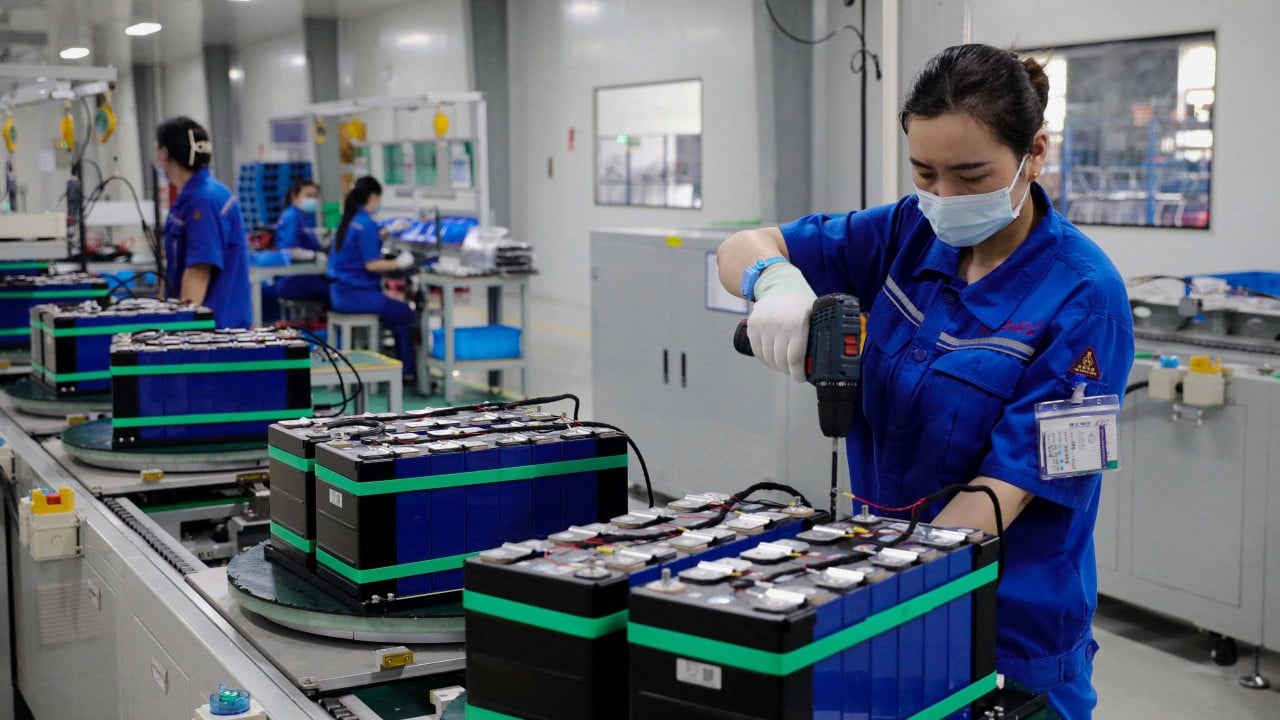
Secondary raw materials are messy. Unlike primary mined ore, which follows standardized grading, black mass varies wildly depending on the chemistry of the scrap battery cells fed into the shredder. LFP chemistry yields a very different recovery profile than high-nickel NMC configurations. Chinese recyclers built their dominant market position not merely through cheap labor or lax environmental oversight, but through massive capital investment in complex, multi-stage hydrometallurgical extraction capacity. They became the default destination for global scrap because they possessed the infrastructure to handle what other nations deemed too difficult or hazardous.
US trade restrictions directly target this structural advantage. By choking off the export of specific high-grade scrap streams and imposing strict origin-tracing mandates under various trade acts, Washington is forcing a bifurcation of the market. Material that once moved freely across borders now faces intense bureaucratic scrutiny, licensing requirements, and outright embargoes.
Consider a hypothetical recycling facility in Zhejiang province accustomed to processing thousands of tons of imported battery scrap monthly. Under the new restrictions, securing consistent, high-grade feedstock becomes an expensive guessing game. Margins shrink. Plants built for maximum capacity utilization suddenly find themselves running below optimal thresholds, driving up the per-unit cost of recovered lithium and cobalt.
Why Western Policy is Targeting the Processing Bottleneck
For years, industrial policy in Washington treated recycling as an afterthought, an environmental footnote to the main drama of mining extraction. That perspective shifted rapidly as supply chain vulnerabilities became glaring economic risks. Officials realized that controlling the mine is only half the battle. If a rival nation controls the refining and recycling infrastructure, they dictate the availability of critical materials regardless of who dug them out of the ground.
The strategic logic behind targeting tungsten and black mass centers on critical choke points. Tungsten production is heavily concentrated, and processing it requires specialized chemical separation techniques that few Western nations retained after decades of industrial offshoring. Battery black mass represents a shortcut past primary mining. Recovering battery-grade salts from scrap is significantly less energy-intensive and environmentally destructive than mining fresh ore.
Denying Chinese facilities access to high-yield Western scrap forces a redistribution of processing capital. Facilities inside the United States and the European Union are suddenly scrambling to scale up their own hydrometallurgical plants. Billions in venture capital and government subsidies are flowing into domestic recycling startups.
Yet building a recycling plant on paper is far easier than operating one at commercial scale. Environmental permitting takes years. Waste water management regulations in Western jurisdictions impose heavy operational costs. The technical expertise required to safely leach, separate, and purify battery-grade chemicals cannot be improvised overnight. Western firms face a steep learning curve while trying to displace an entrenched competitor that spent twenty years optimizing every variable of the recovery process.
The Adaptation Playbook for Affected Firms
Markets find a way around walls. When direct trade paths close, secondary routes open. Chinese operators are not sitting idle as trade barriers rise; they are actively redesigning their supply chain footprints.
One primary avenue involves geographic arbitrage. By establishing joint ventures or wholly owned processing subsidiaries in third-party nations that maintain more flexible trade relationships with both the United States and China—such as countries in Southeast Asia or Latin America—recyclers can re-route scrap materials for preliminary processing. Black mass is transformed into intermediate chemical forms before crossing further borders, obscuring origin points and navigating around strict country-of-origin rules.
Another strategy relies on domestic substitution. China is the world's largest consumer of electric vehicles and industrial tools, meaning its domestic scrap pile is growing exponentially on its own soil. While imported scrap from Western markets offered higher concentrations of specific valuable elements, the sheer volume of internal scrap provides a massive baseline for local recyclers. The reliance on Western inputs, while significant for high-purity applications, is not an absolute existential threat to the largest industrial players who can pivot their collection networks inward.
At the same time, technological innovation is accelerating inside these targeted firms. Faced with lower-grade or restricted feedstock, metallurgists are refining selective leaching techniques to squeeze higher recovery rates out of leaner materials. Necessity remains an effective catalyst for chemical engineering.
The Long-Term Fallout for Global Commodity Markets
The fragmentation of the recycling market carries long-term consequences that extend far beyond bilateral trade statistics. A balkanized recycling ecosystem means higher costs for the global energy transition. If every region attempts to duplicate complex processing infrastructure behind protective trade walls, capital is duplicated, inefficiencies multiply, and the overall cost of critical battery metals rises.
Automakers and industrial manufacturers caught in the middle face persistent price volatility. They can no longer assume that recycled content will be cheap or easily sourced from the lowest-cost global supplier. Compliance departments must now track the molecular genealogy of every kilogram of tungsten carbide or lithium carbonate entering their supply chains.
The era of frictionless global material flows is over. What remains is a high-stakes industrial race where policy dictates geography, and the ability to cleanly separate a pound of cobalt from a dead battery is as much a national security asset as an industrial capability.