The sound did not arrive as a crash. It started as a low, structural groan, like a massive timber splitting deep within the earth, followed closely by a heavy, relentless hiss.
Water has a voice when it moves fast enough. It sounds hungry. For an alternative perspective, read: this related article.
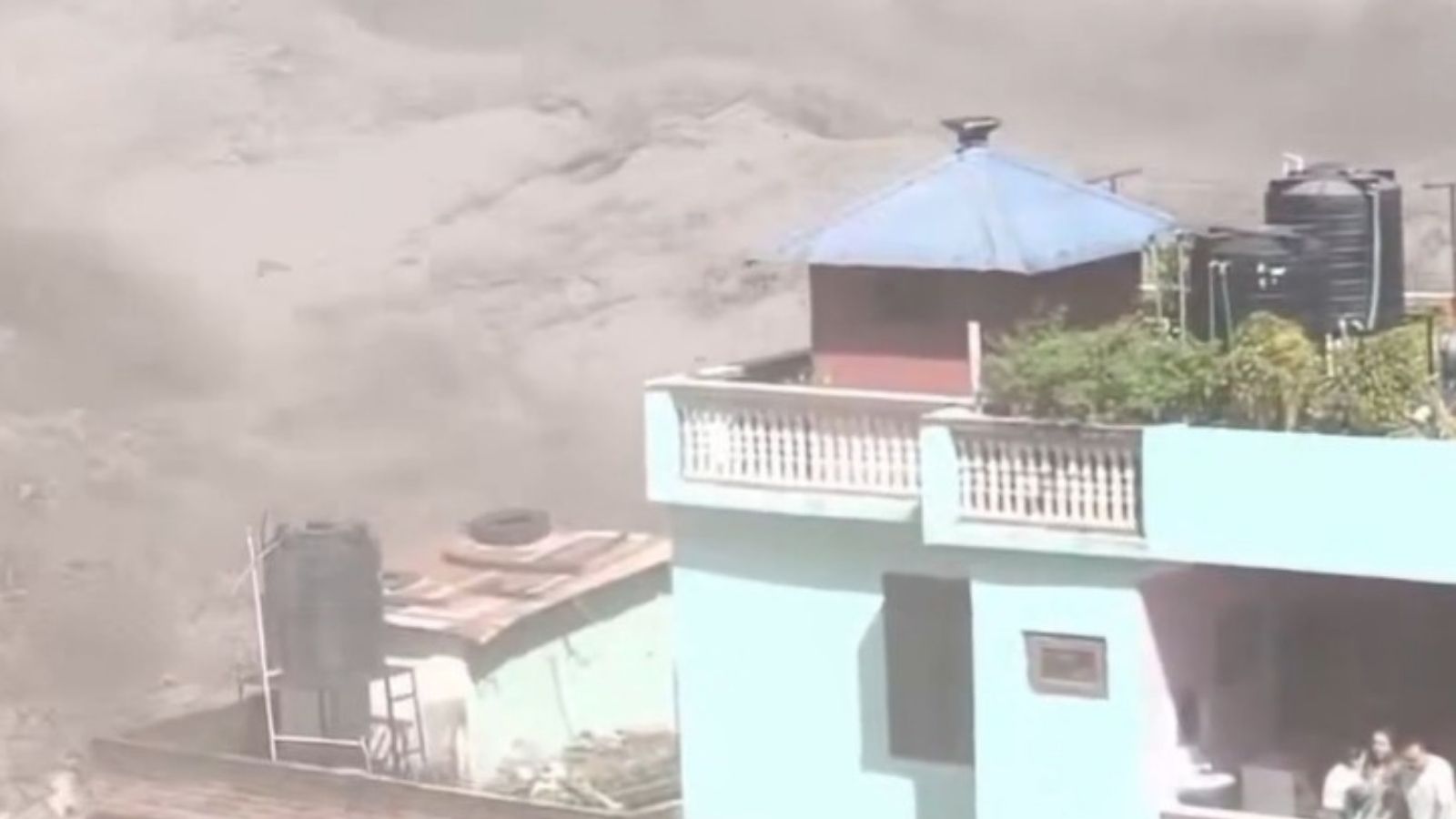
When the monsoon swells broke their banks in Nepal, they did not politely overflow. They arrived as a wall of liquid mud, tearing through narrow mountain passes with the kinetic fury of a freight train. In the span of a single heartbeat, dry stone and soil turned into a churning brown ocean. And right in the middle of it stood a balcony.
Imagine, for a moment, the architecture of ordinary life. A concrete ledge. A plastic chair. A railing rusted slightly at the joints from years of mist. It is the kind of place where you drink morning tea, watching the valley mist lift off the foothills. It is a space designed for safety, for quiet observation, for permanence. Related reporting regarding this has been shared by The New York Times.
Then the river claims the ground beneath it.
A family found themselves stranded on that exact elevated island as the flash flood swallowed the lower levels of their home. Below them, a vortex of debris—snapped pine trees, corrugated tin roofing, household furniture—spun violently, chewing away at the foundation. They had no ladder. They had no boat. They had only vertical space, shrinking by the minute.
Reports from local emergency authorities later confirmed the sheer scale of the disaster: dozens displaced, critical infrastructure compromised, and entire communities cut off as communication lines snapped under the weight of the deluge. But statistics are cold things. They are numbers written on whiteboards in Kathmandu, devoid of the smell of wet silt and the raw, piercing sound of a mother screaming over the roar of the water.
Stand on that balcony with them.
The air is thick with the metallic scent of churning earth. The concrete beneath bare feet vibrates with every impact of a floating boulder slamming into the walls downstairs. The water is inches from the second-floor ceiling now. Every second is an eternity measured in rising centimeters.
This is what modern climate volatility looks like up close. It is not an abstract graph about global temperature anomalies or shifting monsoon patterns. It is a family staring down a brown tide, clutching each other, wondering if the structure holding them will endure another ten minutes of relentless battering.
Meteorologists and disaster management experts have long warned about the intensification of Himalayan weather systems. Glacial lakes, swollen by rising temperatures, occasionally breach their natural moraine dams in catastrophic outburst floods. Combined with increasingly erratic, high-volume monsoon rains, these events turn mountain streams into liquid hazards with virtually zero lead time. Traditional early warning systems—often reliant on downstream radio broadcasts or local observers—frequently fail when communication towers collapse in the initial wave.
You cannot outrun water that moves faster than a sprint. You can only look up.
Rescue operations in such terrain are a masterclass in calculated desperation. Helicopters cannot fly safely through turbulent mountain corridors choked with low-hanging storm clouds and high winds. Ground rescue teams are often blocked by the very landslides and washed-out bridges that trap the victims. Survival relies heavily on micro-decisions made in fractions of a second: moving to the highest possible room, securing children to sturdy fixtures, waving bright fabric through the gray sheets of rain to catch the eye of a distant drone or a brave neighbor on a neighboring ridge.
In the case of the family on that balcony, rescue did not come from an automated system or a swift government response unit. It came from human persistence. Neighbors from a higher contour line, defying the raging currents with improvised ropes and sheer physical grit, managed to anchor a lifeline across the churning gap.
It was a narrow margin. The kind of margin that separates life from a footnote in tomorrow's morning paper.
When the water finally recedes, it leaves behind a landscape unrecognisable. Streets are paved in thick gray mud. Doorways are choked with debris. The geography of home is permanently altered. Yet, the human response to these sudden catastrophes follows an ancient, enduring rhythm. People shovel. They salvage. They rebuild on the very same unstable earth, because for millions across the mountain ranges, the land that threatens them is also the only land they know.
The flash flood lasts only a few hours. The sound of the water stays for a lifetime.