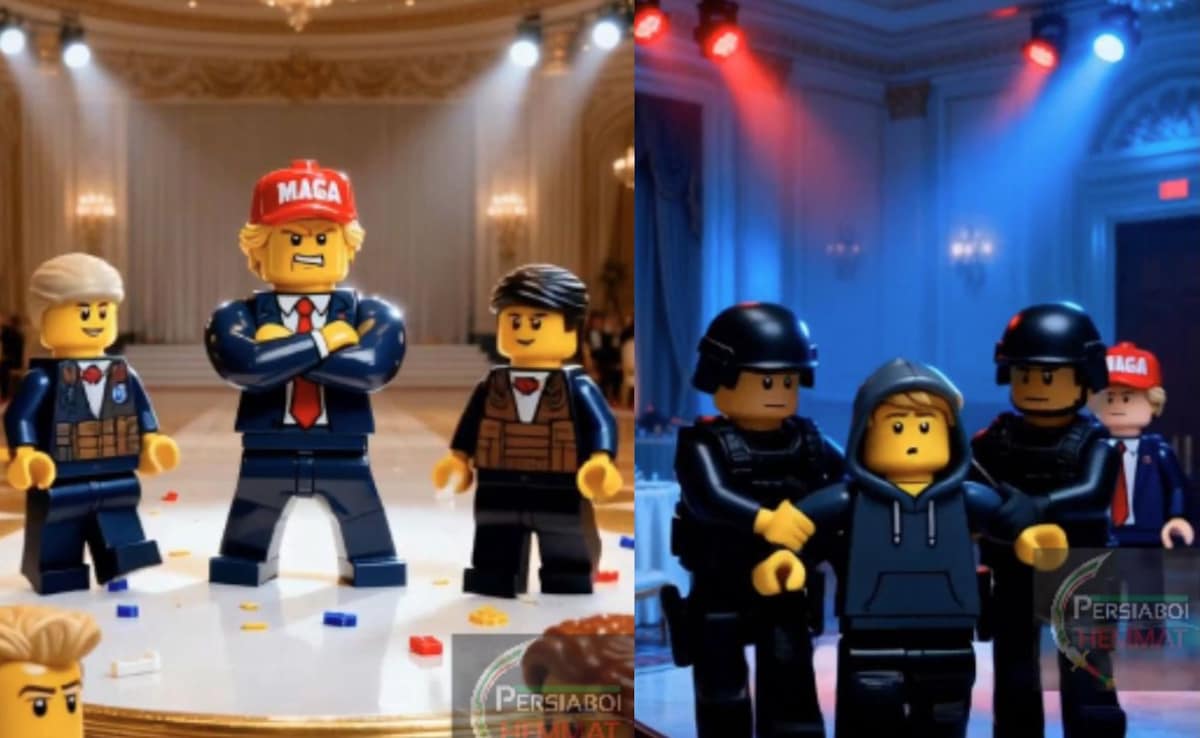
In the high-stakes theater of psychological warfare, the most effective weapon isn't always a hypersonic missile. Sometimes, it is a two-inch plastic figurine with a painted-on scowl.
Over the last month, a series of surreal, high-production animated clips has flooded social media, depicting Lego-style versions of Donald Trump and Benjamin Netanyahu navigating a multiverse of military blunders and personal humiliations. These videos are not the work of a bored hobbyist. They are the frontline of a sophisticated Iranian propaganda operation that has successfully bypassed traditional censorship by dressing up state-sponsored threats in the harmless aesthetic of a childhood toy.
The immediate goal is clear: to mock the American President following a recent assassination attempt and a tense regional ceasefire. But the broader strategy is far more clinical. By utilizing AI-generated "slopaganda"—high-volume, low-cost content that mimics Western pop culture—Tehran is reaching an audience that would never tune into a dry state TV broadcast. They have turned the White House into a play-set and the Commander-in-Chief into a punchline.
The Viral Architecture of Explosive Media
The videos primarily emerge from a group calling itself "Explosive Media." While the creators claim to be independent students, the technical polish and alignment with Revolutionary Guard (IRGC) rhetoric suggest a direct line to the regime’s information warfare wings. These are not clunky, 1990s-era animations. They are slick, fast-paced, and backed by AI-generated rap tracks with hooks that are uncomfortably catchy.
One particularly viral clip depicts a Lego Trump at a White House dinner, bragging about military prowess, only to be caught in the crosshairs of a hidden sniper. The messaging is blunt. On-screen text often reads "This time the bullet won’t miss," a direct reference to the July 2024 shooting in Butler, Pennsylvania. It is a fusion of digital satire and an explicit death threat.
This isn't just about making people laugh. It is about lowering psychological defenses. When a viewer sees a Lego figure, they associate it with play and nostalgia. By the time the video transitions into a critique of U.S. foreign policy or a conspiracy theory about the Epstein files, the viewer's critical guard is already down. Iran has figured out that it is much harder to "fact-check" a cartoon than a press release.
Breaking the YouTube Blockade
The impact of these videos has been significant enough to trigger a digital arms race. In mid-April, YouTube moved to ban Explosive Media, citing policies against deceptive practices and violent content. Iran’s Foreign Ministry immediately framed this as an assault on "the truth," comparing their banned animations to the output of Pixar and Disney.
The ban, however, has largely been a failure of "whack-a-mole" proportions.
- Mirroring: The videos are instantly re-uploaded by thousands of bot accounts.
- Cross-platform migration: When YouTube goes dark, the content explodes on X and Telegram, where moderation is more porous.
- Cultural sticking power: The phrases used in the videos, such as "TACO" (Trump Always Chickens Out), have already entered the vernacular of online anti-war communities.
The U.S. State Department is currently in a defensive crouch. Following the dissolution of the Global Engagement Center—the very body designed to counter this type of foreign influence—Washington is struggling to find a tonally appropriate response. A stern briefing from a podium cannot compete with a viral video of a Lego President playing with toy jets while a catchy beat plays in the background.
The Technical Shift to AI Slopaganda
The speed of this content cycle is unprecedented. Traditionally, high-quality animation took months. Today, using generative AI tools, the Explosive Media team can respond to a news event within hours.
If the White House releases a statement at 10:00 AM, there can be a Lego parody of that statement trending by 4:00 PM. This temporal dominance allows Iran to "flood the zone" with their narrative before the mainstream media has even finished its initial reporting. It is a strategy of saturation.
The aesthetic is purposefully crude yet visually stimulating. It uses the "Inside Out" emotional palette or the "Wii Sports" interface to create a sense of familiarity. This is the democratization of propaganda. You no longer need a multimillion-dollar studio to influence millions of people; you just need a server farm and a clever prompt.
Why the Toy Story Strategy Works
The brilliance of the Lego strategy lies in its inherent "un-cancelable" nature. If a government official denounces a cartoon, they look humorless. If they ignore it, the message spreads unchecked.
This creates a credibility trap for Western institutions. By engaging with "troll" content, the U.S. government elevates it. By ignoring it, they allow it to define the visual language of the conflict for a younger, digital-native generation.
Furthermore, these videos lean heavily into domestic American divisions. They don't just attack the U.S. as a monolith; they target specific political flashpoints—the economy, the border, and the perceived influence of foreign lobbies. They are using the West's own cultural artifacts to pick at its scabs.
The End of the Information Monopoly
We are witnessing the final collapse of the traditional information monopoly. In previous decades, a state like Iran could only reach its own citizens. Today, through the medium of plastic bricks and AI rap, they have a direct line to the smartphones of American voters.
The "Lego-style" clips are a symptom of a much larger shift where spectacle outpaces reality. It doesn't matter if the allegations in the videos are true; it matters that they are viewed two billion times. In this new era, the side that tells the most entertaining story wins, even if that story is built out of digital toy blocks.
The real danger isn't the animation itself. It is the realization that the world’s most powerful nation has no effective shield against a parody. As long as the memes keep clicking, the plastic war will continue to escalate, one brick at a time.