The shipping container smelled of salt and hot rubber. Standing inside the cavernous steel box at a port outside Jakarta, the air pressed down with the thick, wet heat of an equatorial afternoon. Thousands of miles away, corporate boardrooms in New York and Tokyo were drawing arrows on whiteboards. They called it a strategy. They called it diversification. They called it the great migration away from a single manufacturing titan.
They drew a neat little circle over Southeast Asia and wrote three words: China Plus One.
It sounded clean. It sounded mathematical. But standing here, watching a tired dockworker lean against a forklift with a cigarette dangling from his lip, the abstraction dissolved. Steel is heavy. Concrete takes time to pour. Bureaucracy moves at the speed of wet cement. The map in the boardroom was flat, but reality had gravity, friction, and sharp edges.
Let us meet Linh.
Linh runs a mid-sized electronics assembly plant outside Ho Chi Minh City. Her father started the business with three soldering irons and a rented garage in the late nineties. Today, her floor hums with the high-pitched whine of automated surface-mount machines, flanked by rows of young women whose fingers move with terrifying, rhythmic precision. They are soldering circuit boards that will end up in smart home devices across Europe and North America.
Linh did not read the macroeconomic papers predicting the great supply chain shift. She felt it in her ledger.
Orders tripled almost overnight. Global brands, desperate to insulate themselves from geopolitical shockwaves and rising labor costs up north, started knocking on her door. They brought capital. They brought multi-year contracts. They brought hope.
Then, they brought their checklists.
Compliance audits. Environmental safety protocols. Labor standards that required triple-redundant paperwork. Cybersecurity frameworks. Traceability metrics for every single screw and capacitor that crossed her loading dock.
Linh wanted to say yes to every single line item. She wanted her country to seize this generational moment. Yet, as she sat at her desk beneath the spinning blades of a rattling ceiling fan, staring at a stack of municipal permits that had been sitting on a bureaucrat's desk for four months, a cold dread settled into her stomach.
The world wanted an alternative supply chain. But Southeast Asia was drowning in its own administrative mud.
To understand why the great manufacturing migration is stuttering, you have to look past the glistening glass facades of regional capitals and walk into the local customs office. Imagine a customs clearance window built in the 1970s, where three different officials must stamp a single digital manifest because no one trusts the electronic database of the department next door.
This is the hidden tax of bureaucracy. It is paid not in currency, but in hours.
Economists talk about structural reform as if it were a software patch. Download the new rule, install it, restart the economy. But reform is messy, human, and deeply political. It means dismantling fiefdoms that have existed for decades. It means telling a middle-ranking official whose cousin controls the local trucking cartel that his stamp is no longer required.
Consider the infrastructure gap. A factory needs electricity that does not blink out every time a monsoon rolls in. It needs deep-water ports that can handle container ships without backing up traffic for a week. It needs rail lines that connect raw material suppliers to assembly hubs without crossing three different provincial jurisdictions, each with its own weigh station and bribe collector.
Vietnam, Indonesia, Thailand, Malaysia, the Philippines. They are not a monolith. They are a collection of proud, competing nations, each trying to win the grand sweepstakes of global capital while clutching onto old habits of protectionism.
Linh watched a prospective client from a major American appliance brand walk her factory floor last autumn. The executive was polite, impressed by the skill of her workers, and deeply alarmed by the logistics.
"Your labor is brilliant, Linh," the executive said over the hum of the assembly line. "Your quality control is tight. But if my components get stuck at the border for twelve days because the port authority changed its cargo-scanning rules on a Tuesday, my entire just-in-time delivery schedule collapses. I cannot afford twelve days."
Linh had no answer. She could not argue with a spreadsheet that factored in human unpredictability and systemic delay.
The tragedy of the moment is that the opportunity is real. The capital is waiting in offshore accounts, scanning the globe for stable harbors. Trillions of dollars are looking for a home where geopolitical tension will not sever their supply lines overnight. Southeast Asia is geographically positioned to catch this windfall. It has the young workforce. It has the ambition.
Yet, potential without preparation is just a tease.
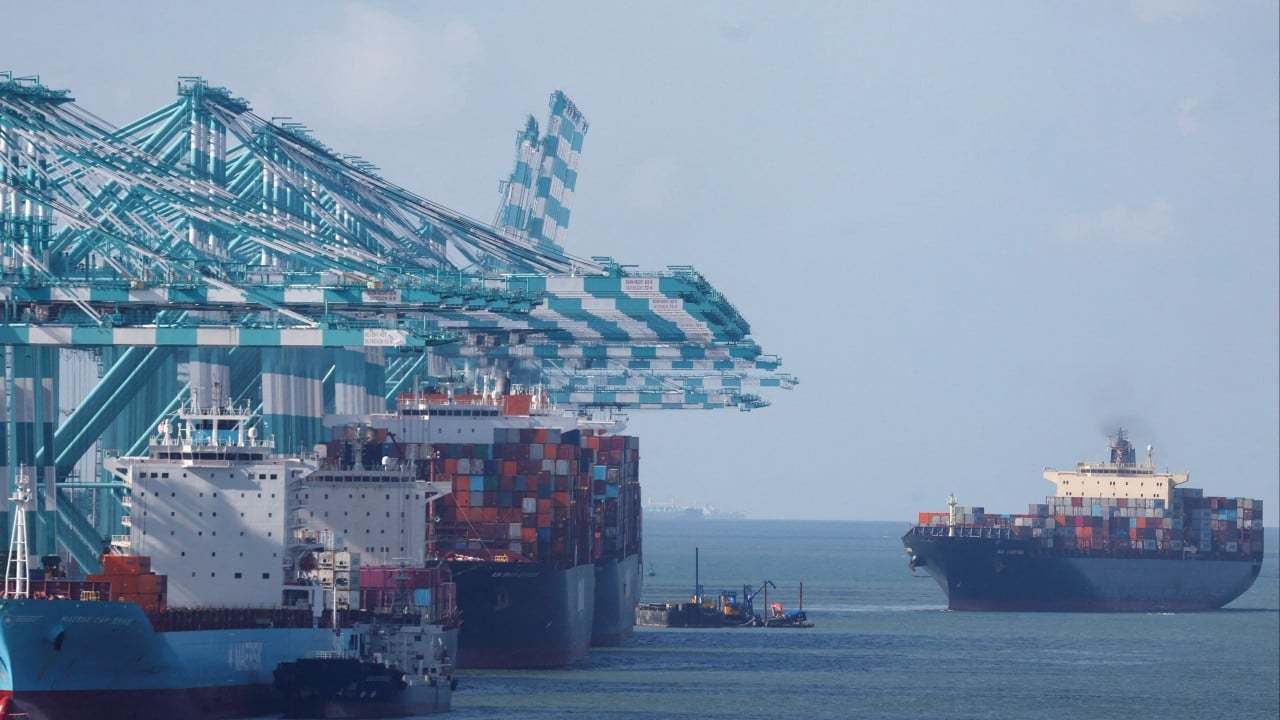
Look at the ports again. Notice the cranes. Many of them are state-of-the-art, built with foreign investment. But look at the roads leading away from them. Potholes patched with loose gravel. Trucks idling for hours because a bridge two provinces over cannot bear the weight of a fully loaded semi.
This is where the grand theory of diversification hits the wall of local reality.
If Southeast Asia wants to capture the crown that is slowly slipping from its northern neighbor, it cannot rely on geographic luck alone. Geography is an invitation, not a guarantee.
The reforms required are not glamorous. They will not fit neatly into an executive summary for a venture capital pitch deck. They involve rewriting archaic corporate laws to make foreign ownership transparent. They involve digitizing customs procedures so that a cargo manifest clears in minutes rather than days. They involve investing heavily in vocational training so that a assembly-line worker can transition into a technician capable of programming the robots that will eventually replace her.
Most importantly, they require political courage.
Back in the container yard, the sun dipped below the horizon, painting the smog over Jakarta in bruised shades of purple and orange. The dockworker tossed his cigarette butt into a puddle and hoisted himself back into the cab of his forklift. The engine roared to life, coughing a cloud of gray exhaust into the cooling evening air.
Somewhere across the ocean, a consumer clicked a button on a glowing screen, expecting a package to arrive on their doorstep in forty-eight hours. They do not know about the paperwork sitting on Linh’s desk. They do not care about the customs agent’s stamp or the bridge with the weight limit.
They only care that the chain holds.
And right now, that chain is being pulled taut across thousands of miles of ocean, resting entirely on the willingness of a few fast-growing nations to fix their foundations before the weight becomes too heavy to bear.