The air in Ottawa that Friday night carried that specific, biting November edge. It was the kind of cold that crawls up through the soles of your boots, wraps its fingers around your shins, and settles deep into your bones. For the players standing on the turf at TD Place Stadium, breathing out plumes of white mist under the glare of the overhead floodlights, the temperature was merely background noise. The real weight was invisible. It was the crushing accumulation of seasons past, of narrow misses, of locker rooms emptied in quiet devastation, and of a fanbase that had learned to wait with a familiar, defensive cynicism.
Football in November is never just a game. It is an audit of character.
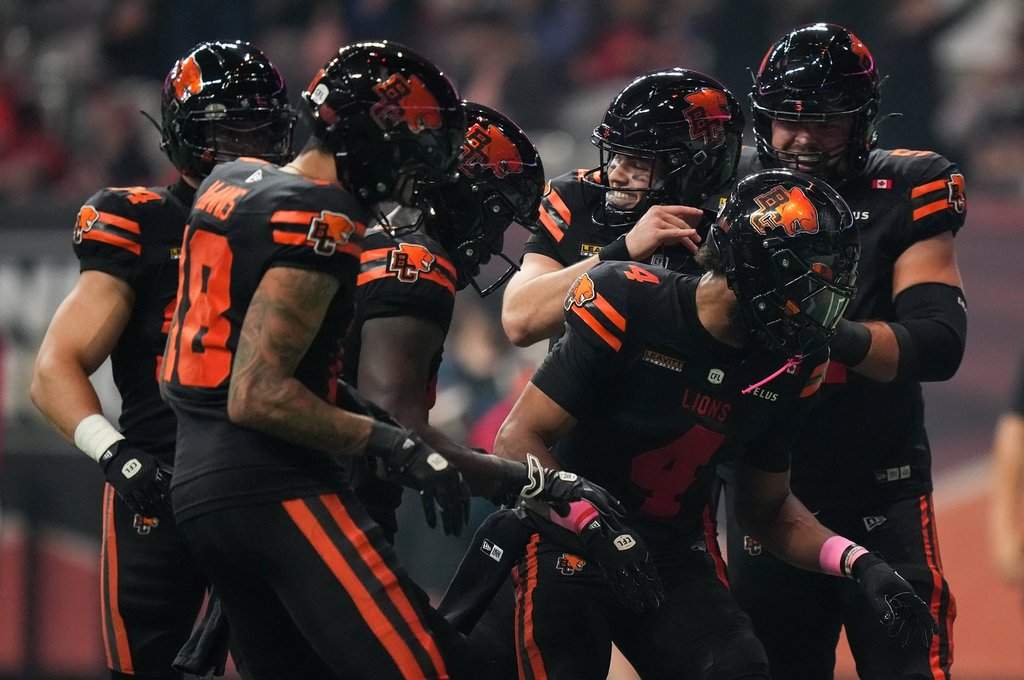
Across the field stood the Ottawa Redblacks, fighting for their own football lives, desperate to protect their home turf and rewrite their narrative. But on this night, the British Columbia Lions carried a different kind of momentum—a slow-burning fury born from months of grinding hits, long flights across time zones, and the relentless pressure of expectations. When the final whistle blew, sealing a victory that officially clinched a coveted playoff spot for BC, there was no wild, cinematic celebration on the field. There was only the heavy, exhausted exhale of men who knew the job was only halfway done.
To understand why that victory mattered so deeply, you have to look past the cold box score. You have to strip away the yards gained, the penalties assessed, and the final scoreline, and look instead at the human architecture of a professional sports team.
Imagine standing in the locker room twenty minutes before kickoff. The room smells of liniment, adhesive tape, and nervous sweat. Veteran players who have undergone multiple knee surgeries sit in silence, wrapping their wrists with surgical precision, their eyes fixed on a point somewhere on the concrete floor. Rookies bounce on their toes, fighting a visceral cocktail of terror and adrenaline. In that room, the standings are not just numbers on a league website; they are the physical manifestation of a year’s worth of missed family dinners, bruised ribs, and mental fatigue.
The Lions entered this matchup with a roster built on resilience. In the Canadian Football League, the margin between triumph and obscurity is razor-thin. A single dropped pass, a mistimed blitz, or a blown coverage can turn a championship contender into an offseason afterthought. Throughout the season, BC had faced its share of turbulence—injuries to key playmakers, inconsistent stretches on defense, and the deafening noise of external critics questioning whether the team had the mental toughness to close out tight games.
Yet, as the game unfolded under the crisp autumn sky, a distinct rhythm emerged.
The offense, orchestrated with a calm deliberation, began to chip away at the Ottawa defense. It wasn’t flashy. It was a masterclass in controlled aggression. Short, efficient completions kept the chains moving. The running game pounded against the front seven, wearing down the Redblacks' linebackers one brutal collision at a time. Every yard gained was earned through sheer leverage and determination.
Consider the perspective of an offensive lineman locked in the trenches. To the spectator in the stands or on the television broadcast, the line of scrimmage looks like a chaotic blur of colliding bodies. But to the tackle, it is a chess match played at 100 miles per hour. Every snap brings a 250-pound defensive lineman intent on disrupting the backfield. Your feet must be rooted, your hands placed with absolute precision under the opponent's breastplate, your center of gravity lowered against a wave of kinetic energy. Do it right, and the quarterback has two seconds to find an open receiver. Do it wrong, and the entire play collapses in a heap of turf and twisted limbs.
On this night, the Lions' trenches held firm when it mattered most.
Defensively, BC played with a predatory hunger. They understood that Ottawa’s offense would look to exploit any hesitation in the secondary. The defensive backs played on a tight wire, reading receiver routes with microscopic focus. When the Redblacks tried to mount a late-game surge, the Lions' defense slammed the door shut with a series of crucial stops that drained the clock and broke the opponent's rhythm.
When the clock finally expired, the immediate reaction was not jubilation, but relief. The statistical reality of the win secured their postseason berth, but the emotional reality was far more complex. Playoffs are not given; they are survived. Earning that ticket in hostile territory against a desperate opponent added a layer of grit to an organization that needed to prove it could win ugly just as easily as it could win pretty.
Football teaches us uncomfortable truths about human nature. It reminds us that progress is rarely linear. It involves setbacks, moments of profound doubt, and long stretches where the only way forward is to absorb the hit and keep moving. The Lions' journey to this playoff berth was a microcosm of that truth. They stumbled at times. They questioned themselves. But when the lights were brightest and the weather was coldest, they remembered who they were.
As the team walked off the field and into the tunnel, the chatter died down. The celebrations would be brief, measured in hours rather than days. The championship road does not pause for self-congratulation. But for one freezing night in the capital, the weight lifted just enough for them to breathe.
The season continues. The stakes grow higher. And out on the frozen tundra, the ghosts of November wait for no one.


