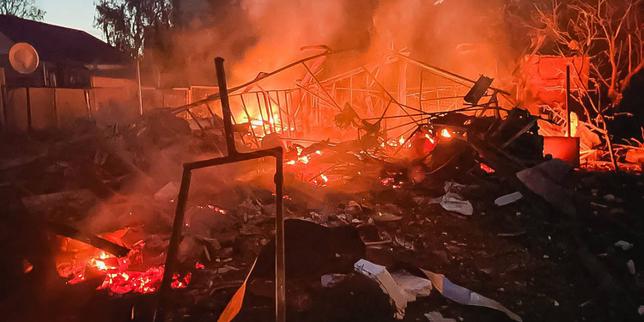
The sirens in Kyiv do not scream anymore. They wail with a tired, mechanical monotony that has somehow integrated itself into the city’s morning commute. To a stranger, the sound is terrifying. To Olena, a thirty-four-year-old schoolteacher waiting in line for coffee on a damp Tuesday morning, it is just background noise. It is the sound of a Tuesday.
When the conflict in Ukraine dominates the international news cycle, it is almost always framed through the lens of macroeconomics, geopolitical chess moves, and military strategy. We read about defense packages, frontline advances measured in meters, and diplomatic impasses in Brussels or Washington. But these metrics fail to capture the true gravity of the situation. They miss the invisible friction of daily survival.
The real war is not just fought in the muddy trenches of the Donbas. It is fought in the quiet determination of ordinary people trying to maintain a semblance of normal life while the ground literally shakes beneath their feet.
The Cost of the Ordinary
Consider the math of a modern workday under fire. When an air raid alert sounds, the subway stations transform. They cease to be transit hubs and become concrete sanctuaries. Thousands of people descend the escalators, laptops in hand, trying to join remote meetings via patchy cellular data while sitting on the cold stone steps.
This is the reality behind the dry headlines reporting routine infrastructure strikes. It is not just about power grids failing; it is about the psychological tax of unpredictability. Imagine trying to explain long division to a screen full of eight-year-olds while wondering if the power will cut out before the lesson ends. Imagine the quiet anxiety of a mother calculating whether she has enough time to run to the pharmacy before the next wave of drones arrives.
The international community views this through a lens of statistics. We count the number of intercepted missiles. We tally the financial aid. But for the people on the ground, the currency of this war is time. Time lost in shelters. Time spent worrying about loved ones at the front. Time eroded by a chronic lack of sleep.
The Geography of Waiting
Move away from the capital, toward the east, and the narrative shifts from disrupted routines to sheer endurance. In towns whose names are read out on evening broadcasts with clinical detachment, life has shrunk to the perimeter of the home.
In these areas, the concept of a frontline is fluid. It is an abstract line on a map that dictates whether a morning walk is merely risky or outright suicidal. The fields that once produced a significant portion of the world's grain are now silent, littered with the metallic debris of modern warfare. For the farmers who have tended this soil for generations, the loss is not just financial. It is a profound disruption of identity.
The human mind is remarkably adaptive, but that adaptability comes at a price. When crisis becomes permanent, the adrenaline wears off, leaving a deep, resonant fatigue. It is a exhaustion that cannot be cured by a good night’s rest, because even sleep is compromised by the subconscious anticipation of the next blast.
The Ripple Effect
The consequences of this prolonged instability stretch far beyond the borders of Ukraine. The global supply chain, food security in East Africa, and the energy policies of Western Europe are all tethered to the outcome of this conflict. Yet, the human element remains the most critical, and often the most overlooked, variable.
Western observers frequently debate the concept of fatigue. There is a growing concern in foreign capitals about the political will to sustain support. But this debate often ignores the perspective of those who do not have the luxury of switching off the television. For Ukrainians, endurance is not a political choice; it is a prerequisite for continued existence.
The true metric of success in this ongoing struggle is not merely territorial control. It is the preservation of society itself. It is the fact that despite the destruction, universities are still holding graduations, theaters are still staging plays, and bakers are still waking up at dawn to ensure there is fresh bread on the shelves. These small, defiant acts of normalcy are the ultimate form of resistance.
The sky over Kyiv remains gray, heavy with clouds and the unspoken threat of what might fall from them. Olena takes her coffee, steps out of the café, and walks toward the school. The siren continues its rhythmic wail, but she does not look up. She simply tightens her coat against the chill and keeps moving forward.