Rain on the paving stones of Edinburgh does not merely fall; it lingers, sticking to the wool of coats and reflecting the amber glow of streetlamps that refuse to yield to the Scottish winter. Walk down through the Old Town on an evening when the mist rolls off the Firth, and you can smell the damp coal smoke and history. It is a history written in stone, but also in the quiet, bruised memories of working-class communities that have watched factories turn to rust and union halls turn to car parks.
Politics here is not an abstraction. It is the texture of linoleum in a cold council kitchen. It is the sound of a rattling radiator when the gas bill is due.
For years, the people who built these streets looked toward a banner bearing a red rose and wondered if anyone was actually listening. They wanted a voice that didn't sound like it had been scrubbed clean in a media training seminar. They wanted someone who understood the granular ache of decline, but also the fierce, stubborn pride of a nation that refuses to break entirely.
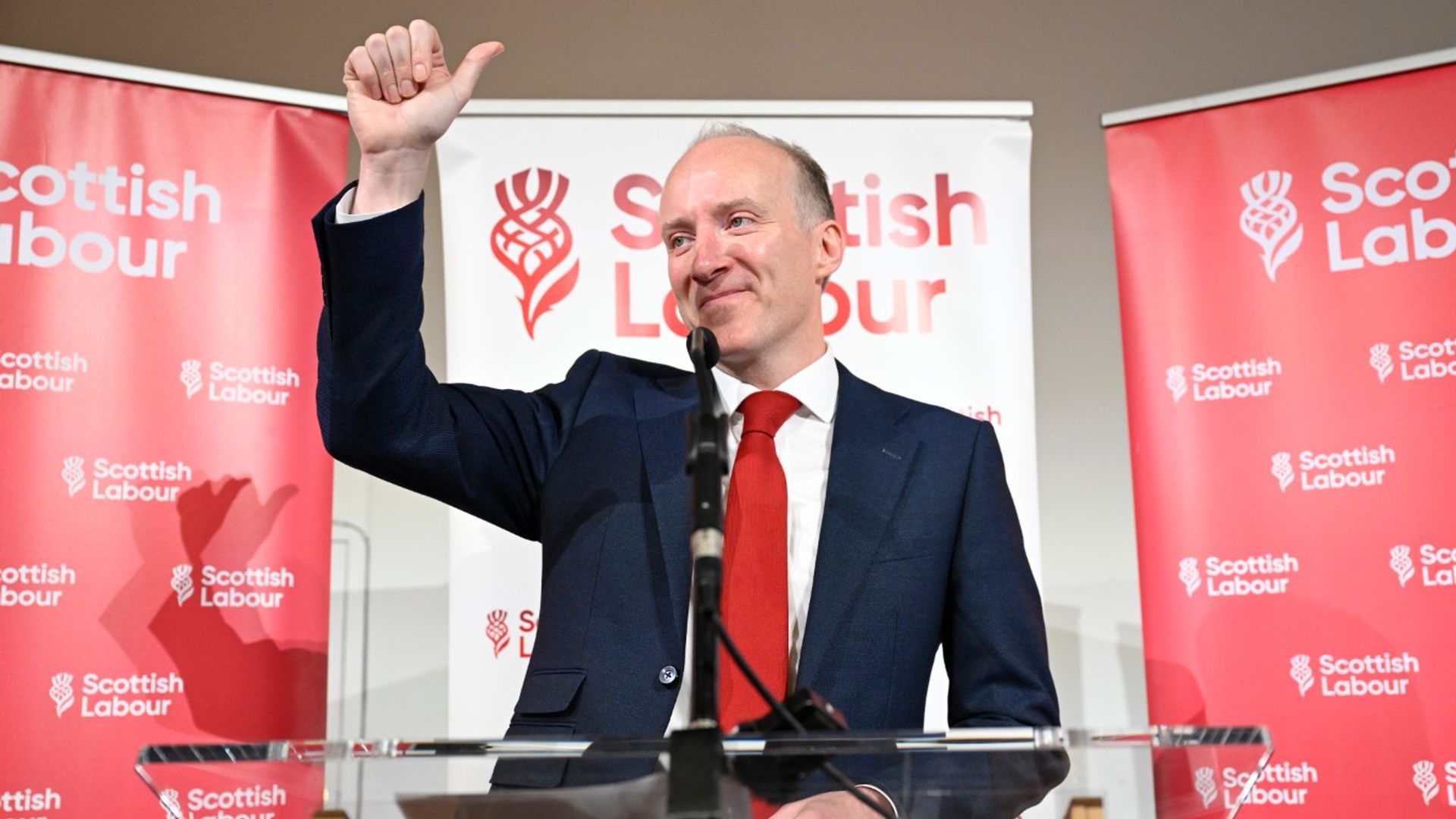
Enter Michael Marra.
To understand why his ascent to lead Scottish Labour matters, you have to understand the specific weight of what he is inheriting. This is not just a political party; it is a ghost ship. For decades, Scotland and Labour were married in a union that felt permanent, almost biological. Generations voted red because their fathers had, and their grandfathers before them, down in the pit villages and the shipyards along the Clyde.
Then came the fractures. The ground shifted. The independence referendum cracked the old loyalties wide open, and a generation of voters walked away, seeking hope in a different flag. Labour found itself wandering a political desert, gasping for relevance, speaking a language of technocratic management to a populace hungry for visceral transformation.
Marra stepped into that vacuum not with a trumpet, but with a ledger.
Picture a cramped back office in Dundee. The tea has gone cold in a chipped mug. Papers are stacked in precarious towers beside a window streaked with salt spray from the Tay. This is where policy meets reality. While many politicians treat ideas as disposable accessories for the evening news, Marra has spent years treating them as load-bearing walls.
He is an intellectual who speaks with the cadence of someone who grew up on a council estate—not because he has to fake it for the cameras, but because his roots are tangled deep in the industrial earth of Tayside. His family name carries resonance here. His brother, the late Michael Marra—the legendary folk singer and bard of Dundee—captured the soul of ordinary Scottish lives in lyrics that smelled of fish markets and ironwork. There is music in the family, yes, but there is also a profound, unyielding duty to the community.
When Marra talks about the economy, he does not speak in the bloodless jargon of Gross Domestic Product or fiscal baselines. He talks about dignity. He talks about what happens to a child’s life chances when the local library closes its doors at four o'clock because the council coffers are bone dry.
Listen closely to how he frames the central dilemma of modern Scotland. We are a country of immense talent, rich in renewable energy, blessed with universities that shape the modern world, and yet, children go to school with empty bellies. It is a profound, screaming contradiction.
"We have confused management with leadership," a veteran trade unionist told me over a pint of heavy in a Glasgow pub last autumn, shaking his head at the television screen. "We’ve had plenty of managers who could file the paperwork while the house burned down. What we needed was someone willing to run into the flames."
Marra is being cast by his supporters as that firefighter. But the fire is old, deep-seated, and fed by decades of cynicism.
To change the political weather in Scotland, you have to do something nearly impossible: you have to convince people who have given up on you that you have changed. You have to walk into rooms where the mention of the Labour Party once brought down a storm of bitterness, and you have to listen. Not nod while you wait for your turn to speak, but truly listen.
Consider the scale of the challenge. The Scottish National Party dominated the political landscape for a generation by positioning themselves as the sole defenders of Scottish interests against Westminster indifference. For Labour to cut through that armor, they cannot simply be "not the SNP" or "not the Tories." They have to offer a compelling, radical vision of self-determination that doesn't rely on constitutional division. They have to argue that the real border line in Scotland is not between Edinburgh and London, but between the rich and the struggling.
It is a difficult needle to thread. Lean too far toward central control, and you sound like the old guard. Lean too far toward localism, and you risk losing coherence.
Yet, Marra’s approach has always been rooted in decentralization and economic democracy. He understands that wealth is not merely generated in corporate boardrooms in London; it is coaxed out of the ground, engineered in labs in Aberdeen, and forged in workshops across the central belt. If you give local communities the tools to rebuild their own industrial base, they will do it with a ferocity that no government decree could ever match.
There is a quiet intensity to him. Watch him across a despatch box or in a radio studio. He doesn’t rely on theatrical outrage. He relies on facts deployed like scalpels. He cuts through the noise with a cold, analytical precision that can rattle opponents who are used to trading in soundbites.
Yet, cold precision alone does not win elections. Politics is an emotional transaction. People do not vote for spreadsheets; they vote for hope. They vote because they believe a leader sees them, understands their struggle, and carries their aspirations like a physical weight on their shoulders.
This is the frontier where Marra will be tested. Can the academic, the policy wonk, the quiet intellect from Dundee become a tribune of the masses? Can he translate complex economic models into a rallying cry that echoes down the closes of Edinburgh and the tenements of Glasgow?
The rain continues to beat against the glass outside. Across Scotland tonight, nurses are finishing grueling night shifts, young families are staring at prepayment meters with a knot in their stomachs, and older people are sitting in coats indoors to save on heating. They are not waiting for a savior. They are too cynical for that. They have seen leaders come and go like the changing of the tide, promising the earth and delivering committee reports.
They are waiting for proof.
Michael Marra has the title now. He has the machinery of the party at his disposal, battered and bruised though it may be. But the real work does not happen in parliament buildings or committee rooms. It happens in the quiet spaces of trust that must now be rebuilt, one conversation, one ruined street, and one broken promise at a time.
The red rose has weathered worse winters than this. Whether it will bloom again depends entirely on whether the man now holding it has the courage to let its thorns prick his hands.