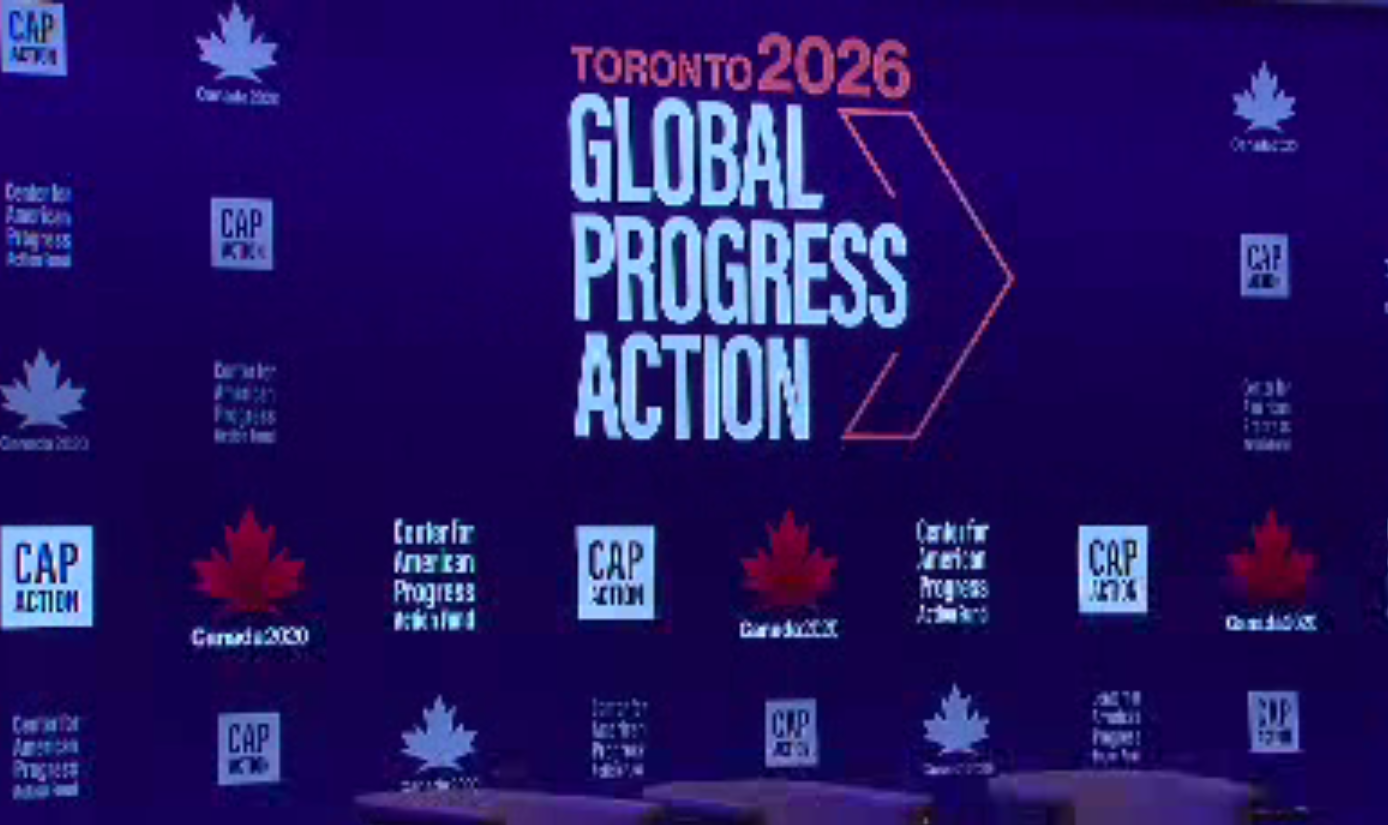
The air in downtown Toronto changed before the motorcades even arrived. You could feel it in the sudden, sharp silence of blocks usually choked with the frantic energy of Bay Street. Security barriers went up like iron scars across the pavement. Snipers took their positions on limestone ledges, looking down at a city that, for forty-eight hours, would become the gravitational center of the global order.
When men like Barack Obama and Mark Carney walk into a room, the oxygen seems to thin. It isn't just the fame. It is the crushing reality of what they carry in their briefcases: the blueprints for how we will survive the next decade.
This wasn't a victory lap or a photo opportunity. The Toronto Global Forum arrived at a moment when the world felt like it was fraying at the edges. Inflation had stopped being a headline and started being a ghost that haunted every grocery aisle. The climate wasn't just changing; it was screaming. Behind the heavy oak doors of the Fairmont Royal York, the conversation wasn't about "if" things were falling apart. It was about who would be left to pick up the pieces.
The Architect and the Orator
Mark Carney walked onto the stage with the clipped, rhythmic precision of a man who sees the world in spreadsheets and moral imperatives. As the former Governor of the Bank of England and the Bank of Canada, he has spent his life navigating the invisible currents of capital. But in Toronto, his tone held a different resonance. He wasn't just talking about interest rates. He was talking about value—specifically, the value of a future we haven't yet secured.
Consider a hypothetical shopkeeper in a small Ontario town. To her, "net zero" is a phrase used by people in expensive suits. But to Carney, that shopkeeper is the primary stakeholder. He spoke of the transition to a green economy not as a choice, but as the only bridge left standing over a rising tide. He argued that if we don't rewire the very DNA of how we invest, the shopkeeper loses everything. Not because of a bad business plan, but because the world she operates in has literally burned or flooded away.
Then came Obama.
The 44th President of the United States has a way of making a room of three thousand people feel like a private kitchen table conversation. He didn't lead with policy. He led with the fragility of the democratic experiment. He looked out at an audience of CEOs, tech founders, and policymakers and reminded them that the skyscrapers they built sit on a foundation of social trust. And that foundation is cracking.
He spoke of the "truth decay" that makes it impossible for neighbors to agree on the color of the sky, let alone the complexity of a global tax treaty. The stakes he described were invisible but absolute. If we lose the ability to speak a common language of facts, the global summit becomes a tower of Babel.
The Invisible Stakes of a Handshake
Why does it matter that these leaders gathered in a Canadian ballroom?
Outside the security perimeter, a young professional waits for a subway that is three minutes late. They are worried about a mortgage that feels like an anchor. They are worried about an AI that might render their degree obsolete by Tuesday. To them, the summit is a disruption to their commute.
But inside, the gears were turning on the very issues that dictate that young person's life. The summit tackled the "polycrisis"—the terrifying intersection of a lingering pandemic hangover, a war in Europe that has rewritten the energy map, and a technological revolution that is outstripping our ability to regulate it.
Leaders from the IMF and the World Bank sat across from Canadian pension fund managers. They debated the "Great Transition." This isn't just about switching from coal to wind. It is about a fundamental shift in where power resides. For decades, the global order was a predictable, if lopsided, machine. Now, the machine is being rebuilt while it’s still running at 100 miles per hour.
The Human Cost of Data
In one session, the talk turned to the global South. It is easy to look at a chart of emerging market debt and see numbers. It is harder to look at the hypothetical father in Lagos who can no longer afford the fuel to drive his children to school because of a currency fluctuation decided in a room half a world away.
The Toronto summit sought to bridge that disconnect. There was a palpable sense of urgency that hadn't been there in previous years. The "leaders" were no longer just projecting confidence; they were pleading for cooperation. They acknowledged that the old ways of doing business—the siloed, nationalistic protectionism—is a suicide pact in a globalized economy.
The conversation shifted to the "S" in ESG: Social.
For a long time, corporate giants treated social responsibility like a coat of paint. You applied it at the end to make the building look nice. In Toronto, the message was clear: the social fabric is the building itself. When inequality reaches a certain threshold, the markets stop working. When people feel the system is rigged, they don't just complain; they tear the system down. Obama’s presence served as a living reminder of this volatility. His career has been defined by the push and pull of progress and its inevitable, often violent, backlash.
The Sound of the Gavel
As the sessions bled into the evening, the "dry facts" of the official program began to take on a more visceral shape. You could see it in the way delegates huddled in the hallways, speaking in hushed tones about the fragility of supply chains.
They weren't talking about "logistics." They were talking about the fact that if a specific port in Asia shuts down, a hospital in Quebec runs out of surgical Grade-A plastics within forty-eight hours. We have built a world of terrifying efficiency and zero redundancy. We are all walking on a tightrope that we’ve mistaken for a sidewalk.
The summit didn't offer a magic wand. There was no single document signed that solved the cooling of the earth or the warming of our political rhetoric. Instead, there was something more subtle: an alignment of intent.
Mark Carney emphasized that the capital exists to solve these problems. There are trillions of dollars sitting on the sidelines, waiting for a signal that the transition is real, permanent, and profitable. The summit was that signal. It was a collective attempt to scream into the void that the era of "business as usual" ended somewhere between the last wildfire and the first bank failure of the year.
The Echo in the Hall
When the motorcades finally pulled away and the barriers were dismantled, Toronto returned to its usual hum. The shopkeeper in the small town opened her doors. The young professional finally caught their train.
But the world had shifted, if only by a few degrees.
The importance of such a gathering isn't found in the lofty speeches or the grand promises. It’s found in the realization that the people we entrust with the world’s steering wheel are just as aware of the cliff as we are. They are sitting in those rooms, under those bright lights, trying to figure out how to keep the engine running while the road disappears beneath them.
The ghost of the summit remains in the policies that will trickle down over the coming months. It will be in the way your pension is invested, the way your energy is priced, and the way your data is protected.
A man in a dark suit stands on a balcony overlooking the lake. He is one of the most powerful people on the planet. He looks down at the tiny, moving lights of the city below—the millions of lives, the uncounted dreams, the quiet struggles. He knows that his success isn't measured by the stock market's closing bell. It is measured by whether those lights stay on through the storm that is already visible on the horizon.
The heavy doors are closed now, but the weight of what was discussed inside remains, pressing down on all of us, demanding that we pay attention before the silence returns for good.



