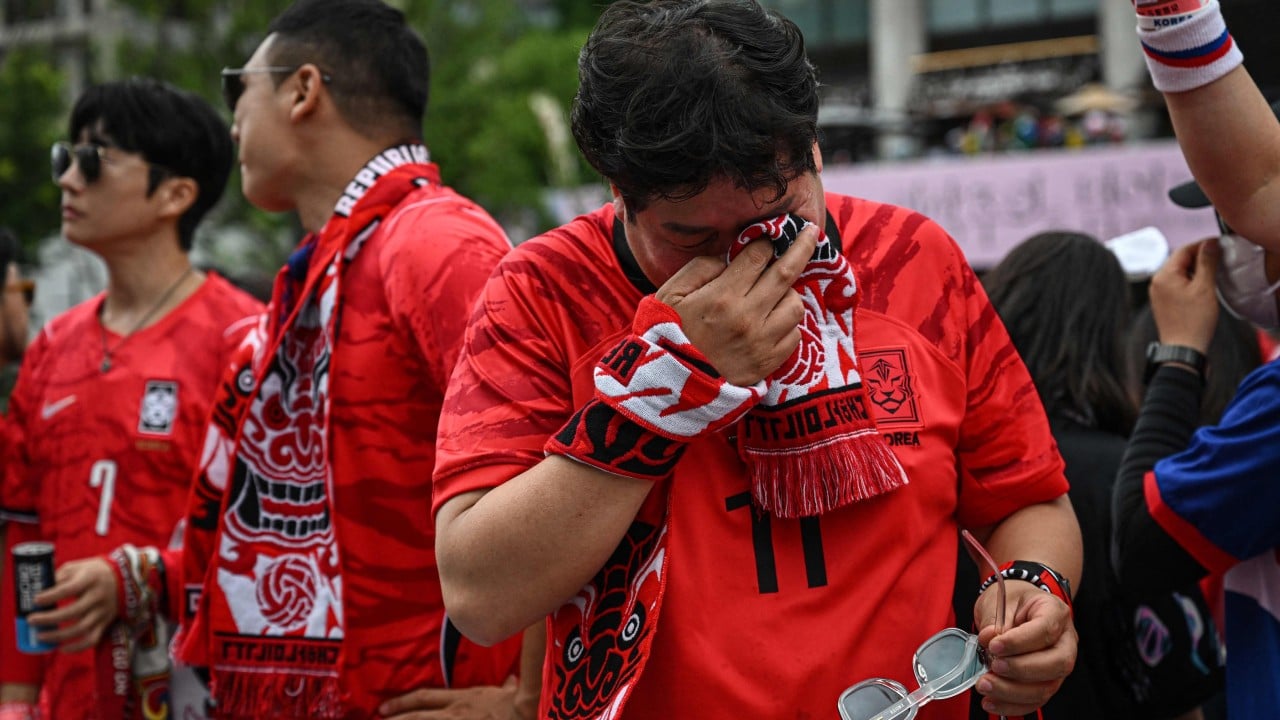
The air inside the stadium doesn’t just carry the scent of stale popcorn and cut grass. It carries friction. When the Netherlands and Morocco meet in the knockout rounds of a World Cup, the tension isn't confined to the touchlines. It vibrates through the concrete apartments of Rotterdam. It spills across the cafes of Utrecht. It sits heavily on the shoulders of kids kicking deflated balls against brick walls in Amsterdam-West, wearing orange shirts but harboring hearts that beat to a North African rhythm.
This isn't a mere tactical chess match. It is a collision of shared histories, split loyalties, and the beautiful, agonizing complexity of modern identity. Learn more on a connected topic: this related article.
To understand this Round of 32 clash, you have to look past the standard press releases and the sterile statistics. You have to look at the boots. Specifically, the boots of men who could very well have been wearing the opposite color. For decades, the Dutch football system nurtured, polished, and perfected some of Morocco's brightest modern stars. Now, those very stars stand in the tunnel, looking across at their childhood neighbors, ready to knock them out of the biggest tournament on earth.
Blood against birthright. That is the invisible scoreboard before a single whistle blows. More journalism by NBC Sports explores comparable views on this issue.
The Orange Machine Meets the Red Wall
On paper, the Dutch approach football like architects. They measure space. They value geometry. Under the blinding lights of the knockout stage, their manager will demand the usual: structured progression, patient possession, and sudden, lethal shifts in tempo. They enter this match as the traditional giants, carrying the historical burden of three lost World Cup finals. That history is a ghost that stalks every Dutch squad. It whispers that brilliance without a trophy is just a beautiful tragedy.
But look at Morocco.
The Atlas Lions don't play to fulfill an architectural blueprint. They play to survive, to conquer, and to honor the millions of diaspora voices screaming at television screens across Europe. Their defensive structure isn't just a tactic; it is a vow. During their historic runs, that red defensive block has broken the spirit of the world's most expensive forward lines. They don't mind if the Netherlands keeps sixty percent of the ball. They invite it. They wait for that one loose pass, that single moment of Dutch arrogance, to spark a counterattack so rapid it leaves defenders chasing shadows.
Consider the midfield battleground. It features a fascinating contrast in styles. On one side, you have the serene, almost detached brilliance of the Dutch creators, men who look like they are solving a calculus equation in their heads. On the other, you have Moroccan enforcers who treat every loose ball like a threat to their family honor.
The Anatomy of a Heartbreak
To predict how this unfolds, we have to look at the vulnerabilities both sides try so desperately to hide.
The Dutch flaw is psychological. When their rhythm is disrupted, when a team refuses to play "proper" football and instead turns the pitch into a muddy dogfight, the Oranje can fracture. They start arguing with the referee. They start arguing with each other. If Morocco can frustrate them through the first forty-five minutes, keeping the scoreline blank, the pressure from back home will start to suffocate the Dutch players.
Morocco's danger lies in the depth of their emotion. They play at an intensity that is impossible to sustain forever. Muscle fibers fray. Lungs burn. If the Dutch can move the ball from flank to flank with enough speed, they will eventually find the microscopic gaps that open when fatigue sets in.
Imagine a hypothetical supporter named Youssef. Born in Utrecht, raised on Dutch cheese and Moroccan mint tea. He bought an orange jersey for the group stage, but his father’s eyes always wander back to the red flag hanging in the hallway. For Youssef, a Dutch goal brings a cheer that catches in his throat. A Moroccan goal brings tears he can't quite explain to his coworkers. Multiply Youssef by hundreds of thousands, and you begin to grasp the emotional scale of this fixture.
The Tactical Calculus
News from the training camps suggests both managers are playing a game of poker. The Dutch camp is projecting calm, hinting at a tactical tweak designed to bypass Morocco's legendary low block. Rumors swirl about a late fitness test for their primary creative spark, a man whose vision is required to unlock a defense that has conceded fewer goals this year than a pub team on a rainy Tuesday.
Morocco, meanwhile, is nursing bruises. Their style demands sacrifice. Key defenders are reportedly training with heavy strapping, relying on adrenaline and painkiller injections to get them through ninety minutes. But a wounded lion is often the most dangerous. They will rely heavily on their talismanic wing-backs to stretch the Dutch defense and exploit the space left behind when the full-backs venture forward.
The smart money, the sterile algorithms run by betting syndicates, will likely favor the Netherlands. They have the pedigree. They have the squad depth. They have the experience of navigating these tournament deep waters without drowning.
But algorithms don't feel the cold sweat in the tunnel. They don't factor in the pride of a continent or the fierce loyalty of a diaspora that feels it has something to prove to the very country hosting its children.
The Final Whistle Awaits
The match will likely be decided in a single, unscripted moment. A slipped footing on the damp grass. A referee’s whistle echoing over a chaotic penalty box scramble. A piece of individual magic from a winger who grew up playing on the concrete pitches of Rotterdam, executing a turn he learned in the Netherlands to score the goal that breaks Dutch hearts.
When the ninety minutes—or one hundred and twenty—are up, one side will collapse onto the turf in agony, their tournament over, their dreams reduced to data points in a sports trivia book. The other will march on, carrying the hopes of a fractured, beautiful culture into the quarter-finals.
The referee checks his watch. The captains exchange pennants. In the stands, the orange waves crash against a sea of red, and for the next two hours, the rest of the world ceases to exist.