The Strategic Blueprint Behind Pre-Election Closures
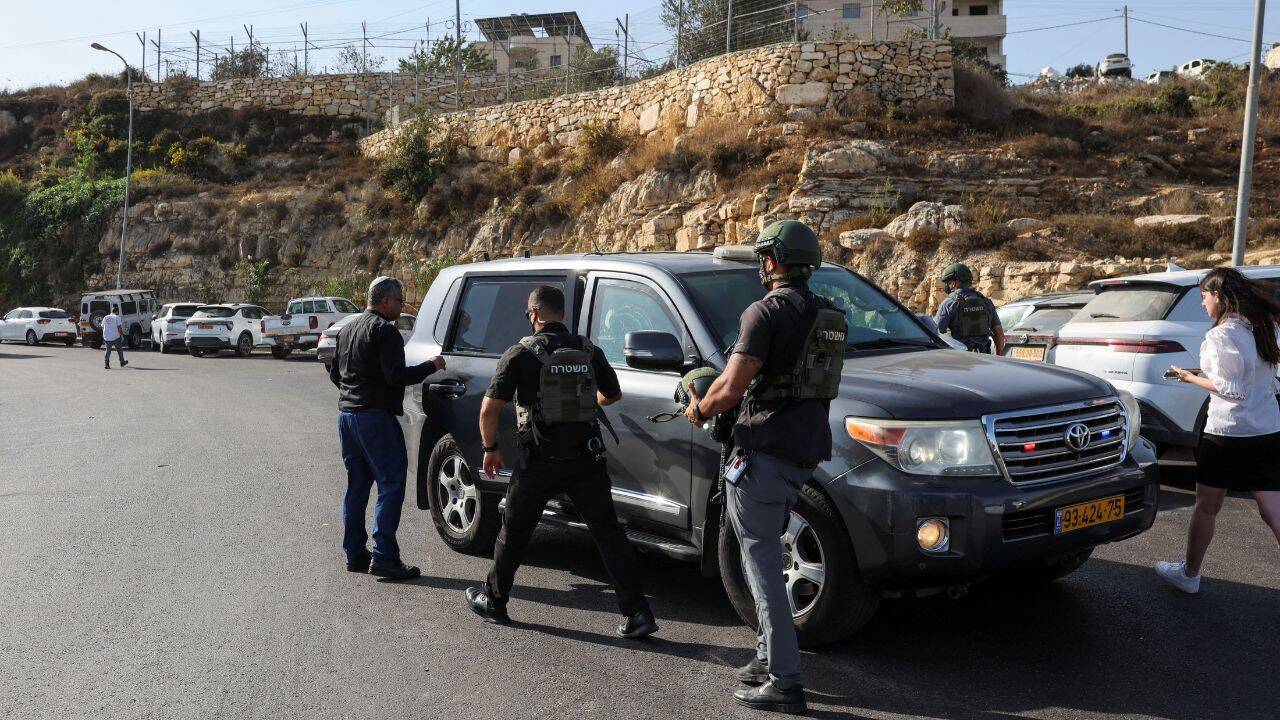
A headline pairing a Hebron cordon, a threatened full West Bank closure, and election anxiety simplifies a multi-variable crisis into a single cause-and-effect chain: an attack happens, a leader orders a lockdown, and election fears rise. That framing misses the structural mechanics at work. When a security incident occurs days before a national vote, security enforcement and electoral signaling converge inside the same decision loop.
To understand what actually drives a closure order and why it reshapes domestic politics, a strategic breakdown requires separating four interlocking mechanisms:
- Tactical Deterrence and Force Protection: Immediate cordons, checkpoints, and raids aim to contain suspects, disrupt follow-on plots, and protect transit corridors.
- Electoral Signaling and Threat Salience: High-visibility security measures shift voter attention toward existential security threats and away from domestic coalition fractures or governance debates.
- Economic and Mobility Friction: Restricting movement across municipalities or external crossings imposes immediate daily costs on local commerce, industrial output, and permit-holding workers.
- Civil-Military Friction: Political pressure to maintain visible restrictions can collide with military assessments over whether operational objectives have already been reached.
Known facts vs. educated hypotheses: It is a known fact that lethal attacks and military operations in the West Bank—including the late October 2026 Hebron escalation and closure orders—occurred immediately ahead of Israel's October 27, 2026 legislative election, and that restrictions carry sharp economic and displacement consequences. By contrast, claims about a politician's private electoral motive for extending or ordering a closure are educated hypotheses inferred from timing, public statements, and political incentives rather than directly observed intent.
Deconstructing the Competitor's Logic
Standard breaking-news coverage on a pre-election lockdown typically relies on three shortcuts: chronological stacking, implied causation, and undifferentiated scale.
First, chronological stacking places an attack, a prime ministerial directive, and pre-election polling anxieties in adjacent paragraphs without explaining how each step constrains or enables the next. An attack creates an immediate operational imperative—securing roads, tracking perpetrators, and preventing secondary strikes. Announcing a full West Bank closure operates on a broader register than sealing a single city neighborhood; treating a localized cordon and a territory-wide closure as interchangeable obscures the difference between targeted containment and broad economic strangulation.
Second, implied causation treats "election fears" as a single monolithic mood. In reality, election anxiety splits along competing fault lines:
- Incumbent and Coalition Anxiety: Concern over coalition cohesion, voter turnout among security-focused blocs, and perceptions of whether the government projects decisive control.
- Opposition Fragmentation Risk: The dynamic in which an acute security emergency can pressure rival parties or factions into rallying around state security rather than pressing domestic critiques.
- Civilian and Regional Spillover Anxiety: Worry among residents, business owners, and outside observers that temporary emergency measures—such as home sealings, demolitions, or checkpoint closures—will harden into longer-term structural changes.
Third, undifferentiated scale treats every restriction as equally consequential across geography. Hebron presents a distinct operational profile within the West Bank: a major commercial and industrial hub with dense urban neighborhoods, nearby refugee camps, major arterial roads, and settler enclaves inside the city center. A lockdown in Hebron disrupts supply chains and civilian life differently than a general restriction on movement or work permits across other governorates.
The Three Pillars of a Pre-Election Lockdown
Evaluating any security lockdown ordered near an election requires testing it against three structural pillars: operational necessity, political utility, and friction cost.
Operational Necessity vs. Performative Scale
Every security restriction has a containment boundary—the geographic and functional perimeter needed to stop an active threat or apprehend suspects. When a cordon matches the threat footprint, operational necessity is high. When restrictions expand across wider areas or remain in place after primary searches conclude, the measure shifts toward deterrence through collective friction or visible reassurance.
In practice, security officials weigh two competing risks:
- Under-reaction Risk: Lifting restrictions too early allows a secondary cell or fleeing suspect to execute another attack.
- Over-extension Risk: Broad closures tie down forces, inflame local grievances, and can draw pushback from military commanders when operational goals are already met.
The Electoral Salience Function
In democratic politics, voters evaluate candidates through issue ownership—the perception that a leader or party handles a specific problem better than rivals. When economic cost-of-living, judicial or institutional disputes, or coalition rifts dominate campaign coverage, incumbents who rely on a "Mr. Security" brand face headwinds.
A sharp security shock alters the campaign information environment in three ways:
- Agenda Displacement: Media coverage and public debate pivot from governance records and domestic grievances to immediate physical safety.
- Decisiveness Signaling: Issuing firm orders—canceling partisan events, deploying troops, and threatening sweeping closures—projects command authority during turbulence.
- Coalition Discipline: Heightened threat perception raises the political cost for allies or opposition figures of appearing divided or soft on security.
Yet electoral salience is a double-edged sword. If a security crisis occurs right before a vote, voters can interpret an attack and lockdown either as proof that tough measures are required or as evidence of vulnerability despite years of security policies. Timing and framing determine which interpretation dominates.
The Cost Function of Closure
A lockdown is never cost-free. Its cost function rises non-linearly with duration and geographic breadth. Rather than inventing figures where granular audits are incomplete, analysts can model the cost function across four concrete channels:
- Direct Economic Output Loss: Sealing a commercial and industrial center halts freight movement, closes shops, damages or idles factories, and strips daily revenue from local municipalities and households.
- Labor Market Disruption: Freezing crossings or revoking/pausing entry for permit workers severs wage income for families and creates labor gaps in sectors that depend on cross-border labor.
- Humanitarian and Household Displacement: Nighttime raids, home sealings or demolitions, and neighborhood blockades force families out of residences, disrupt schooling, and strain basic services.
- Long-Term Escalation Risk: Severe economic contraction and civilian hardship compress household resilience, increasing long-term instability even if short-term movement is suppressed.
Missed Cause-and-Effect Chains
Surface reporting often stops at the announcement of a closure. Four downstream cause-and-effect chains explain why pre-election lockdowns produce lasting consequences beyond election day.
The Escalation-Friction Loop
- An attack triggers a cordon and raid cycle.
- Checkpoints, curfews, and closures freeze normal economic activity and mobility.
- Prolonged economic strain and civilian displacement deepen local anger and economic desperation.
- Heightened friction increases the odds of future clashes or attacks, creating a feedback loop that makes full normalization harder to achieve.
The Institutional Friction Chain
When political timelines (such as an impending election) run alongside military operational cycles, civil-military friction can emerge. Military leaders assess readiness, force fatigue, and mission completion; political leaders weigh public mood, coalition dynamics, and voter sentiment. Tension between keeping restrictions in place for political optics and lifting them once tactical goals are met can strain command alignment and complicate post-election governance.
The Administrative Inertia Effect
Emergency measures often outlive their initial trigger. Once checkpoints are closed, permits are suspended, or neighborhoods are cordoned off, reopening requires deliberate administrative action and risk sign-off. Even after an acute operation winds down, residual friction—damaged infrastructure, disrupted supply chains, and cautious enforcement—persists.
The Diplomatic and External Constraint Chain
Unilateral or sweeping closures in contested territory carry external costs. Foreign governments and international bodies scrutinize civilian displacement, movement restrictions, and escalation near sensitive sites. While diplomatic reactions often stop short of sweeping collective sanctions when international consensus is divided, they still shape diplomatic leverage, aid coordination, and post-election external relations.
Tactical Evaluation Framework: How to Read Lockdowns in Real Time
Anyone tracking a West Bank closure or Hebron lockdown—whether an analyst, policymaker, business operator, or regional observer—can apply a five-step diagnostic sequence to separate signal from noise.
- Audit the Scope of the Order: Distinguish between an announced intent or preparation for a full West Bank closure, an active cordon around a specific city or neighborhood, and selective crossing or permit freezes. Full closures threatened in rhetoric do not always match full closures enforced on the ground.
- Track Operational vs. Political Timelines: Map the exact hours and days between the security incident, military raid milestones, election dates, and decisions to extend or lift restrictions. Pay close attention to any daylight between military assessments and political directives.
- Measure Choke Points Rather Than Headlines: Watch specific arteries, industrial zones, municipal borders, and worker crossings rather than relying solely on broad labels like "lockdown". Logistics choke points reveal real economic impact faster than political speeches.
- Separate Tactical Outcomes from Strategic Impact: Track concrete security outputs—arrests, weapons seized, plots disrupted—alongside civilian and economic costs such as displacement, business closures, and infrastructure damage. A major raid with limited material seizures or high civilian disruption carries a very different strategic balance sheet than a targeted interdiction.
- Monitor Post-Vote Reversal Friction: Watch what happens in the days immediately following an election. Rapid easing signals that restrictions were tightly bound to an immediate security sweep or election window; prolonged continuation signals deeper structural or political entrenchment.
Limitations and Analytical Blind Spots
No analytical framework eliminates uncertainty in fast-moving security environments. Four limitations require explicit guardrails:
- Fog of Operations and Information Lag: During active raids and closures, casualty counts, displacement estimates, property damage tallies, and operational details often diverge across military briefings, local municipalities, and media reports before independent verification catches up.
- Unobservable Intent: Analysts can observe timing, rhetoric, and policy choices, but cannot directly measure a leader's internal calculus or separate security caution from electoral opportunism with mathematical certainty.
- Non-Linear Voter Behavior: A security lockdown does not guarantee a uniform electoral swing. Voters weigh security alongside economic pressure, leadership trust, and coalition arithmetic, meaning the same event can energize one bloc while alienating another.
- No Silver-Bullet Policy Trade-Off: Lifting restrictions prematurely risks security lapses, while keeping broad closures in place deepens economic harm and local resentment. Every option involves severe trade-offs rather than a clean solution.
Strategic Play for Decision-Makers
Treat pre-election West Bank lockdown announcements as a dual-track signal—simultaneously an operational security response and a high-stakes political lever—and build contingency plans around a phased, condition-tied de-escalation rather than a single binary "open vs. closed" assumption. For organizations, observers, and policymakers operating in or around the territory, the highest-value move is to maintain independent supply and contingency buffers for high-friction corridors like Hebron while benchmarking policy and risk assessments against verifiable post-election movement changes rather than pre-vote declarations.