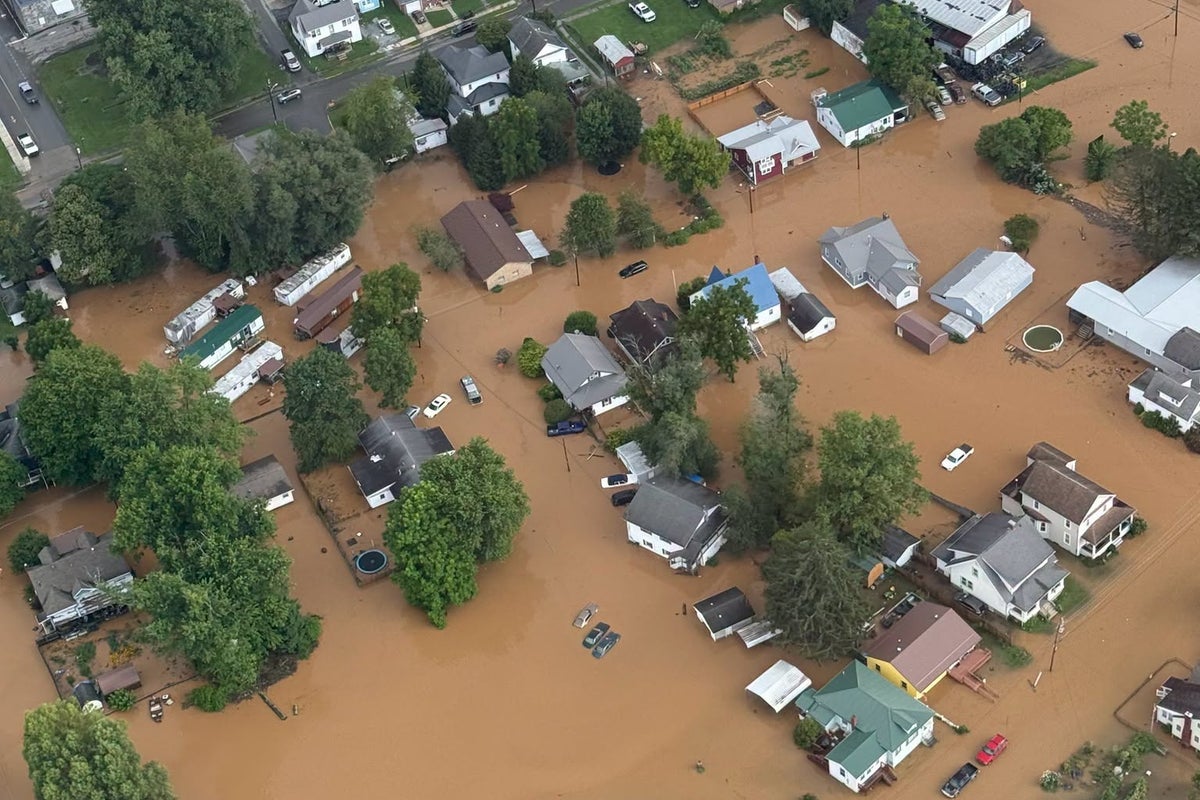
Deadly flooding in West Virginia is rarely an act of pure meteorological malice. It is almost always a slow-motion administrative failure, punctuated by sudden violence. When heavy rains arrive in the mountain state, they do not just swell creeks and overflow rivers; they test a fragile infrastructure network that has been studied, debated, and neglected for generations. Mitigation plans sit in filing cabinets while hollowed-out communities wash downstream.
The immediate trigger is meteorological, but the true disaster is structural. For decades, federal agencies, state legislators, and local county commissions have produced exhaustive reports on watershed management, floodplain mapping, and stream clearance. Millions of dollars in federal disaster relief flow into the region after every major catastrophe, yet the fundamental vulnerability of West Virginia's hollows remains virtually unchanged.
The Anatomy of a Hollow Disaster
Geography dictates tragedy in central Appalachia. Narrow valleys leave little room for error when millions of gallons of water rush off deforested ridges. Over generations, human settlement crowded the flat ground directly beside streams and rivers because that was the only usable land available near the coal camps and industrial sites.
When cloudbursts drop half a foot of rain in a matter of hours, steep terrain turns precipitation into a wall of moving water with terrifying speed.
Engineers call this a flash flood, but seasoned residents know it simply as inevitable math. The problem is not a lack of scientific understanding. Hydrologists know precisely which creeks choke on sediment and debris during heavy storms. State officials have long lists of bridges that act as accidental dams, catching uprooted trees and rolling cars until the water diverts directly into residential streets.
The information exists. The political will and sustained funding to act on it do not.
Bureaucratic Paralysis in the Watershed
Federal programs like the Federal Emergency Management Agency hazard mitigation grants are theoretically designed to break this cycle. In practice, they often trap local governments in endless loops of paperwork, benefit-cost analyses, and environmental reviews. A small county commission with a part-time staff and a shrinking tax base lacks the administrative capacity to navigate federal bureaucracy.
Buyout programs offer a case study in structural friction. When a home floods three times in a decade, residents often want to leave. The government may eventually agree to purchase the property, demolish the structure, and return the land to nature so it can safely flood next time.
However, this process frequently takes years. Families live in limbo, wondering if they should invest in repairs or pack their bags. Meanwhile, the local tax base shrinks with every acquired parcel, making the county even less equipped to maintain the remaining infrastructure.
Counties are caught in an impossible squeeze. They cannot afford to fix the streams themselves, and they cannot accelerate federal assistance fast enough to prevent the next disaster.
The Cost of Deferred Maintenance
Stream maintenance sits at the center of the controversy. For generations, local residents cleared debris, gravel, and fallen timber from local waterways on their own initiative. Modern environmental regulations changed that dynamic entirely.
State and federal clean water laws rightly protect aquatic ecosystems and prevent unauthorized stream dredging that can worsen erosion downstream. However, the regulatory pendulum swung so far that routine maintenance became legally treacherous. Local officials fear massive fines from environmental agencies if they touch a creek without a small army of permits.
This creates a dangerous regulatory vacuum. Federal agencies do not have the manpower to clear every choked creek in Appalachia, and local authorities are too legally intimidated to try. The gravel bars build up, the stream channels lose their capacity, and the next heavy rain overflows banks that should have easily handled the volume.
The tension between environmental protection and human safety is real, but treating routine channel clearance as a federal environmental violation ignores the physical reality of living in a narrow mountain valley.
Where the Money Goes
Following major flood events, political leaders arrive in West Virginia with promises of historic investment. Millions are allocated for infrastructure resilience, economic diversification, and flood wall construction.
Yet a hard look at historical spending reveals that recovery funds frequently prioritize emergency response and temporary repairs over permanent mitigation. Paving washed-out roads and patching crumbling culverts gets traffic moving again, but it does nothing to prevent the next storm from washing those same roads away.
True mitigation is expensive, unglamorous, and invisible when it works. Nobody cuts a ribbon for a creek that stayed inside its banks. Politicians prefer projects with high visibility. Elevating homes, relocating entire communities out of floodplains, and redesigning regional drainage systems require multi-year commitments that span multiple election cycles.
When leadership changes, priorities shift. Comprehensive watershed plans gather dust while new administrations commission fresh studies to reinvent the wheel.
Breaking the Cycle
If West Virginia is to escape this recurring nightmare, the approach to disaster management must shift from reactive recovery to proactive transformation.
First, federal agencies must streamline mitigation grant processes for economically distressed rural counties. Expecting a county commission with a two-person office to compete with wealthy suburban municipalities for complex federal funding guarantees that the most vulnerable areas get left behind.
Second, state regulators must establish clear, standardized protocols for local stream maintenance. Property owners and county workers need a legal pathway to remove dangerous gravel bars and accumulated debris without risking federal penalties or destroying local ecosystems. Balancing habitat protection with human survival is difficult, but not impossible.
Finally, the state must confront the painful reality of managed retreat. Not every hollow can be saved. Pumping millions of dollars into rebuilding infrastructure in repeatedly devastated flood zones is a bad investment of public funds. Helping communities relocate to higher ground before the next catastrophe strikes is the only permanent solution to a geography that refuses to change.
Until state and federal leaders find the courage to prioritize long-term structural survival over short-term political posturing, the next flood warning will remain a terrifying countdown to a preventable tragedy.


