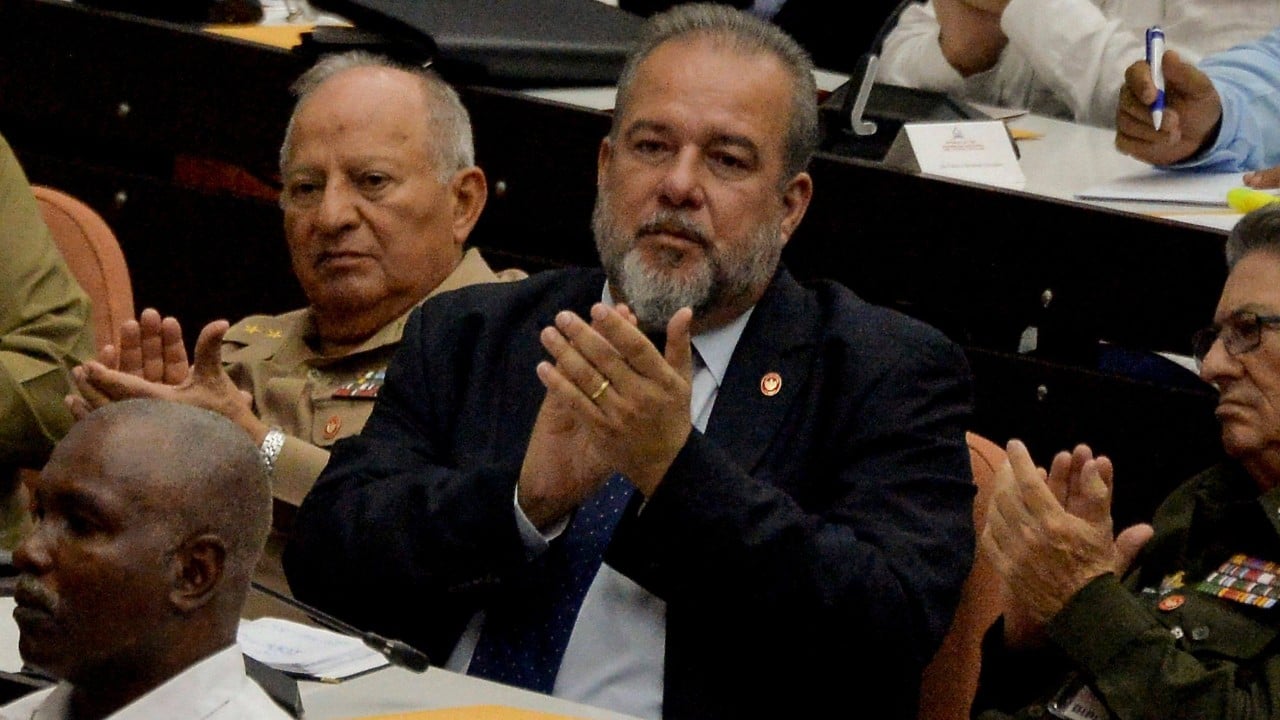
The international press core has fallen for the same macroeconomic optical illusion for decades, and they are doing it again. Whenever Havana tweaks its economic policy, a wave of breathless headlines follows, proclaiming that a historic free-market revolution has finally arrived on the island. The latest announcements from Miguel Díaz-Canel regarding the centralization changes, the expansion of private small and medium-sized enterprises—known locally as mipymes—and the reduction of ministries are being heralded as a profound shift toward capitalism.
It is a fantasy. If you liked this post, you should read: this related article.
The lazy consensus among mainstream analysts is that these measures represent the gradual, inevitable thawing of a command economy. They look at the thousands of newly registered private businesses and see a nascent middle class ready to upend the old guard. They look at state enterprises gaining the autonomy to set wages and see a corporate blueprint.
They are missing the core reality. These reforms are not an entry point to a free market; they are a sophisticated survival strategy designed to offload the catastrophic costs of a collapsing state onto the citizen, all while the regime maintains an absolute monopoly on true economic power. For another perspective on this development, see the recent coverage from TIME.
The Illusion of Ownership
To understand why the mainstream narrative is broken, you have to look closely at what a Cuban private enterprise actually is. Under current regulations, these entities are legally permitted to exist, hire up to 100 people, and even import goods. On paper, it looks like a standard small business ecosystem.
In practice, it is an economic sandbox where the walls can be shifted at a moment's notice. True private property requires a framework of stable contract law, an independent judiciary, and predictable regulatory environments. None of these exist on the island. The state remains the ultimate landlord, the sole legislator, and the final arbiter of every dispute.
Imagine a scenario where an entrepreneur invests tens of thousands of dollars to set up a supply chain for basic food items, only for the ministry to suddenly impose a hard 30% profit margin cap on basic goods, or mandate that wholesale transactions must occur exclusively through state-managed intermediaries. This is not hypothetical; it is exactly how the regime operates whenever a private actor becomes too successful or threatens the state’s economic hegemony.
The system allows citizens to open small storefronts, bakeries, or tech consultancies because the state can no longer provide basic necessities. By allowing private actors to import chicken, cooking oil, and milk, the government effectively transfers the political risk of shortages and hyperinflation to private individuals. If a grocery store shelf is empty, it is no longer a failure of the state; it is the failure of a private shop owner. It is brilliant political risk mitigation disguised as economic liberalization.
The State Currency Cartel
The single biggest flaw in the "free-market transition" narrative is the complete absence of a functional, unified currency market. Mainstream analysts praise the fact that private companies can now import goods, but they gloss over how those goods are paid for.
Cuba operates in a chaotic multi-currency environment where the official exchange rate is completely decoupled from economic reality. Private businesses must source their hard currency—mostly US dollars or Euros—from the informal, street-level market to pay foreign suppliers. The state then demands that taxes, social security, and utility fees be settled in Cuban pesos, a currency experiencing historic devaluation.
+-------------------------------------------------------------------------+
|                        THE CUBAN CURRENCY TRAP                          |
+-------------------------------------------------------------------------+
|                                                                         |
|  [ Private Business ] ---> Buys USD/EUR on Informal Market (High Rate)  |
|          |                                                              |
|          v                                                              |
|  Imports Goods & Sells to Public (Faced with strict state price caps)   |
|          |                                                              |
|          v                                                              |
|  Earns Devaluing Pesos ---> Must Pay Mandatory Taxes/Fees to State      |
|                                                                         |
+-------------------------------------------------------------------------+
This creates a structural trap. A business owner takes 100% of the exchange-rate risk. If the value of the peso drops overnight, their margins evaporate. Meanwhile, the state-run conglomerates, particularly military-controlled entities like GAESA, operate with separate rules, accessing resources and infrastructure that no private citizen can touch.
True economic freedom cannot exist when the government maintains a monopoly on the banking apparatus and explicitly blocks private enterprises from accessing domestic credit markets in the currencies required to scale operations. The new measures allowing municipalities to manage foreign-currency income are not an act of decentralization; they are a concession that the central bank is completely broke and has run out of hard currency to distribute.
Decentralization is Not Liberalization
The 2026 economic package makes a big deal about cutting the state bureaucracy, trimming ministries from 27 down to 20, and giving state-owned enterprises the autonomy to design their own salary systems. Western commentators look at this and call it corporate restructuring.
It is actually an administrative retreat. The state sector is shrinking not out of a philosophical commitment to smaller government, but because it is hemorrhaging labor. Over the last several years, the island has lost a massive percentage of its workforce to emigration, with the most educated and productive citizens fleeing the economic gridlock.
When a state enterprise is granted "autonomy to reinvest profits," it sounds progressive until you realize most of these enterprises are deeply unprofitable, weighed down by obsolete Soviet-era machinery, fuel blackouts, and structural inefficiencies. Giving a bankrupt state factory the autonomy to set its own wages is meaningless when that factory does not have the electricity to run its assembly lines or the raw materials to produce goods.
The structural core of the economy remains entirely closed. The state retains its absolute monopoly over:
- Telecommunications and digital infrastructure
- The banking and financial sectors
- Heavy industry, mining, and energy production
- Large-scale tourism and real estate development
- The legal, medical, and professional service sectors
By restricting private enterprise to small-scale retail, light manufacturing, and hospitality, the government ensures that no private entity can ever achieve the scale necessary to build an independent political base. It is a controlled ecosystem designed to produce compliant shopkeepers, not independent industrial tycoons.
The Myth of the Level Playing Field
The latest policy shifts claim to allow private businesses to invest on equal terms with foreign investors and invite Cubans living abroad to fund domestic ventures. This is touted as a massive opening for foreign direct investment.
Any venture capitalist who understands sovereign risk knows this is a minefield. The regulatory framework is characterized by extreme institutional instability. A decree-law enacted one month can be completely rewritten by a ministerial resolution the next, without warning or right to appeal.
Consider the reality of international trade operations. While the government hints at scrapping state intermediaries for imports and exports, private businesses still face massive compliance hurdles, international banking restrictions, and a total lack of transparency in customs enforcement. The playing field is structurally tilted toward state enterprises and joint ventures backed by foreign geopolitical allies who operate under entirely different legal protections.
Furthermore, the expansion of private enterprise has created profound social stratification. The businesses that thrive are almost exclusively those with access to external capital via remittances from relatives in Miami, Madrid, or Havana’s elite circles. This has left a huge portion of the population, particularly those without family abroad or those tied to fixed state salaries, completely priced out of the new market economy. This is not a free market working efficiently; it is an economy operating on structural privilege.
Dismantling the Premise
When observers ask how fast Cuba's private sector will grow, they are asking the wrong question. The real question is how long the state will tolerate that growth before initiating another cycle of regulatory tightening.
Historically, Cuban economic policy has moved in a predictable pendulum swing. When the economic situation becomes existential—such as during the Special Period of the 1990s or the current post-pandemic crisis—the regime opens the valve just enough to let private economic activity relieve the pressure. The moment the immediate crisis recedes, or the private sector begins to show signs of genuine autonomy, the state swings the pendulum back, introducing new restrictions, audits, and asset seizures to reassert control.
The current opening is wide because the crisis is deep. The island is facing unprecedented fuel shortages, a collapsed electrical grid, and the complete withdrawal of major international hotel chains. The private sector is being used as an economic shock absorber.
Believing that these administrative adjustments will naturally evolve into a modern market economy requires ignoring the structural reality of the Cuban state apparatus. The goal of the current package is transformation for the sake of preservation, ensuring that the political status quo remains completely unchanged while the population figures out how to feed itself. Expecting a free market to emerge from this framework is not just optimistic; it is a fundamental misunderstanding of authoritarian survival strategies.


