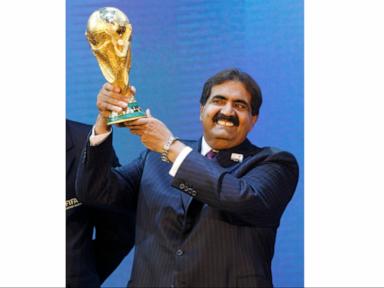
Standard media obituaries love a predictable script. When a Gulf leader passes, the narrative machine instantly churns out boilerplate copy about oil wealth, glittering skylines, and standard dynastic succession. The mainstream commentary surrounding Sheikh Hamad bin Khalifa Al Thani follows this exact, lazy blueprint. They paint a picture of a traditional monarch who happened to strike gas gold, transforming a quiet peninsula into a playground of global influence through sheer financial muscle.
This view is completely wrong. It misses the actual mechanics of modern statecraft.
What the consensus calls an accidental miracle of natural resource management was actually a cold, calculated, and highly disruptive restructuring of how small states survive in a hostile world. Sheikh Hamad did not just rule Qatar; he ran it like an aggressive, high-stakes venture capital firm that weaponized sovereignty to outmaneuver regional giants and Western superpowers alike. The conventional analysis treats his legacy as a story of Middle Eastern wealth. In reality, it is a masterclass in asymmetrical geopolitics and institutional engineering that defies every established rule of international relations.
To understand what actually happened during his reign, you have to discard the superficial fixation on sovereign wealth totals and look at the structural innovations that redefined global power dynamics.
The Abdication Myth and the Illusion of Dynastic Instability
Foreign analysts routinely misread Gulf political transitions because they look through a flawed lens of democratic transitions or fragile autocracies. When Sheikh Hamad voluntarily handed power to his son, Sheikh Tamim, in 2013, the commentariat scrambled to find hidden palace coups, failing health narratives, or external pressures. They expected the typical friction associated with dynastic successions.
They missed the institutional logic entirely.
The 2013 transition was not an act of surrender or a response to crisis. It was a deliberate corporate succession plan executed at the absolute peak of the regime's domestic and international influence. In the brutal arena of Middle Eastern politics, aging rulers typically cling to absolute authority until their final breath, frequently leaving behind paralyzed states or bitter succession battles. By stepping aside early, Sheikh Hamad eliminated the single greatest vulnerability that plagues non-democratic systems: the predictability of a transition crisis.
This move effectively institutionalized the state. It signaled to global markets, international corporations, and foreign intelligence agencies that Qatari policy was not tied to the mortality of a single individual. The corporate-state hybrid model required a young, energetic executive to manage the next phase of global integration, while the architect stepped into the role of the ultimate board chairman.
Western analysts spent decades waiting for the other shoe to drop, predicting that a tiny state sandwiched between Saudi Arabia and Iran would inevitably fracture under the weight of its own ambition. By treating the state as an agile corporate entity rather than a rigid feudal monarchy, the leadership insulated the country from the exact regional shocks that swallowed its neighbors.
The Liquid Natural Gas Gamble Mainstream Economists Misunderstood
The lazy historical consensus attributes Qatar’s economic ascent to pure geological luck. The conventional narrative implies that anyone sitting on the North Field—the largest non-associated natural gas field in the world—would have achieved identical results.
This completely ignores the massive financial and geopolitical risk calculations made in the early 1990s.
When Sheikh Hamad took control in 1995, the global energy market was dominated by crude oil. Liquid Natural Gas (LNG) was an incredibly expensive, technically challenging, and unproven alternative. The infrastructure required to cool gas to minus 162 degrees Celsius, ship it across oceans in specialized vessels, and regasify it at destination ports required astronomical upfront capital.
Major international oil companies were deeply skeptical. Wall Street analysts openly questioned the viability of the projects. The country went deeply into debt, borrowing billions of dollars to build the massive liquefaction trains at Ras Laffan.
Imagine a scenario where global energy markets shifted toward cheaper coal or alternative fuels in the late 1990s. Qatar would have faced catastrophic insolvency. This was not a passive collection of resource rents; it was a high-stakes levered bet on a completely unproven global supply chain.
[Traditional Oil State Model] -> Passive extraction -> High reliance on crude prices -> Vulnerability to regional cartels
[Qatari LNG Infrastructure Model] -> Massive upfront capital debt -> Specialized global supply chain -> Long-term fixed contracts -> Complete supply autonomy
By choosing LNG over crude oil, the state decoupled its economic survival from the OPEC cartel dominated by Saudi Arabia. It built a bespoke customer base across Asia and Europe, effectively ensuring that the world's major economic engines became direct stakeholders in the country's physical security. If a regional adversary threatened the peninsula, they were not just threatening a patch of desert; they were threatening the heating systems of Tokyo, Seoul, and London.
The Soft Power Fallacy: Al Jazeera and Global Brand Management
No institution draws more superficial analysis than Al Jazeera. The network is routinely described by critics as a mere propaganda tool or a chaotic agent of regional instability. Conversely, Western media liberals often praise its early days as an attempt to introduce free-press principles to the Arab world.
Both views miss the point. Al Jazeera was never about journalism, nor was it a simple megaphone for state messaging.
It was a highly sophisticated asymmetrical defense asset.
In 1996, a small state with a tiny native population and a minimal conventional military had no way to deter aggressive neighbors. Conventional warfare was a losing proposition. The solution was to build an information deterrent that could project power far beyond its geographic borders.
By creating a platform that gave voice to dissidents, opposition movements, and political actors across the Middle East, the network broke the information monopoly held by larger regional capitals. It turned the state into an indispensable mediator. The network was a strategic lever: it could be dialed up to apply immense pressure on regional rivals, or dialed down during diplomatic negotiations.
The mainstream press focuses heavily on the controversy the network generated, framing it as a liability that culminated in the 2017 regional blockade. What they fail to realize is that without the global visibility and diplomatic leverage generated by these media and soft-power strategies, the state could have been easily annexed or subjected to forced regime change during periods of regional realignment. The controversy was not a flaw in the system; it was the system working exactly as intended.
The Sovereign Wealth Illusion: Why Capital Quantity Matters Less Than Velocity
Every standard profile highlights the sheer size of the Qatar Investment Authority (QIA), listing iconic acquisitions like Harrods, the Shard, Volkswagen stakes, and prime Manhattan real estate. The commentary treats these acquisitions as trophy hunting by mega-rich elites looking for prestige.
This superficial analysis misinterprets the entire doctrine of sovereign wealth deployment.
The objective of these high-visibility investments was never purely financial return, nor was it simple vanity. The real goal was the aggressive acquisition of systemic importance.
When a sovereign wealth fund buys significant stakes in the core infrastructure, banking institutions, and iconic cultural assets of Western superpowers, it is purchasing a unique form of insurance. The strategy deliberately embeds Qatari capital into the financial DNA of nations like the United Kingdom, Germany, and the United States.
If a crisis occurs, the political leadership of those Western nations cannot afford to let the investing state fail or be overrun by regional competitors. The economic fallout for their own domestic markets would be too severe. The portfolios were constructed to create a web of mutual economic dependency.
The consensus view treats sovereign wealth as a retirement fund for a post-oil future. The contrarian truth is that the fund functions as a forward-deployed, non-military deterrent strategy. It turns global financial capitals into stakeholders tasked with preserving the sovereignty of a tiny Gulf peninsula.
The Contradictory Diplomatic Doctrine That Confounds Western Analysts
Western foreign policy experts consistently criticize what they see as a chaotic, hypocritical, and contradictory diplomatic strategy. They look at a state that hosts the largest US military base in the Middle East (Al Udeid) while simultaneously maintaining diplomatic lines to groups like Hamas and the Taliban, and sharing a massive gas field with Iran.
The conventional foreign policy establishment views this as an unsustainable double game that will eventually backfire.
This criticism betrays a fundamental misunderstanding of survival strategies for small states.
In a hyper-polarized geopolitical environment, rigid alliances are a recipe for destruction. If the state had relied solely on Western protection, it would have become a vassal state completely dependent on the shifting political winds of Washington. If it had aligned strictly with regional powers, it would have been swallowed by their respective spheres of influence.
The strategy of radical neutrality and multi-alignment turns the country into the ultimate diplomatic clearinghouse. By hosting everyone from American central command to militant political factions, the state made itself completely indispensable to global intelligence and diplomatic networks. When major powers need to negotiate hostage releases, execute back-channel diplomacy, or wind down long-running conflicts, they are forced to route their operations through Doha.
                  ┌──────────────────────┐
                  │   Doha Capital Hub   │
                  └──────────┬───────────┘
         ┌───────────────────┼───────────────────┐
         ▼                   ▼                   ▼
┌────────────────┐  ┌────────────────┐  ┌────────────────┐
│  US Al Udeid   │  │ Shared Gas     │  │ Back-channel   │
│  Military Base │  │ Fields (Iran)  │  │ Factions       │
└────────────────┘  └────────────────┘  └────────────────┘
This is not hypocrisy; it is a calculated hedging strategy. The real risk is not the complexity of holding these contradictory positions, but the danger of ever becoming expendable to either side. The mainstream media views this balancing act as a fragile tightrope walk. The reality is that the tightrope was built deliberately to ensure that no single global power could ever afford to cut the wire.
The Brutal Reality of the Modernized Rentier State
To maintain absolute credibility, one must look directly at the severe internal contradictions of this hyper-accelerated developmental model. The rapid transformation overseen by the leadership created a unique domestic environment that traditional Western metrics completely fail to analyze accurately.
The standard critique focuses heavily on the stark demographic imbalance and the labor structures required to construct this massive infrastructure from scratch. Western commentators look at a population where foreign workers outnumber citizens by nearly nine to one and apply standard Western models of civil rights and labor dynamics.
They fail to understand the unique social contract of the modernized rentier state.
The domestic political architecture is built on a total elimination of internal friction through complete economic insulation of the citizen class. The state provides its citizens with free healthcare, free education, zero income tax, heavily subsidized utilities, and guaranteed, high-paying state employment. This is not merely a benevolent welfare state; it is a highly effective mechanism for absolute political stabilization.
The trade-off is clear: absolute economic security in exchange for total political acquiescence.
The vulnerability of this system is not the potential for democratic uprising or ideological revolution, which Western analysts constantly look for. The real risk is the long-term cultural and economic dependency it creates within the native population. When a state completely decouples wealth acquisition from productivity and labor for its citizens, it faces a unique internal challenge: sustaining a globally competitive state apparatus while its domestic population is entirely insulated from the harsh realities of global market competition.
The End of the Era of Small-State Anomaly
The conventional obituaries will conclude with standard remarks about how an era has ended and how the region faces a highly uncertain future. They will repeat the same tired warnings about volatile energy markets, regional rivalries, and the challenges of sustaining a global footprint.
They are still looking at the wrong chessboard.
The institutional matrix established during the reign of the Father Amir did not create a temporary anomaly; it constructed a permanent blueprint for how small, resource-rich states can project outsized global power. The structures built over those crucial decades—the decoupled energy supply chain, the integration of sovereign wealth into critical global infrastructure, and the doctrine of aggressive diplomatic multi-alignment—are now deeply embedded in the international system.
The mainstream consensus will continue to judge the legacy by counting skyscrapers, calculating investment fund assets, and analyzing formal diplomatic statements. They will miss the real story right in front of them: a total transformation of the realities of sovereign power, proving that geographic size is completely irrelevant if you know how to weaponize the global financial and media networks to your absolute advantage. The architecture is built. The strategy has been stress-tested through blockades, regional wars, and global energy shocks. The world is not waiting to see what happens next; it is already living in the geopolitical landscape that this disruptive strategy permanently altered.


