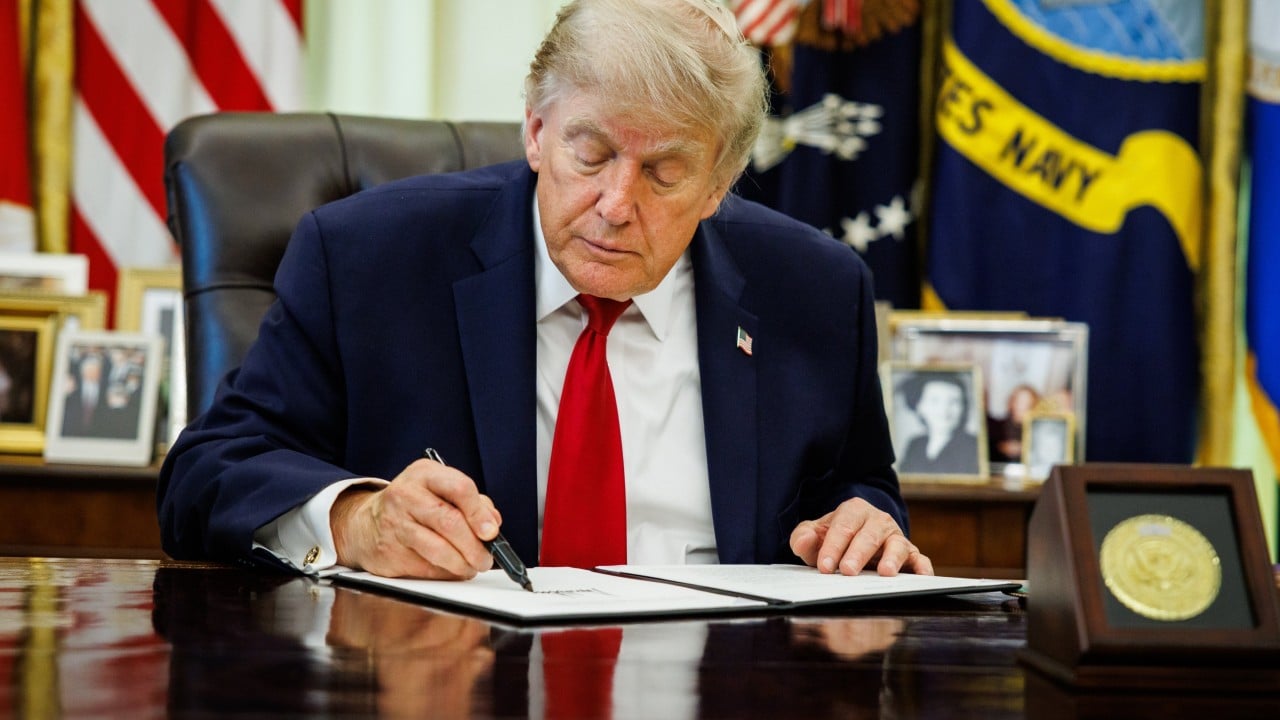
The White House just signed an executive order meant to choke off Chinese critical minerals from the American defense industrial base. The administration claims that by slamming the door on defense contractor waivers, contractors like Lockheed Martin and Boeing will suddenly wake up, build domestic processing plants overnight, and secure the weapons supply chain.
It is a comfortable delusion.
In the real world, forcing defense primes off Chinese waivers without first building the heavy industrial infrastructure to replace them does not destroy China's monopoly. It simply forces defense giants to buy laundered Chinese minerals through third-party intermediaries in Southeast Asia at triple the price.
The Illusion of Upstream Control
Washington politicians love talking about mining. They point to reserves in Nevada, California, or Minnesota and claim America is sitting on a goldmine of strategic autonomy.
They are looking at the wrong end of the pipe.
Mining a raw rock out of the ground is the easy part. Digging up neodymium or dysprosium means nothing if you cannot refine it into high-purity oxides and turn those oxides into permanent magnets. China controls between 70% and 90% of the world’s refining capacity for critical minerals.
When you ban defense contractors from sourcing refined inputs from a country that controls nearly all the refining capacity, you do not spur innovation. You trigger a paper-shuffling shell game.
I have spent years watching defense contractors navigate federal acquisition mandates. When Washington issues a mandate without providing the physical processing capacity to fulfill it, contractors do not magically invent new chemical refining plants. They hire armies of compliance lawyers to find loophole jurisdictions.
Instead of buying neodymium-iron-boron magnets directly from a supplier in Ningbo, a subcontractor sells the raw material to a shell company in Malaysia or Vietnam. The material gets repackaged, stamped with a non-Chinese certificate of origin, and shipped to a defense plant in Alabama. Beijing still gets paid, the Pentagon pays a 300% middleman markup, and the supply chain becomes longer, darker, and infinitely more vulnerable to sabotage.
Why Permitting Bureaucracy Beats Executive Orders Every Time
If the White House actually wanted to break China’s grip on defense supply chains, it would stop issuing press releases about waiver bans and start tearing down domestic environmental permitting regulations.
Consider a simple thought experiment: Imagine a domestic chemical firm that has secured $500 million in private capital to build a heavy rare earth separation facility in Texas.
Before that plant can process its first gram of heavy rare earths, it faces a decade of litigation under the National Environmental Policy Act (NEPA), endless state air quality reviews, and resistance from local anti-industrial coalitions. Meanwhile, a state-subsidized refinery in Inner Mongolia can go from groundbreaking to full operation in fourteen months.
| Strategic Metric | United States Regulatory Reality | Chinese Industrial Reality |
|---|---|---|
| Refining Facility Lead Time | 7 to 10 years (Permitting & Litigation) | 1 to 2 years (State-Backed Construction) |
| Environmental Compliance Cost | Up to 45% of total capital expenditure | Subsidized by central/provincial government |
| Global Processing Market Share | Under 10% for key heavy rare earths | 70% – 90% across critical magnet metals |
You cannot out-regulate an industrial superpower when your own legal system makes building industrial plants nearly illegal. Executive orders cannot override the Clean Water Act or court injunctions. Until Washington exempts critical mineral refining from years of regulatory paralysis, forcing defense contractors to "prove they searched for alternatives" is just administrative theater.
The Math Defense Contractors Won't Discuss
The Pentagon wants contractors to map their supply chains down to tier-four and tier-five suppliers. It sounds reasonable until you examine how modern defense hardware is actually built.
A single F-35 fighter jet requires roughly 920 pounds of rare earth materials. These elements are embedded in flight control actuators, radar systems, targeting optics, and jet engine coatings. The prime contractor does not buy raw dysprosium; they buy a finished radar component from a sub-tier vendor, who bought a circuit board from another vendor, who bought a capacitor from a distributor, who bought processed materials from an overseas chemical company.
Expecting a defense contractor to trace every gram of cobalt or samarium down to the exact pit in the ground—when domestic alternatives simply do not exist at industrial scale—forces executives into an impossible choice:
- Halte assembly lines and fail to deliver missile systems to active forces.
- Sign origin attestations based on third-party audits that everyone knows are compromised.
When forced to choose between shutting down a missile line during active global conflicts or taking a risk on a questionable supplier's paperwork, every defense company will choose to keep the line moving.
Fixing the Real Bottleneck
If the goal is genuine national security rather than quick political headlines, the play is obvious, difficult, and wildly unpalatable to standard trade warriors:
- Build Direct Government Price Floors: Private capital will not invest hundreds of millions in refining capacity because China can crash the global market price of lithium or cobalt at will to bankrupt Western competitors. The Pentagon must guarantee long-term off-take prices for domestic processors regardless of market swings.
- Carve Out Regulatory Fast Tracks: Pass federal legislation that exempts defense-critical chemical processing facilities from standard multi-year environmental reviews.
- Build Direct Allied Refining Capacities: Accept that the United States cannot do all processing within its borders. Establish joint-venture refining hubs in Australia, Canada, and Japan with explicit tax credits for processing, not just extraction.
Slapping tighter waiver restrictions on defense contractors without fixing the underlying industrial capacity does not secure the battlefield. It starves American military readiness while giving Beijing complete leverage over the precise moment to shut down Western defense production.