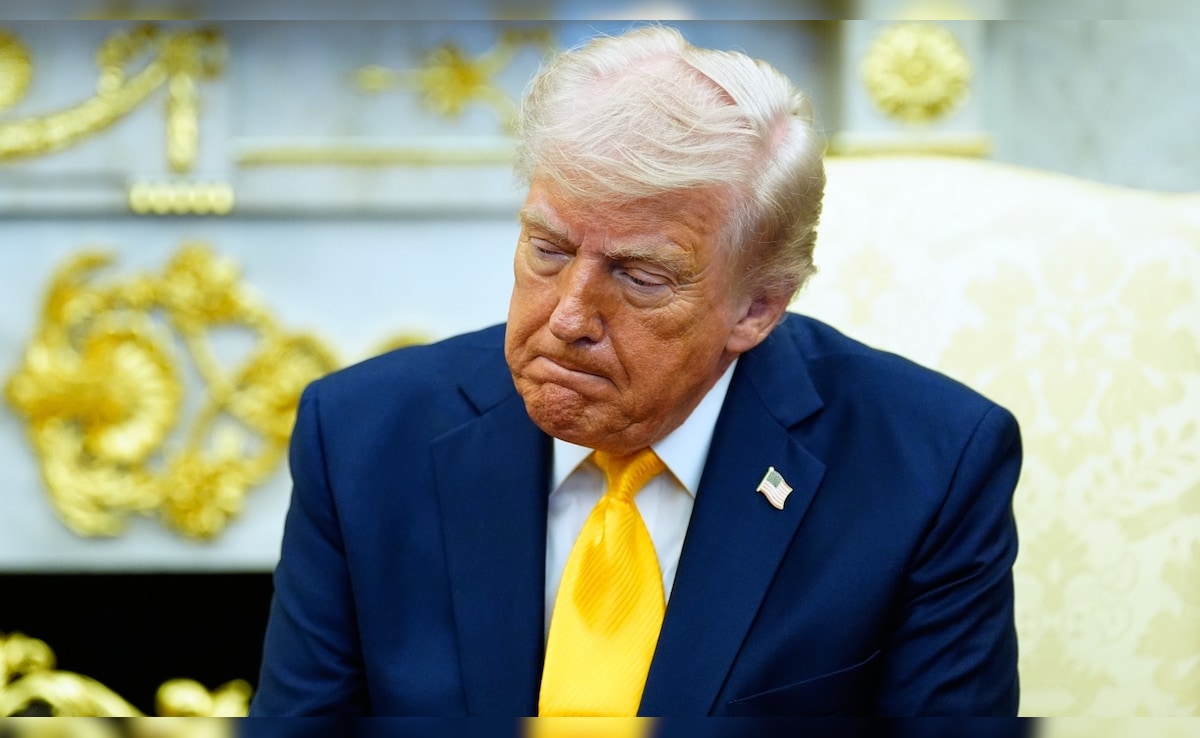
Donald Trump thought he found the ultimate cheat code for regime change when Nicolás Maduro was hauled away in handcuffs this past January. He didn’t. The quick, surgical strike on Caracas felt like a cinematic victory—a "marvellous little two-week war" that convinced the administration they could repeat the trick anywhere. They were wrong. Now, as the Middle East smolders and the global economy takes a hammer blow, it's clear that the White House mistook a lucky break in South America for a universal strategy.
You can't treat a 2,500-year-old civilization like a criminal enterprise. Former diplomats are now sounding the alarm, arguing that the administration is "reaping the bitter fruit" of a massive strategic blunder. The mistake wasn't just tactical; it was a fundamental misunderstanding of what makes a state collapse. Iran isn't Venezuela. It never was.
The Venezuela Mirage and the False Sense of Victory
The capture of Maduro was, by all accounts, an unbelievable stroke of luck. It worked because the Venezuelan regime had spent a decade hollowing itself out, turning into a disorganized mafia. When the elite U.S. units moved in, the structure folded because there was no foundation left.
John Feeley, a former Marine pilot and ambassador to Panama, points out that this success lulled Trump into a dangerous overconfidence. He felt "flush with victory." If you can snatch a president from his palace in Caracas, why not decapitate the leadership in Tehran?
This logic is seductive but hollow.
In Venezuela, the U.S. was dealing with a relatively recent criminal autocracy. In Iran, they're facing a decentralized, highly indoctrinated revolutionary state that has survived a decade-long war with Iraq and forty years of crippling sanctions. They've built deep internal structures specifically designed to survive exactly what the U.S. tried to do.
Why the Decapitation Strategy Failed in Tehran
On February 28, the U.S. joined Israeli forces in a massive strike against Iranian leadership. The goal was simple: kill the Supreme Leader, wipe out the top brass, and watch the country crumble like a house of cards.
It didn't happen.
Instead of a "Rodríguez-style" figure stepping in to play ball with Washington, the Iranian state dug in. Thomas Shannon, a former ambassador to Brazil, explains that the president expected the same "display of force" effect seen in Caracas. He thought the Iranians would see the fire and surrender.
- Institutional Resilience: Iran’s military isn't just a group of bodyguards; it’s a tiered system of regular army and Revolutionary Guard (IRGC) units with separate command chains.
- Indoctrination: Unlike the mercenaries in Maduro’s circle, the Iranian ranks are ideologically committed. You can't bribe a martyr.
- Decentralization: Tehran has spent decades preparing for "civilizational erasure." Their command structures are designed to function even if the head is cut off.
Basically, the administration brought a scalpel to a wildfire.
The Regional Revenge of the Status Quo
There’s a dark irony in how this played out. By making the January intervention look easy, the Venezuelan collapse inadvertently set a trap for U.S. foreign policy. It provided a false positive that emboldened the hawks in the Oval Office.
Now, the "bitter fruit" is everywhere.
The Strait of Hormuz remains a flashpoint, casting doubt on any fragile ceasefire. Oil prices are projected to stay high for at least another year, even if the shooting stops today. Every time Trump casts doubt on a deal, the markets twitch. British Prime Minister Keir Starmer has already expressed being "fed up" with the impact on UK energy bills.
It’s not just an American problem anymore. It's a global crisis triggered by a lack of nuance.
The Cuba Warning
If you think the administration has learned its lesson, look toward Havana. The same "we'll just go in there" rhetoric is already bubbling up regarding Cuba.
The concern among the diplomatic corps is that the White House is preparing to make the exact same mistake for the third time. They see Cuba as another "easy" target, failing to realize that like Iran, the Cuban regime is an entrenched, multi-generational system. It's not a ten-year-old mafia; it’s a 70-year-old institution.
What Needs to Change Right Now
The U.S. cannot afford to keep treating foreign policy like a series of reality TV episodes where the "bad guy" gets caught in the season finale. Hard power has its limits.
- Ditch the Blueprint: Stop assuming the Caracas raid is a repeatable model. It was an outlier, not a standard.
- Focus on Demand: If the goal in Venezuela was stopping drug trafficking, the focus should be on curbing demand at home, not just maritime strikes that escalate into regime change attempts.
- Respect the History: You can't ignore "millennial civilizations." Threatening to blow up ancient cultures doesn't lead to surrender; it leads to total, asymmetric war.
If the administration continues to ignore the "internal capacity and structures" of its adversaries, the 2026 midterms won't just be about domestic culture wars. They'll be about the high cost of a foreign policy built on "unbelievable good luck" that finally ran out. Stop overthinking the next raid and start thinking about the next decade. The world can't afford another "victory" like this one.