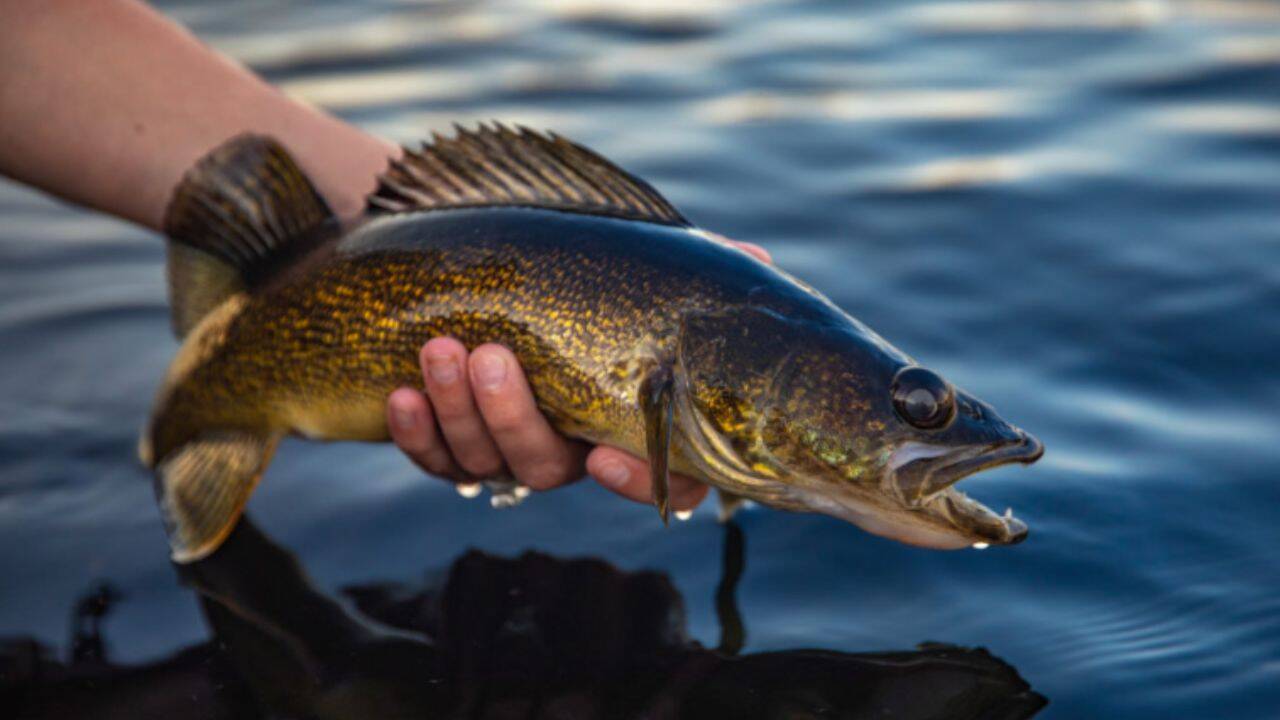
When researchers hauled roughly 285,000 warm-water fish out of a 33-hectare northern Wisconsin basin, they anticipated a clear ecological correction. The target was McDermott Lake, an Iron County water body where native walleye populations had flatlined over two decades, mirroring a broader regional decline across the state.
For four grueling years between 2018 and 2021, fisheries crews deployed mini-fyke nets, cloverleaf traps, and boat electrofishing units to extract an estimated 3,190 kilograms of centrarchids—primarily bluegill, largemouth bass, black crappie, pumpkinseed, and rock bass. The foundational hypothesis was straightforward: excessive numbers of panfish and small bass were outcompeting or consuming young walleye, suppressing natural recruitment.
Remove the panfish ceiling, the theory went, and walleye would bounce back.
Nature refused to cooperate. Four years after the intensive culling operation concluded, natural walleye recruitment in McDermott Lake remained precisely at zero. Not a single age-0 walleye turned up in subsequent surveys. Instead of reviving the apex predator, the massive biological vacuum triggered an unexpected explosion in an entirely different species.
Yellow perch numbers surged by 788 percent.
This outcome offers a stark masterclass in the unintended consequences of aquatic manipulation. It lays bare the limits of top-down management in complex aquatic environments where removing one gear from the machine causes adjacent gears to spin out of control.
The Mechanics of a Massive Biomanipulation
To understand why the McDermott Lake experiment unfolded the way it did, one must look closely at the sheer scale of the extraction. Of the roughly 285,100 fish pulled from the basin, bluegills accounted for the lion's share at more than 197,000 individuals, followed by over 35,000 largemouth bass.
The effort required staggering human resources. Researchers logged 107 hours of electrofishing, 717 fyke-net nights, 908 mini-fyke-net nights, and nearly 7,000 cloverleaf-trap nights. This was not a casual thinning project. It was a sledgehammer approach to restructuring an entire biological community.
Centrarchids had expanded their footprint in northern Wisconsin lakes concurrently with the steady drop in walleye numbers. Fisheries managers suspected that dense populations of these smaller species were preying heavily on larval walleye or monopolizing shared zooplankton resources during critical early life stages. By purging the system of these competitors, scientists hoped to clear a wide runway for juvenile walleye to survive their first critical year.
For a brief window, the numbers hinted at success. By 2020, after two years of removals, the estimated adult walleye population in McDermott Lake ticked upward to roughly 120 fish.
That fragile momentum vanished almost overnight.
By 2021, the adult walleye count crashed back down to between 30 and 40 individuals, matching the baseline levels recorded before the experiment even began. Subsequent analysis revealed that the temporary bump had nothing to do with natural reproduction. It was merely the residual survival of hatchery-stocked fingerlings introduced in prior years. The system was still fundamentally broken when it came to self-sustaining walleye reproduction.
The Perch Takeover
While the target species stagnated, yellow perch rushed to fill the newly emptied ecological space.
Catch-per-unit-effort data for yellow perch in McDermott Lake skyrocketed from roughly 8.9 fish per net to an astonishing 79.11. Beyond raw population growth, the perch grew physically larger. Average length increased by approximately 18 percent, shifting from 156 millimeters to 184 millimeters.
By contrast, a neighboring reference water body, Sandy Beach Lake, saw a much smaller, statistically insignificant perch increase of 116 percent, with average fish size actually declining slightly over the same period.
The sudden dominance of yellow perch in McDermott Lake highlights a profound irony in freshwater ecology. Perch are typically primary prey for adult walleye. Conventional wisdom suggests that boosting perch populations should ultimately benefit walleye by providing an abundant, high-energy food source.
Yet, an overabundance of perch can create its own bottleneck. Dense schools of adult perch frequently target fish eggs and early-stage larvae. When a panfish vacuum is created by heavy removal, surviving species often experience a release from predation and competition that allows them to dominate benthic resources before top predators can re-establish control.
The perch did not just recover; they locked down the ecosystem. They occupied the feeding niches, utilized the available habitat, and effectively slammed the door shut on any incoming walleye fry.
The Broader Crisis Facing Northern Fisheries
The failure at McDermott Lake points to a systemic anxiety among biologists tracking freshwater ecosystems across the Upper Midwest. Walleye abundance across Wisconsin declined by roughly 36 percent over the two decades preceding these studies, with recruitment failures standing out as the primary driver.
Anglers and state agencies have spent millions of dollars on stocking programs, habitat restoration, and aggressive management interventions. Many lakes that historically supported self-sustaining walleye populations have transitioned into stocking-dependent systems.
Climate change, shifting water chemistry, loss of coarse woody habitat along shorelines, and changing predator-prey dynamics create a multi-front pressure cooker. When scientists attempt to isolate a single variable—such as panfish competition—they often run up against the sheer resilience of complex aquatic webs. Pull out one thread, and the entire fabric shifts in ways models fail to predict.
The Wisconsin experiment demonstrates that lakes are not simple ledger books where subtracting undesirable components automatically yields preferred outcomes. Biology is transactional, dynamic, and frequently resistant to human engineering.
The 285,000 fish removed from McDermott Lake left behind empty water, and the yellow perch answered the call. The walleye, meanwhile, remain absent, waiting for environmental conditions that modern management tools have yet to figure out how to manufacture.