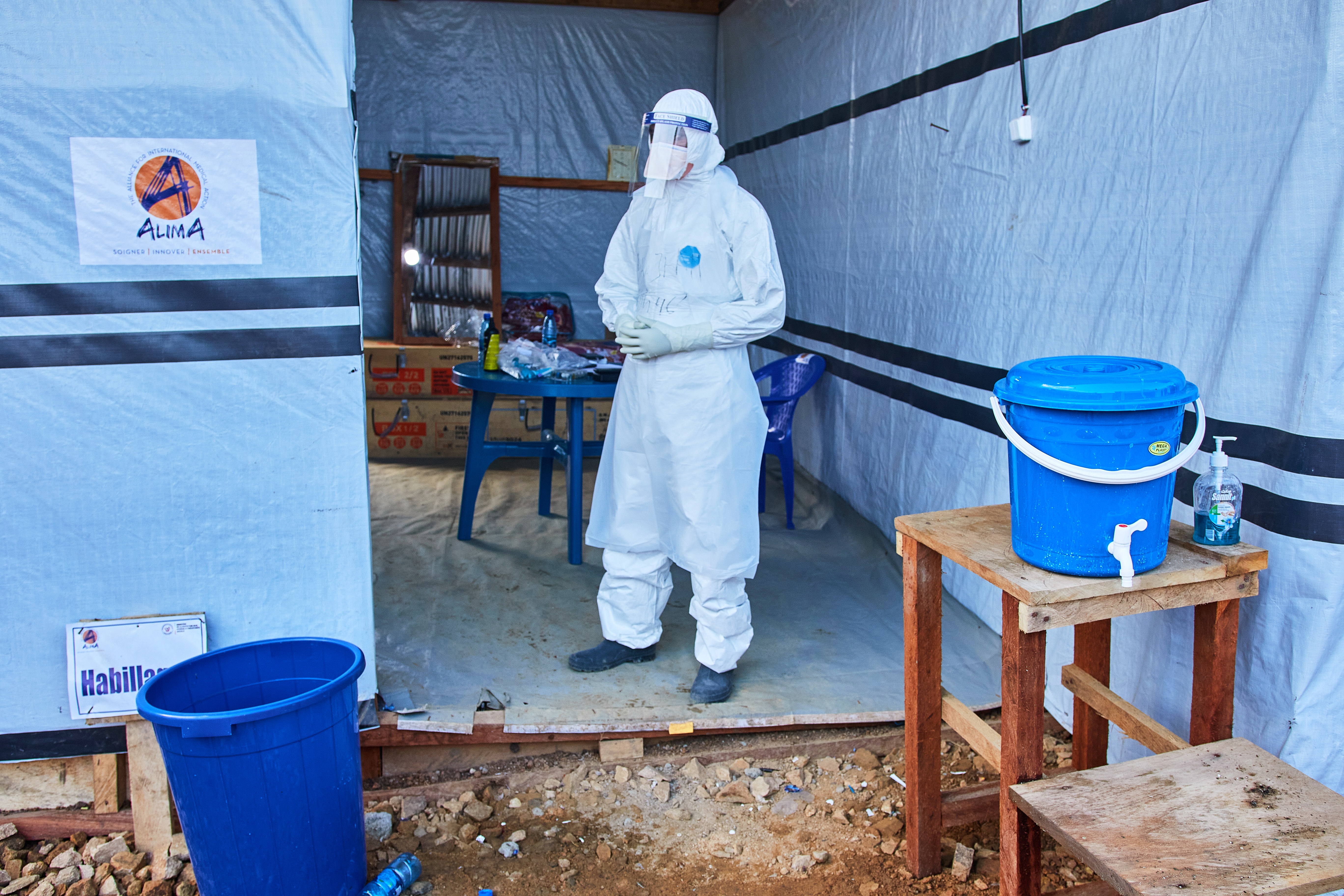
Ebola is moving faster than our ability to track it. In the conflict-torn forests of the eastern Democratic Republic of Congo, health workers are face-to-face with a terrifying mathematical reality. Eight out of every ten new Ebola cases are popping up outside of known contact lists.
That means 80% of the people getting sick are catching the virus from unknown transmission chains. They aren't on anyone's radar until they are already dying or dead. Recently making waves in this space: The Epidemiology of Urban Aerosols: Deconstructing the NYC Legionnaires Outbreak.
This isn't the Ebola we think we know. It is a highly aggressive outbreak of the rare Bundibugyo strain, and the death toll has officially cleared the grim milestone of 700. If you think the global health system has this under control, you are mistaken. The Africa Centres for Disease Control and Prevention has labeled this the fastest-growing Ebola outbreak the continent has ever seen.
The hard truth is that the traditional containment playbook is failing in eastern Congo. We need to look honestly at why this is happening and what it takes to stop a runaway virus when you cannot even find the path it is traveling. Additional information on this are covered by WebMD.
The Invisible Spread of the Bundibugyo Strain
To understand why this outbreak is burning through communities so quickly, you have to look at the virus itself. This is the Bundibugyo species of Ebola. Unlike the more common Zaire strain, which was the target of massive vaccination campaigns in recent years, Bundibugyo has no approved vaccine and no licensed treatment.
We are fighting this with empty pockets and bare hands.
When a patient infected with the Zaire strain shows up, health workers can deploy highly effective tools like the Ervebo vaccine to ring-fence contacts and halt transmission. With Bundibugyo, those safety nets do not exist. While clinical trials for experimental treatments have finally started on the ground in Bunia, they are in their infancy.
Ebola Outbreak Speed Comparison (Days to reach 1,000 cases)
------------------------------------------------------------
2018 North Kivu Outbreak (Zaire Strain):    235 Days
2026 Eastern Congo Outbreak (Bundibugyo):    40 Days
------------------------------------------------------------
Look at those numbers. The speed of this outbreak is unprecedented. It crossed the 1,000-case mark in just 40 days. That is nearly six times faster than the massive 2018 outbreak. As of mid-July 2026, total infections have climbed to nearly 2,000 across multiple provinces including Ituri, North Kivu, and South Kivu, with cases spilling across the border into neighboring Uganda.
Why the Containment Playbook is Broken
Standard epidemiology relies on a simple premise. You find a patient, you isolate them, you list everyone they interacted with, and you monitor those contacts for 21 days. If any of those contacts get sick, you isolate them too.
But contact tracing only works if people trust you enough to tell you who they spent time with. In eastern Congo, that trust has completely eroded.
Dying in the Shadows
Chikwe Ihekweazu, a prominent global health official who recently returned from the hard-hit city of Bunia, pointed out the most alarming aspect of this crisis: people are dying in their homes without ever seeking formal care.
When someone dies of Ebola in their community, their body is at its most infectious. Traditional washing and burial practices involve direct contact with bodily fluids, which acts as a super-spreader event. Because these deaths happen outside the medical system, health authorities cannot perform safe burials, isolate family members, or trace who attended the funeral. The virus simply resets and multiplies.
The Cash and Combat Crisis
It is easy to blame local skepticism, but the structural failures of the response are just as devastating. Eastern Congo is an active conflict zone. Armed groups frequently attack villages, making it physically impossible for surveillance teams to enter certain areas.
Then there is the financial neglect. In July 2026, healthcare workers at an Ebola treatment center in northeastern Congo went on strike over unpaid salaries and hazardous duty bonuses. When the very people risking their lives to fight a deadly pathogen are not getting paid, the entire defense system collapses. Even a 24-hour strike leaves patients completely abandoned and allows the virus to slip through the cracks.
How to Regain Control of the Outbreak
We cannot keep doing the same things and expecting different results. To stop this virus from triggering a wider regional crisis, the global health response must pivot immediately. Here is what needs to happen right now:
- Fund frontline hazard pay immediately: International donors must bypass bureaucratic red tape and guarantee direct, consistent payments to Congolese medical staff. No healthcare worker should have to strike to receive a basic salary while battling Ebola.
- Fast-track Bundibugyo clinical trials: Since there is no approved vaccine, the trial protocols in Bunia must be scaled up aggressively. Data on experimental therapeutics must be analyzed in real-time to offer patients a genuine reason to seek medical care instead of staying home.
- Decentralize treatment to community levels: Large, intimidating isolation centers often fuel local rumors and fear. Integrating Ebola screening and basic supportive care into existing, trusted local clinics can encourage early reporting.
- Prioritize local leadership over foreign directives: Instead of relying solely on international teams, funding and decision-making power must be handed directly to local community leaders, religious figures, and neighborhood associations who hold the trust of the population.
The window to contain this outbreak before it becomes a massive trans-border disaster is closing. If we do not change how we track, treat, and fund this response, we will keep chasing a virus that is always three steps ahead.